A lot has happened in the past few days. I really should have been writing every night, but I’ve been a little afraid since my laptop no longer charges consistently. I think that’s a problem I haven’t brushed on yet: the DC-in jack on my laptop is broken. Again. This happened to me on the last trip. Thankfully, Dell’s DC-in jacks are all-in-one components. I just have to entirely disassemble the computer, and screw the new one in. No soldering involved. It’s still a several hour job for me, and it’ll take me all night to finish. I ordered the part in Dunedin and had it Fedex’d to our Grandparents house on Second Day Air ($13 in shipping for a $2 part). Actually, I might have already covered this…
We left Cartagena at about 4:00pm—too late, in retrospect. I have mentioned this before, but Cartagena is hot. I thought I was coping with the heat moderately well, especially as an Alaskan. The temperature difference was 150F from Fairbanks the day we left Cartagena, not including humidity (0% in Fairbanks). We took a wrong turn into Turbaco ten miles outside of Cartagena, and ended up trying to navigate the center of town at 5:30 at night. We were stopped by a police officer who almost demobilized our car for having a cracked windshield, but let us go at the last minute. We got out of town as fast as we could, and ended up driving into Arjona at night. It was a stressful, hot day. Our trailer was probably 100F by the time we stopped for the night, and it felt more than a little isolating to be in a small village in Colombia at night in a climate that’s quite literally the opposite of Alaska’s where we didn’t speak the language. However, a few minutes after we pulled in several children came up to our trailer to check it out. My mom let a few of them inside, and all of a sudden people started coming over to check us out. We started talking with them, and they brought over a man named Hillo who could speak English. We ended up sitting outside with more than fifty people until 11:00pm in a spontaneous party. The language barrier suddenly didn’t seem so bad either, with a phrase book and a laptop, we could translate most things and were able to converse quite well. By the end of the night I had a slip of paper with several facebook names, email addresses and phone numbers. The feeling of isolation was completely gone, and we had the best night of the trip so far.
The next morning we went to breakfast as they insisted and had bollos (sort of like a tamale without a filling), cheese and a type of cured meat. Hillo also gave me a much needed haircut and did a great job at it. I ended up giving all of my American coins to the group of children waving goodbye to us right before we left.
We got on the road, and took a wrong turn down the non-toll highway. The road got progressively worse as we continued until it got to the point where we couldn’t go more than five miles an hour. The car was really hot because the windows hardly open, and there was no air exchange. The road was physically painful—huge potholes, ditches, speedbumps… People would stand in the road and fill the potholes for spare change. It was harsh. We turned around after about forty minutes or so. It was hard to tell how far we went, but we couldn’t take it anymore.
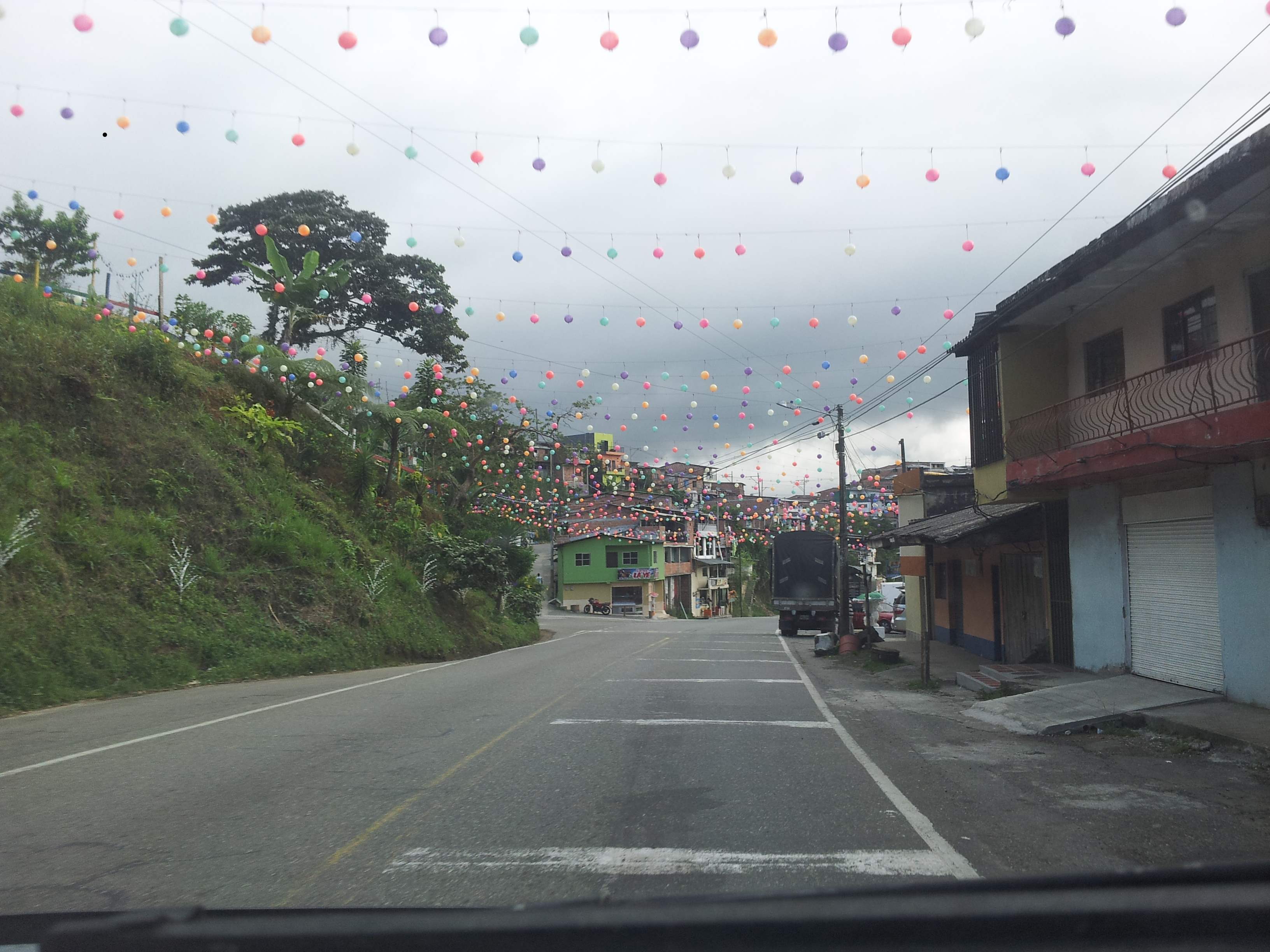
The main highway was much, much better. It was twisting and windy, but we could go reasonable speeds on it. The stretch of road was vaguely reminiscent of a tropical British Columbia, really beautiful. We camped at about 4:00pm near La Ye in a truck stop. It was cooler that night. Still in the 80s, but it seemed a lot less hot than the previous night. We all took showers and went to bed at about 10:00 so we could get up early and drive to a cooler region.
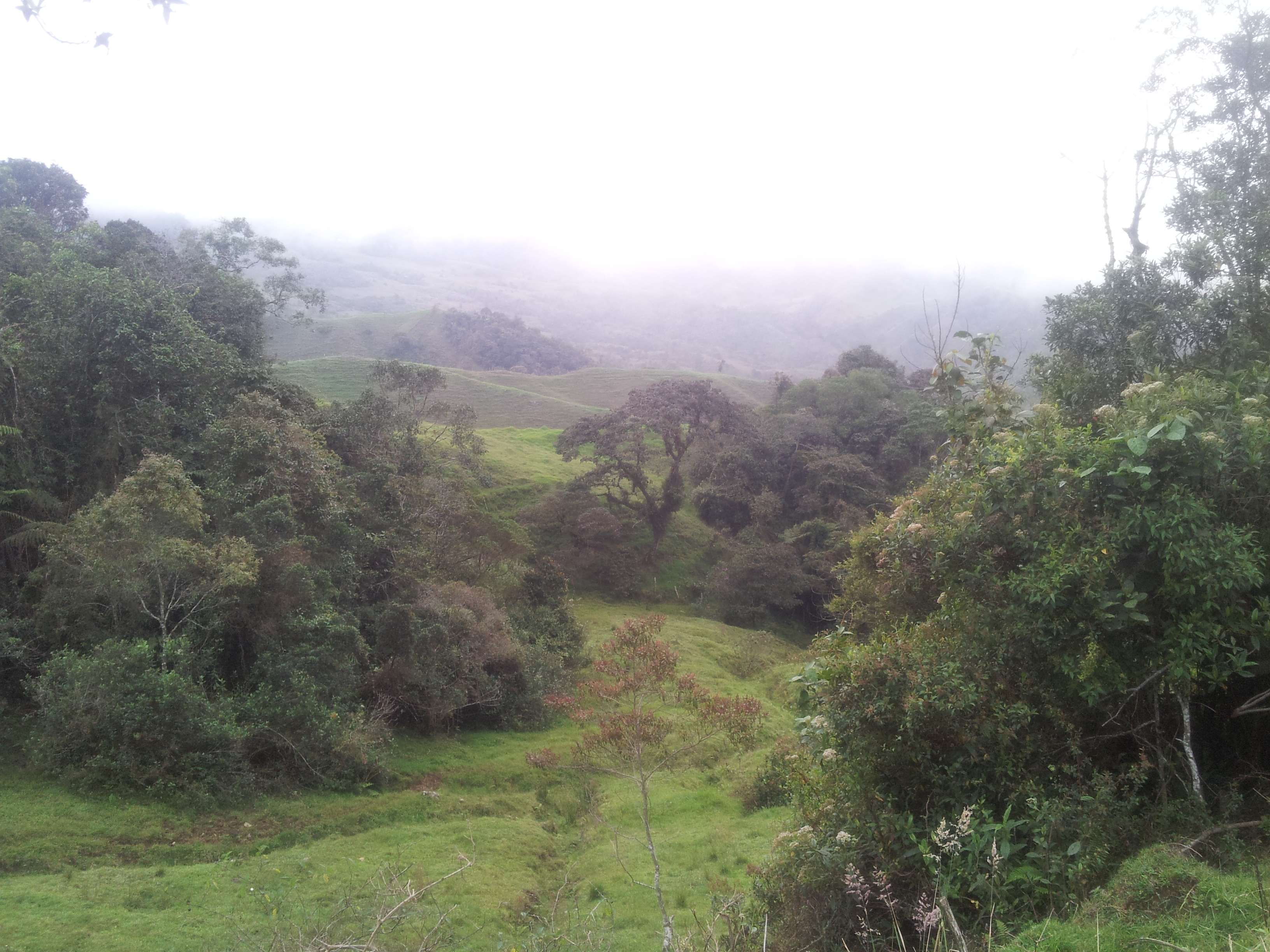
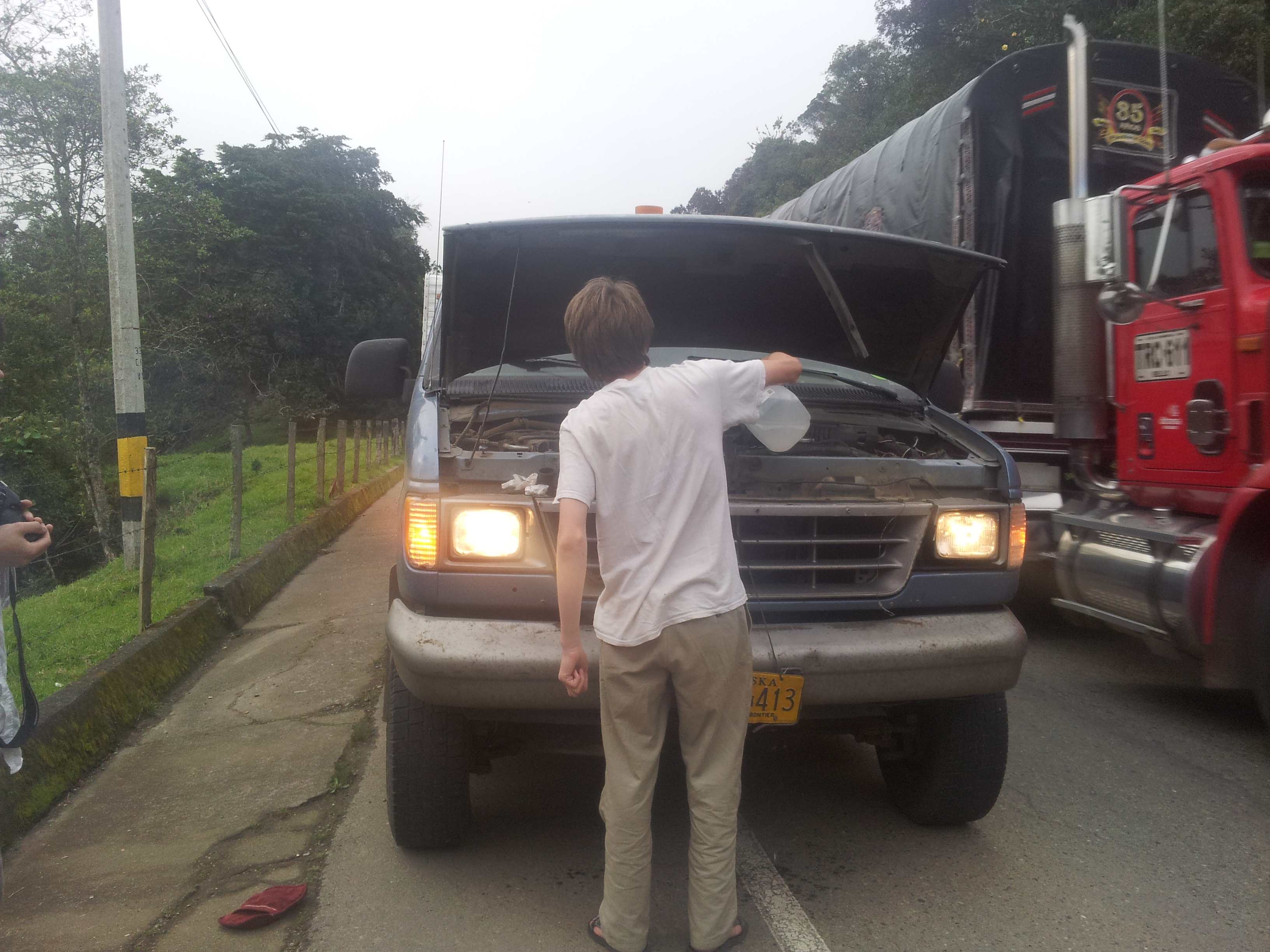
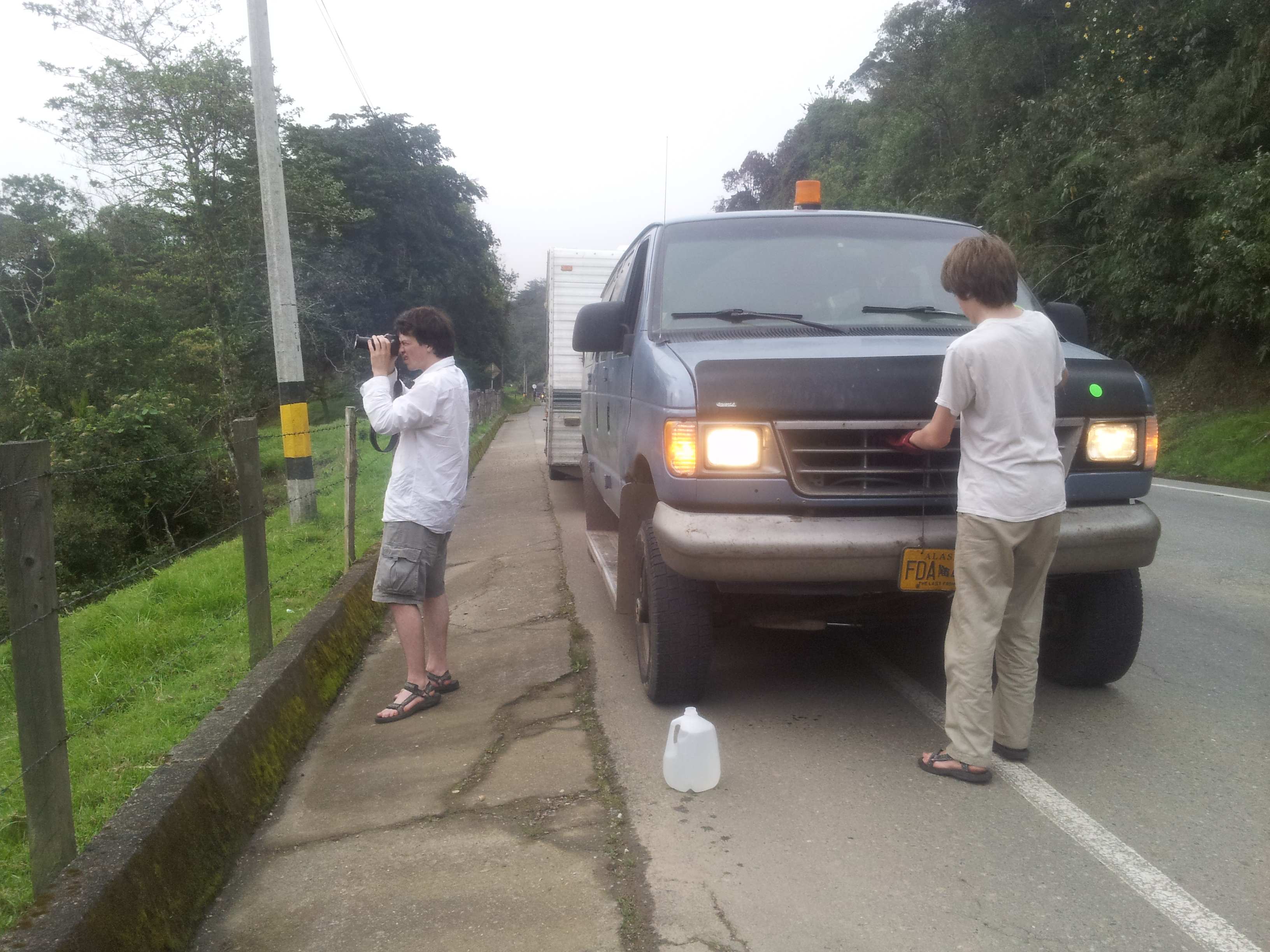
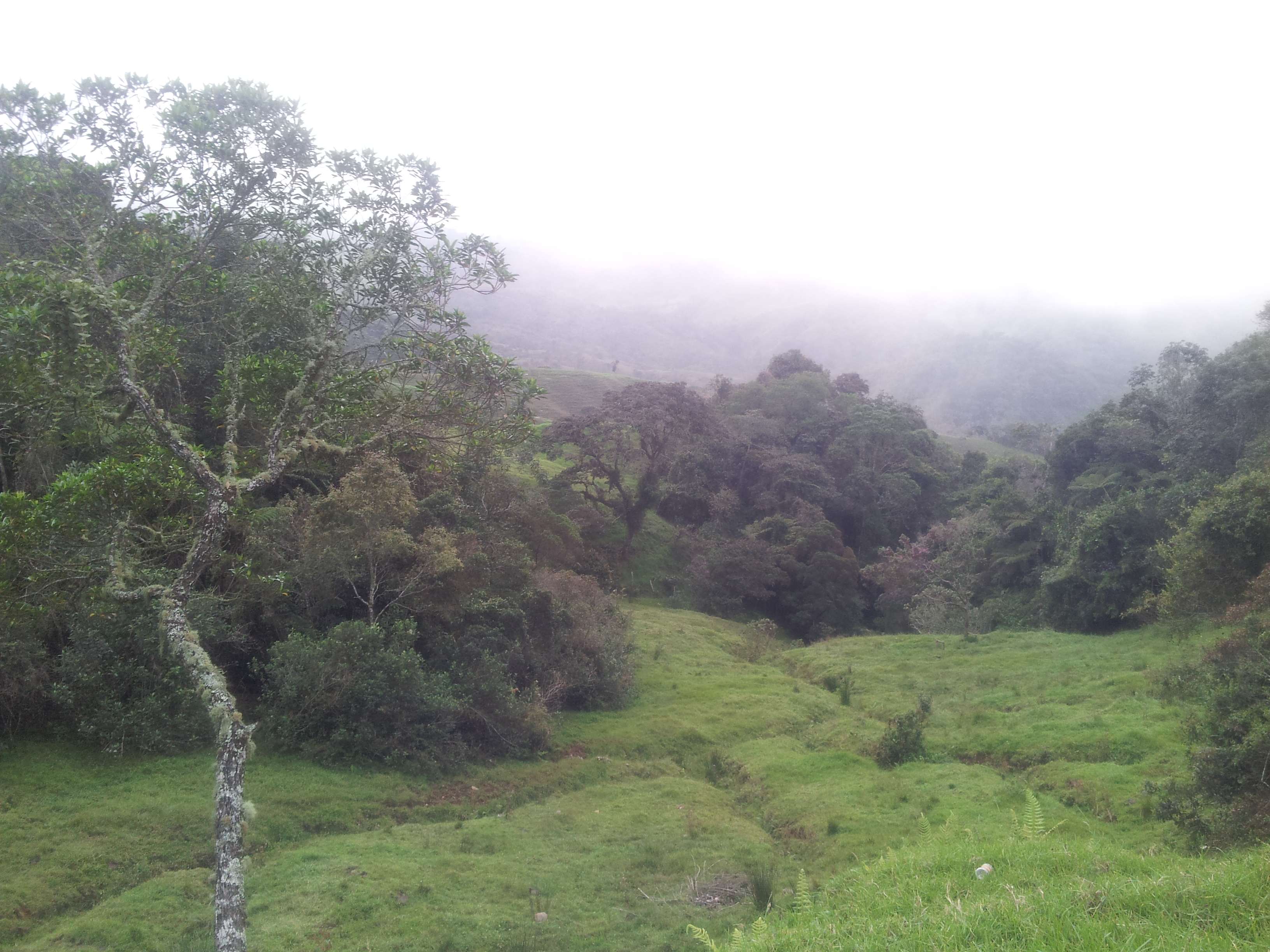
A little after 2:00pm the next day, we started going uphill. The thing is, we didn’t go down. We went up hill for hours on the slow, narrow road carved into the mountains. The scenery was spectacular, It easily beat the Going to the Sun Road in Glacier National Park. The road was carved into the mountain, with a cliff sometimes thousands of feet high on the opposing side. Along the cliff were tiny houses supported on stilts and cement platforms. The grade was so steep that the fifteen-foot wide houses could have a ten or twelve foot drop off out the backdoor. Our car started to overheat and we had to pour water on the radiator to cool it off while huge trucks trundled past.
Eventually the views succumbed to clouds, and all sense of perspective was lost—an unnerving prospect when you’re clinging to a twenty foot, laneless road shared with tractor trailers thousands of feet above the valley floor. On a particularly steep grade our car stop moving forward. The transmission must have overheated, but we could only roll backwards down the hill. We turned off the car for a few minutes and put in some more transmission fluid. All the while we were being passed by huge trucks and buses. A few pothole-fillers came to see what was wrong, and we tried to explain to them what was wrong. Eventually we got the car to move forward again, but there was enough time to think about how we would ever get off the top of a mountain in rural Colombia.
The road went higher, with visibility steadily decreasing to fifteen feet. And yet, the whole time we’ve been in Colombia, I haven’t seen one accident, or even near-accident. Traffic is a free for all here, there’s no lanes, few signs and traffic lights, and the only rule seems to be “Don’t hit me and I won’t hit you”. In St Petersburg, I saw accidents every single time I left the house—sometimes two. Awful accidents, in the middle of a well regulated, eight lane road with all licensed drivers.
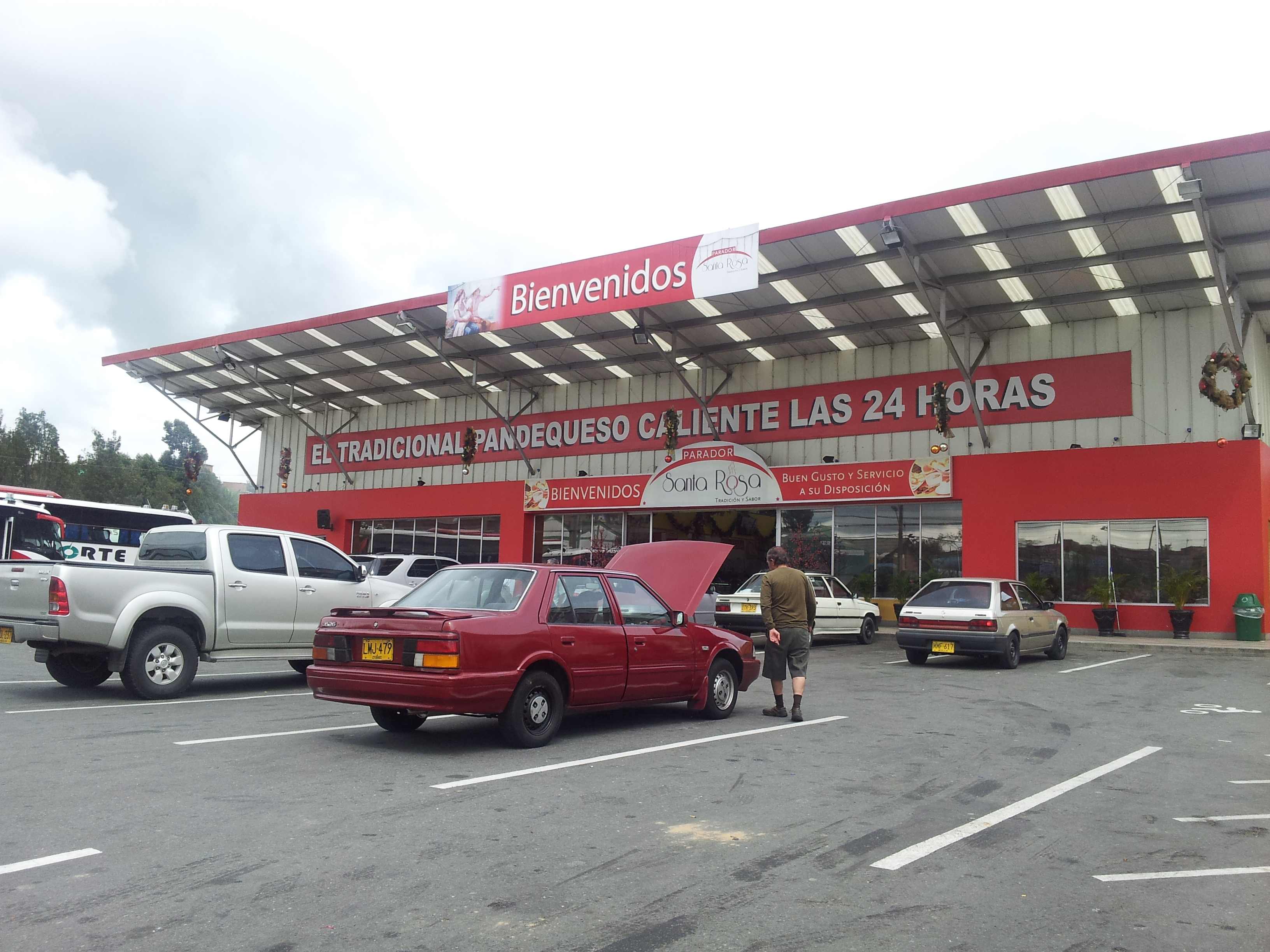
After we got off the mountain road last night, we drove in the dark for about an hour because it seemed safe, then we pulled into some sort of travel stop for the night which happened to also be a cheese factory, restaurant, bakery and convenience store that’s open 24 hours a day and has free wifi. I think we’re staying here for Christmas, in a Colombian truck stop seventy miles from Medellin.
We had planned on spending a short time in Colombia. People say that you can drive from Cartagena to Ecuador in a day or two as it is only about 700 miles. Our initial plan was to drive straight to Ecuador – but that was before we all fell in love with Colombia. The food was some of the best we have ever had. The people were without a doubt the nicest we had ever met traveling. The scenery was unbelievable (and we are from Alaska!).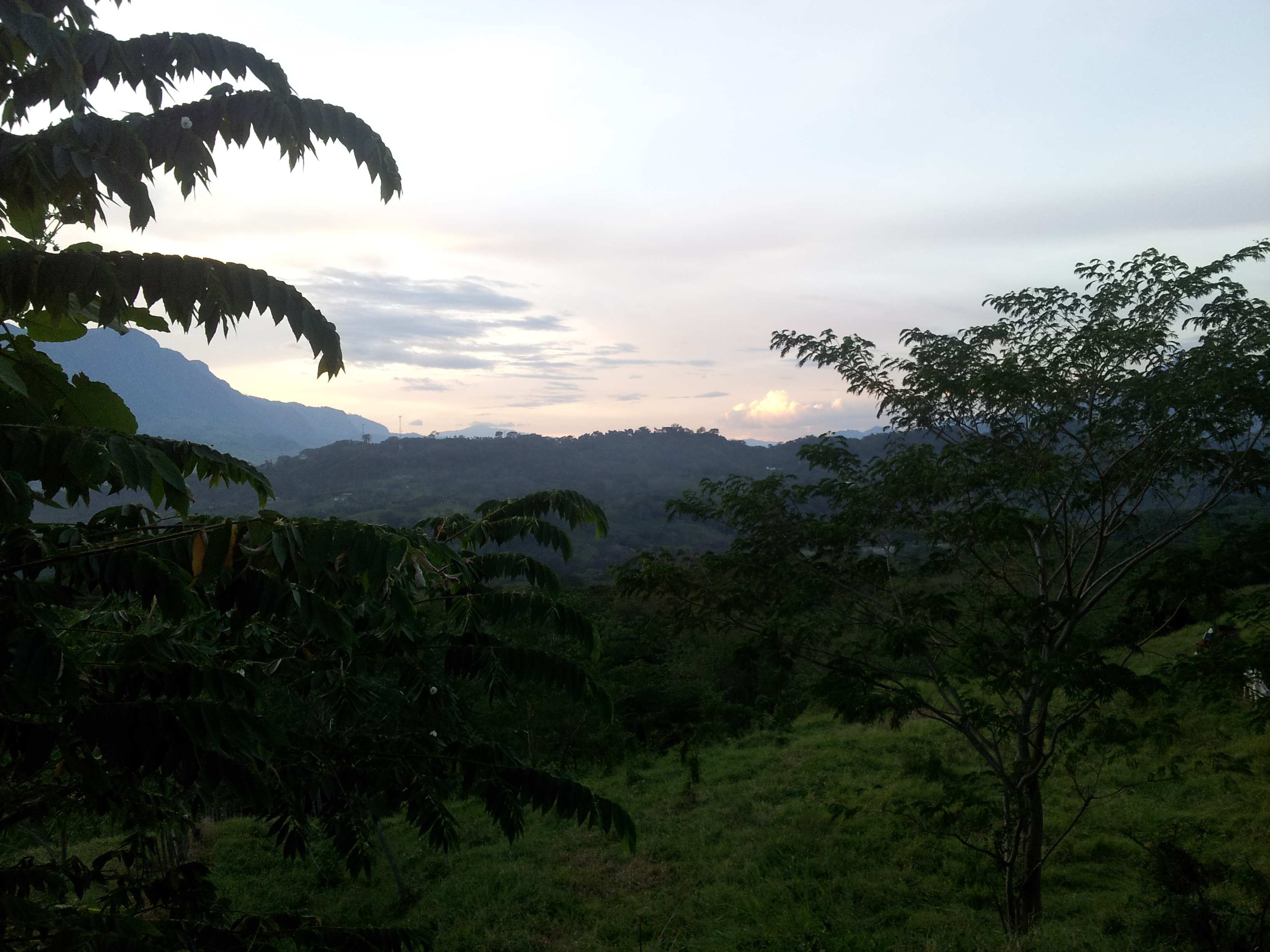
We left the coastal lands (the hot lands) and entered the highlands where most people live. The temperature was better for us. We stuck to the Pan American Highway and disconnected the camper when we wanted to drive to villages off the Highway.
Driving in Colombia Pulling a 29 ft Trailer
When we first began researching this trip, we could find very little information on the roads in South America. The descriptions we did find were usually vague (fine or rough or slow). We figured (correctly so far) that if a truck could drive the Pan American, then so could we.
First, it was always our plan to stick to the Pan American Highway. All adventures off the
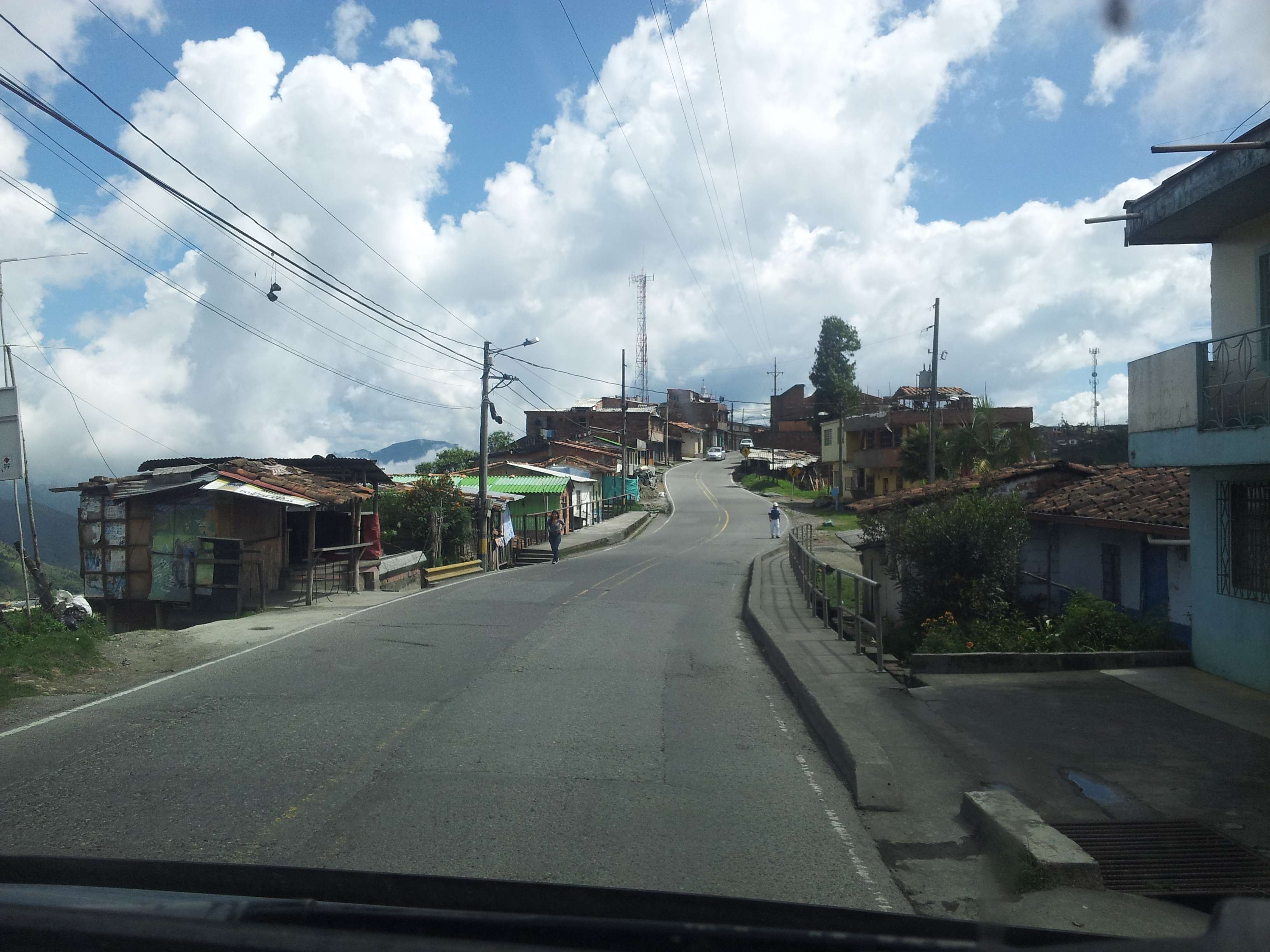
highway involve parking and either disconnecting the van and driving, walking or taking a bus / taxi. The first rule of driving a big rig is Don’t Leave the Highway unless you know for sure you can get where you are going. We are lucky that our rig is short (many are not) so we fit under archways and such. The Pan American wends through several big cities in Colombia and driving gets tense but it is all part of the adventure.
Here are some things to note about the Pan American in Colombia:
- Parquaederos are everywhere, all along the highway. There is always a place to park over night. Some are industrial like parking lots (we only stayed in one of those near Popayon), some are gas stations (some are crowded and loud, some are close to the road but many are spacious and quiet), some are restaurants and some are in hotel parking lots where you can pay the price of a room ($12 USD seemed to be the most expensive) and use the pool, the showers, the wifi and the room. The cost ranged from free to $7000 pesos ($4 USD).
- There are often no signs especially when you need them most. Sometimes there is a sign that says something is about to happen (like turn left up ahead) but then when you get to the point it is a roundabout with three left turns off of it – none are marked.
- GPS barely works when you need it. Often we were driving in a white space.
- Roundabouts are in every city and manage all traffic flow.
- Traffic lights turn yellow before they turn green as well as before they turn red (green – yellow – red – yellow – green)
- The Pan American is a toll highway. We paid about $7000 pesos per toll (same as a car). We paid $82,000 in tolls (about $42 USD).
- People stretch ropes across the road and you have to stop. A few coins and you are on your way – a kind of unofficial toll.
- There is a strong police / military presence but they never stopped us once and were always kind and helpful
- We passed many gas stations in southern Colombia that were sold out of gas (not diesel)
- Many gas stations do not take credit cards.
- Most small towns do not have an ATM. ATMs are often out of cash.
- There are sections of the highway that are literally a steep uphill /downhill for thousands of feet.
- Vehicles pass three and four at a time so there are sections of the highway that may look like a four lane, one way highway but it is just trucks and cars passing a truck. At the same time. Early on, we got confused coming out of Cartagena because the road divided (one side went into a town) and the other turned into a major passing section. It looked entirely like a divided highway section.
- There are few places to pull over when you most want to pull over (scenic overlooks, steep uphills)
- We nearly overheated a few times driving. Make sure you have plenty of water.
- We filled up with water at almost every gas station. The water is clear and smells like chlorine but we only used it for showering, dishes, laundry — and overheating.
- People fill the pot holes in and remove rocks from the road and expect you to pay them. We handed out coins and it was never too little.
- There are military police check points all over the place but they always gave us the thumbs up (meaning we could drive on). We did see buses stopped and searched and we met some people who worked with the police at a restaurant – they wanted to see pictures of snow.
- Expect to be the center of attention every place you stop. We were sometimes swarmed with people and it feels a bit scary at first but every single time it was a fabulous experience.
We divided our trip through Colombia into five sections:
- Cartagena
- Cartagena – Medellin
- Medellin – Popayon
- Popayon – Pasto
- Pasto – Border of Ecuador
Cartagena – Medellin
The roads out of Cartagena are smooth and paved. We passed through one police check point, they looked at Mark’s passport and asked us questions about Alaska. The inland country is very hot and humid. The first night, we actually felt like we couldn’t breathe (but we are Alaskans). The road is two lanes and there are not a lot of cars – but there are many trucks and even more motorcycles. There are no passing lanes and few places to pull over. Once you start the climb into the mountains, things move pretty slow. Trucks average about 35mph and there is really no passing because there is just another truck uphead. Better to just relax and enjoy the slow and beautiful drive. We could have made the trip to Medellin comfortably in three days but we weren’t in a hurry.
Camping spots:
- A field in Arjona on the left side of the Pan American.
- Parquedearo with a big field and a restaurant and a little store
- Santa Rosa de Osos parquedearo, a five minute walk into the lovely town and the parquedearo is behind a 24 Hour Travel Stop which had a cheese maker, a bakery, a small store and restaurant with excellent and inexpensive food.
Medellin – Popayon
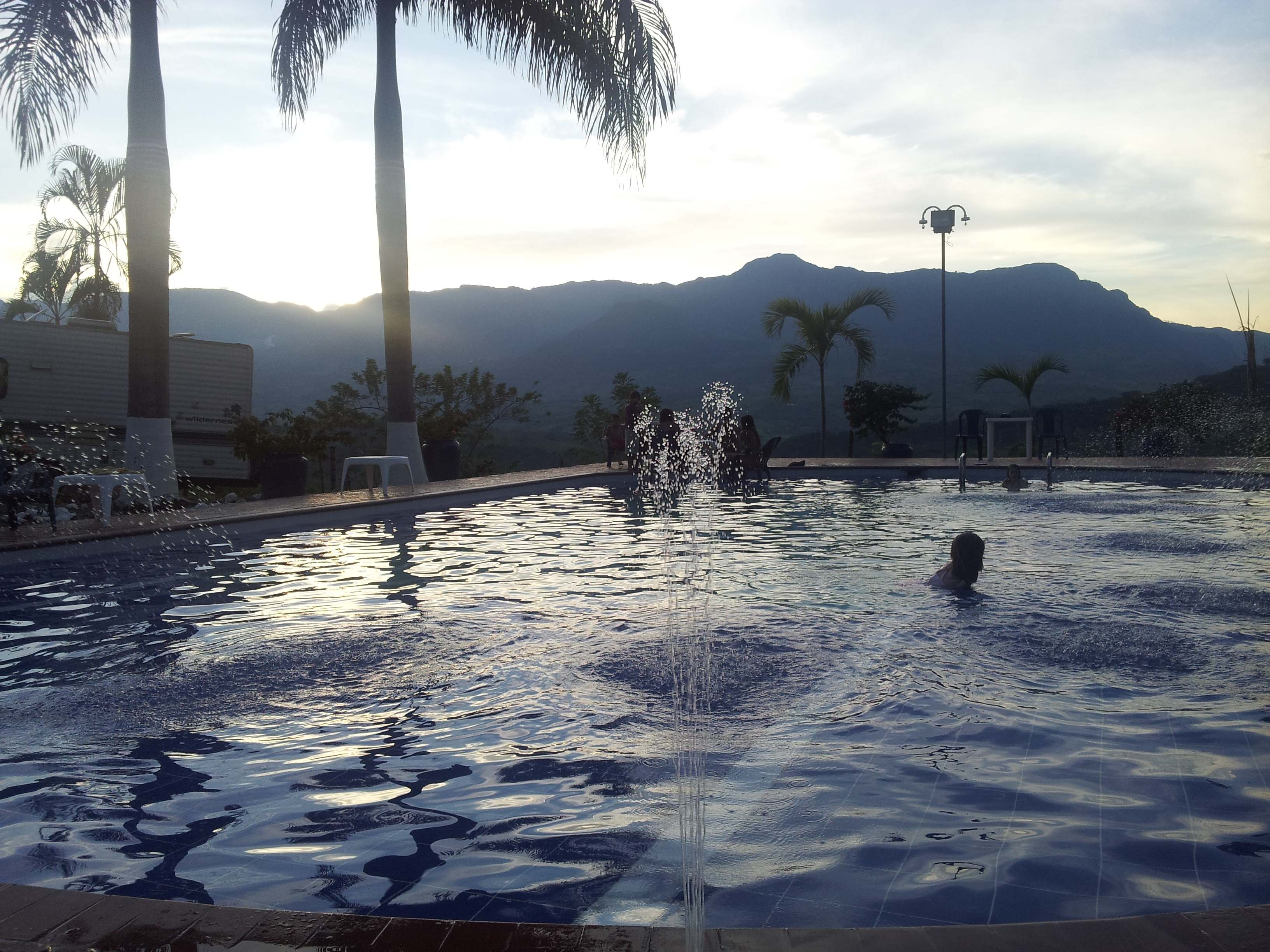
 We spent wonderful and relaxing days in the beautiful town of La Pinatada.We saw a parquedearo with a hotel and a pool and it turned out to be one listed in Americas Overland but the name had changed to Mirador del Rocio. We were not really looking for a place to camp but this looked so wonderful that we had to stay. It was $20,000 pesos a night ($11 USD) and that included the pool, the bathrooms and showers and a nice lobby patio with hammocks and ping pong and a pool table. The hotel overlooks the coffee fincas.
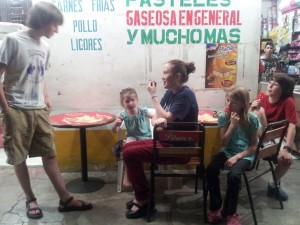
In the evening, we disconnected the van and drove into town and walked around. We bought popsicles and some supplies (potatoes, avocados, oranges for juice) and were headed back to the van. Women were gathered around the van peering inside – it was Sylvia’s car seat that they were looking at. The car seat led to a lengthy discussion which involved Sylvie buckling herself in as a demonstration. Car seats are completely unheard of in Colombia. We told them they were the law in the USA and there was much conversation about this. Our van is also quite the conversation starter, even without the Alaska plates. Kids always ask us why we have a bus as even minivans do not exist in Colombia.
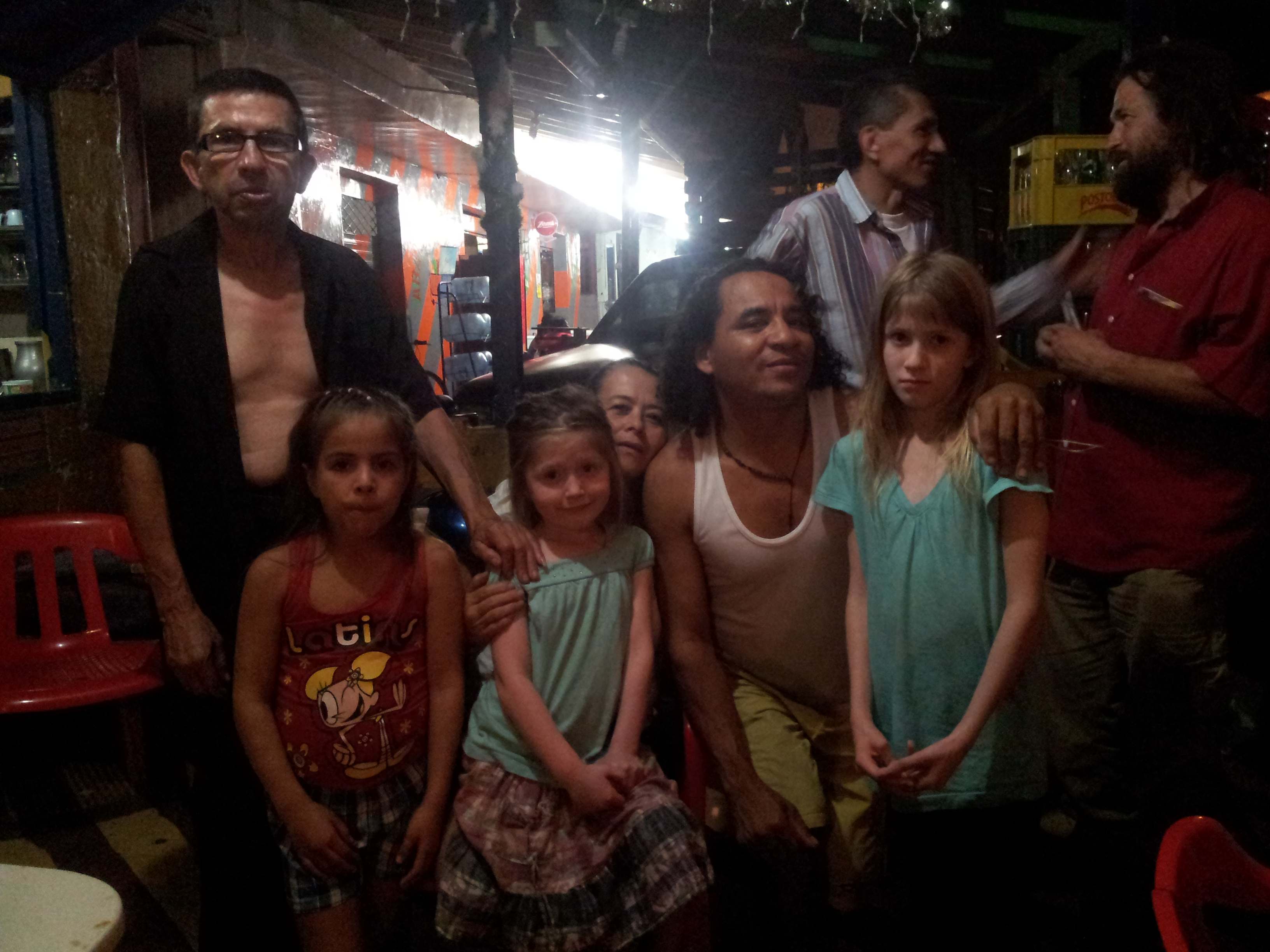
In La Pintada, we met some wonderful and friendly people who brought us all to their restaurant and gave us all bottles of juice. The juice was Colombian and they were wanting to share things from Colombia with us. It is hard for us to understand Colombian Spanish as there is a strong accent so we talked haltingly for a long time and had a very nice evening. We left with a great CD (the folks we met were in a band) and promises to meet up when we left La Pintada so they could see the camper. We did this – which is no easy task but we had great luck and a truck was delivering produce when we pulled up and it promptly left so we had plenty of space to park.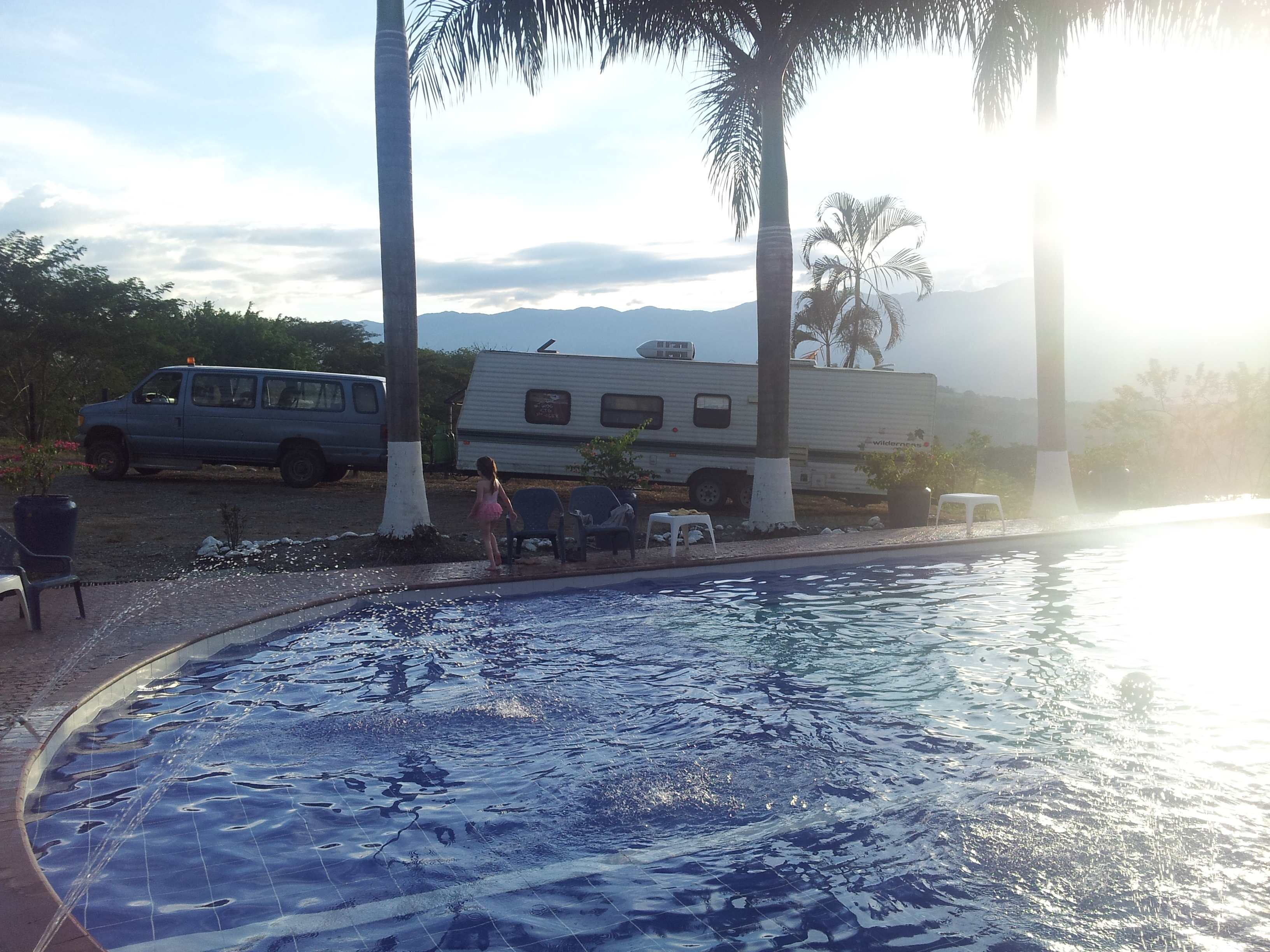
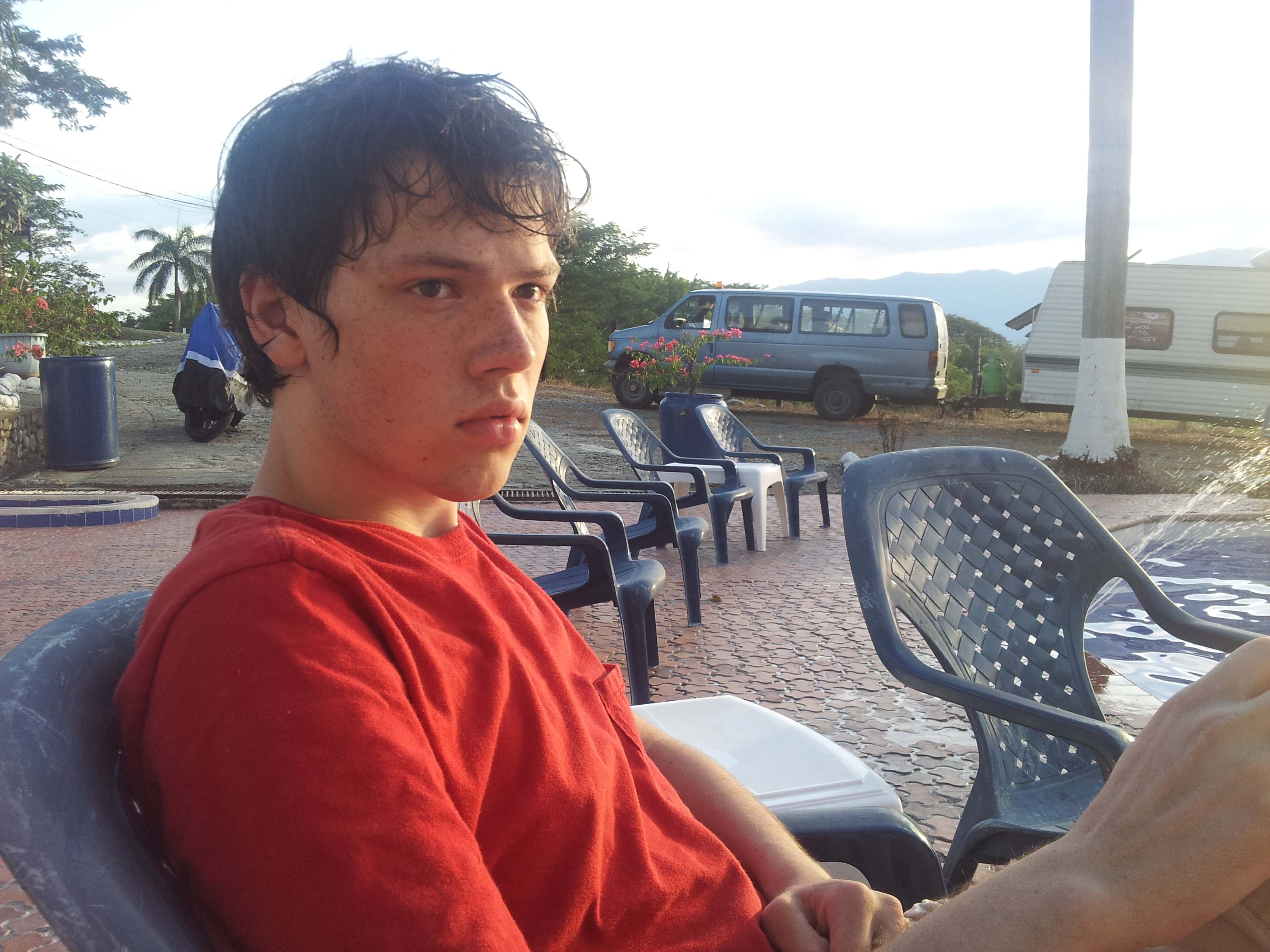
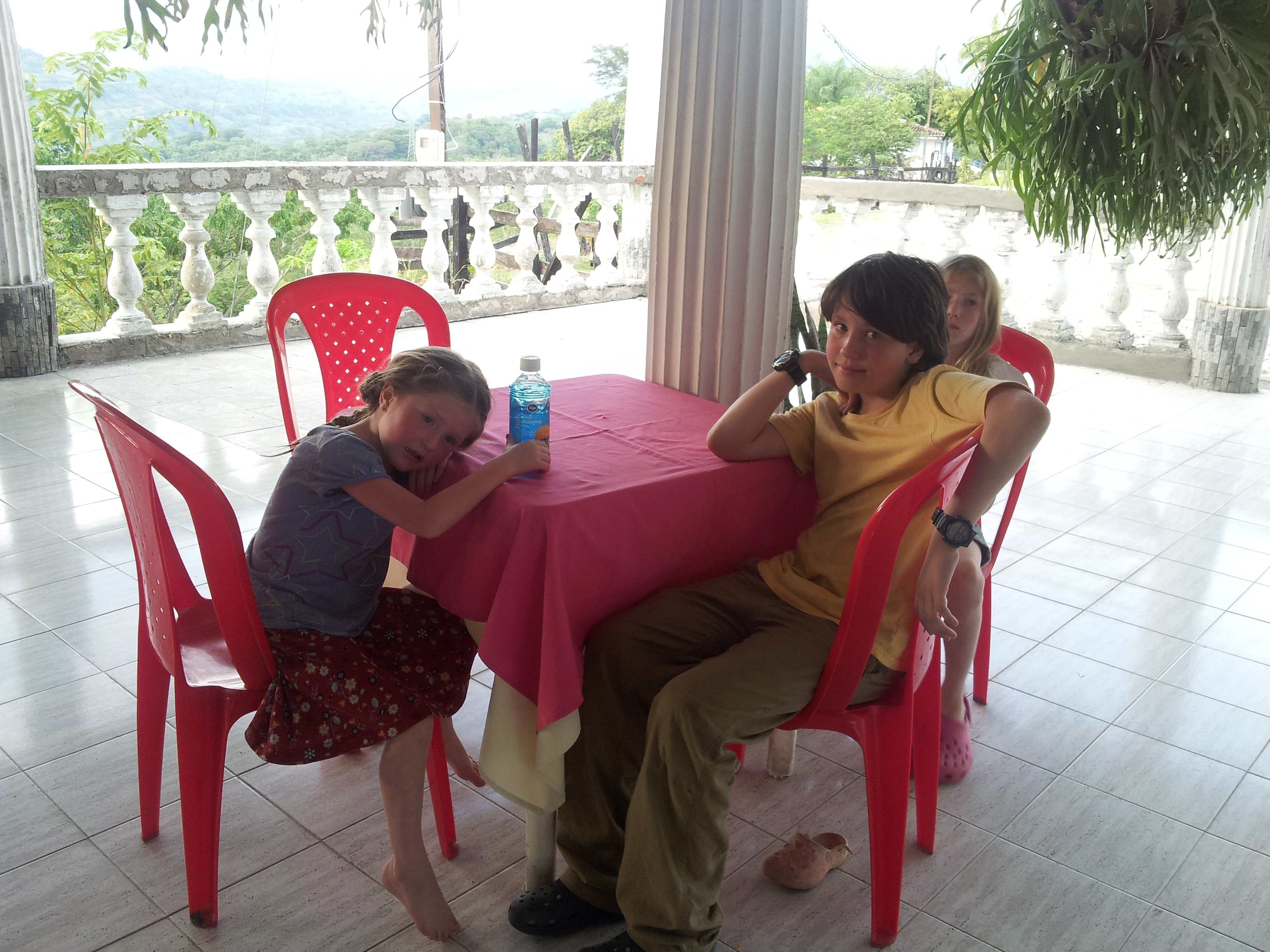
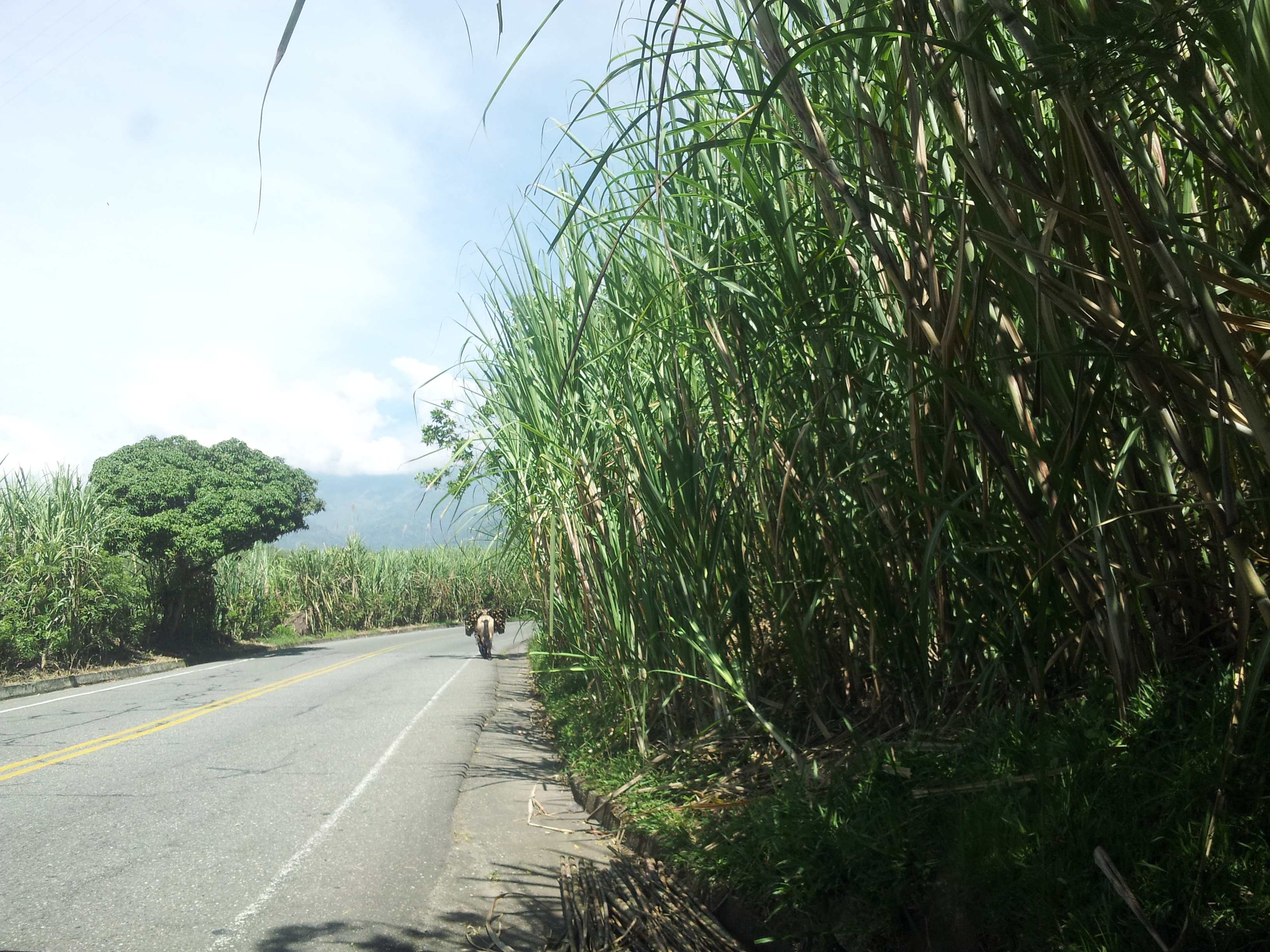
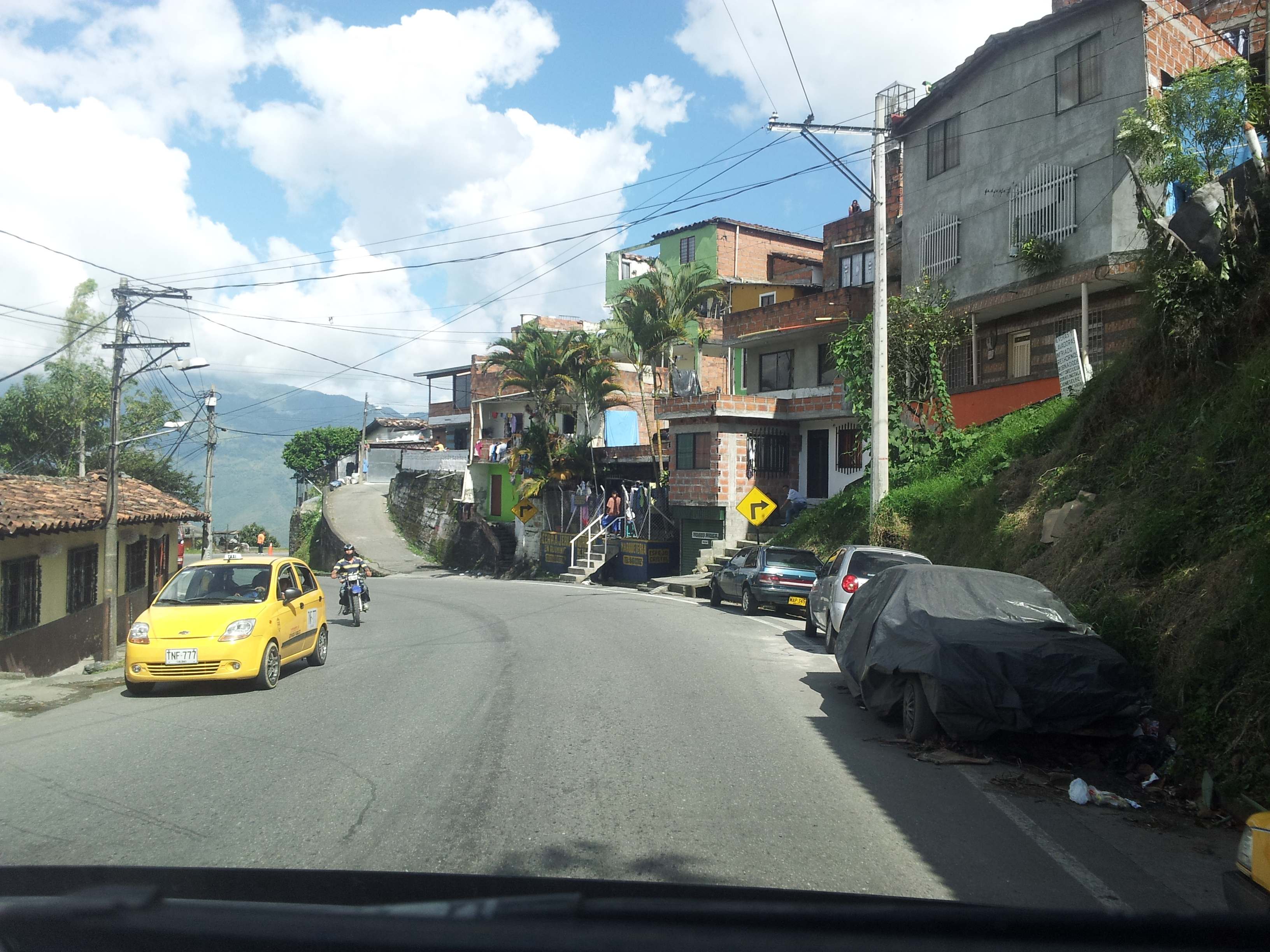
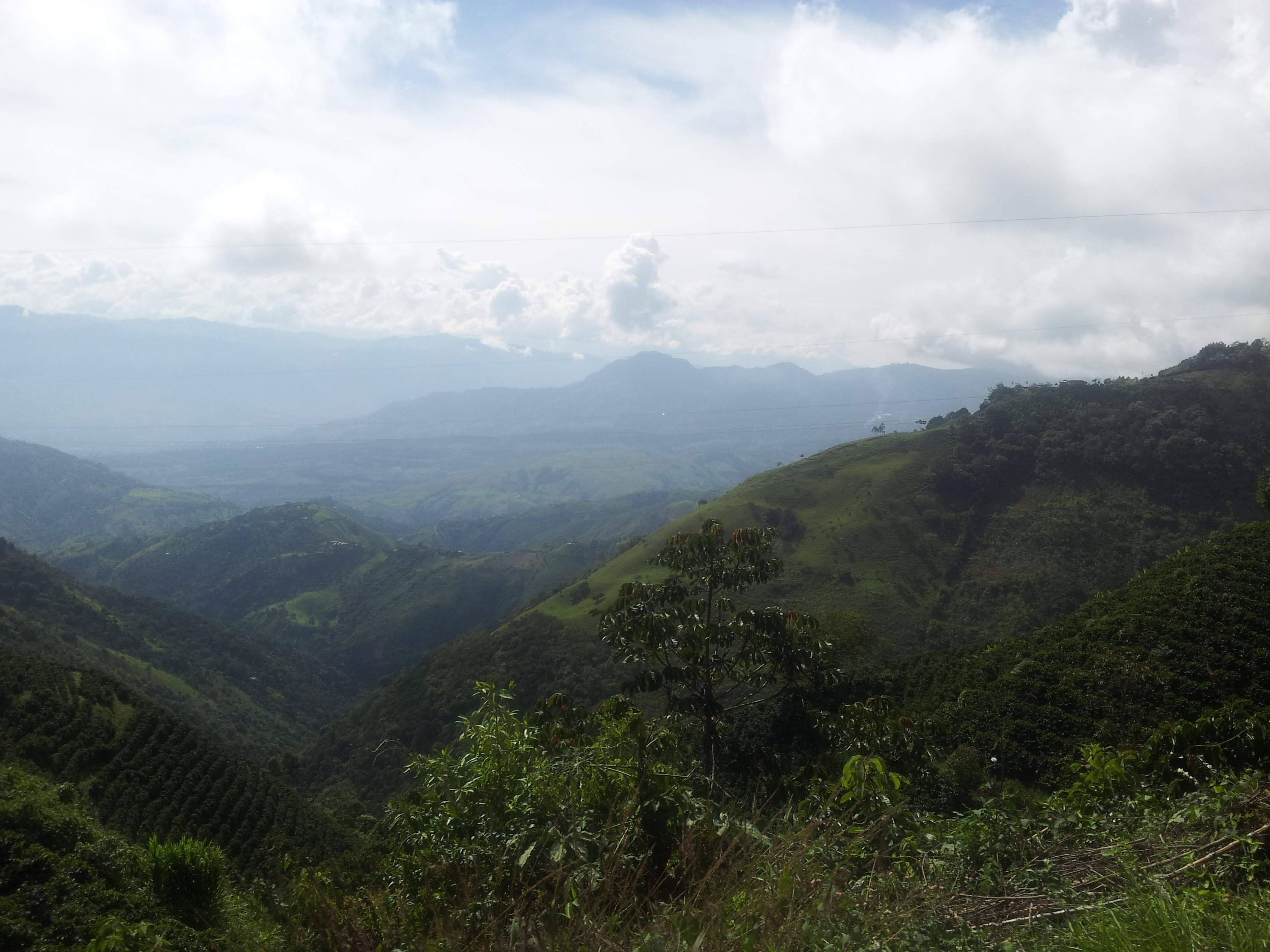
We drove through Medellin which was beautiful. Medellin is mostly red brick and it is nestled high in the mountains with no sprawl so you sort of meander down a two lane highway from the mountains right into Medellin. Here are some things we learned about Medellin: it has one of the most efficient public transportation systems in the world which includes trams up the steep mountainsides and it has art everywhere and is very beautiful. Medellin has a law that says that all public buildings must have art so there are statues and gardens and fountains and mosaics everywhere and many light up at night. Along the river which runs through the city is a park completely lit up the entire length at night with colorful decorative lights. All along the trip, people kept asking us if we were from Medellin and once we got there, we knew why. Most people in Medellin are much lighter skinned than coastal people and tourists are so rare everyone assumed we were from Medellin.
We headed into a small town on the advice of a Colombian / Irish gas station attendant and camped at a Esso station next to a hotel. It was quite the exciting moment when we arrived and we soon had a crowd of about 20 people outside hanging around. We were too far from the town to walk and we were pretty tired that night so we stayed around our neighborhood. Our neighborhood turned out to be filled with prostitutes and hotels you could rent by the hour, hotels called things like the Love Karma Sutra and Cupid Love Shack with gigantic nativities set up outside. Apparently this is part of the truck driving industry.
We camped in Popayon in a parquedearo listed in Americas Overland and disconnected the camper and drove into Popayon. The van and camper were secure but the parquedearo was filthy and smelled really bad. Oil and gas had been spilled or dumped all over it and it was pretty toxic smelling. The section of town was kind of rowdy and from the camper we could here plenty of fights and screaming and even a few gunshots. The security guards at the parquedearo were constantly walking the gate and the evening was not tranquillo. Once it got dark, there was some kind of massive trash fire that filled the entire valley with smoke that made your eyes sting. This lasted all night. We shut all the windows – luckily it was not very hot.
Popayon – Pasto
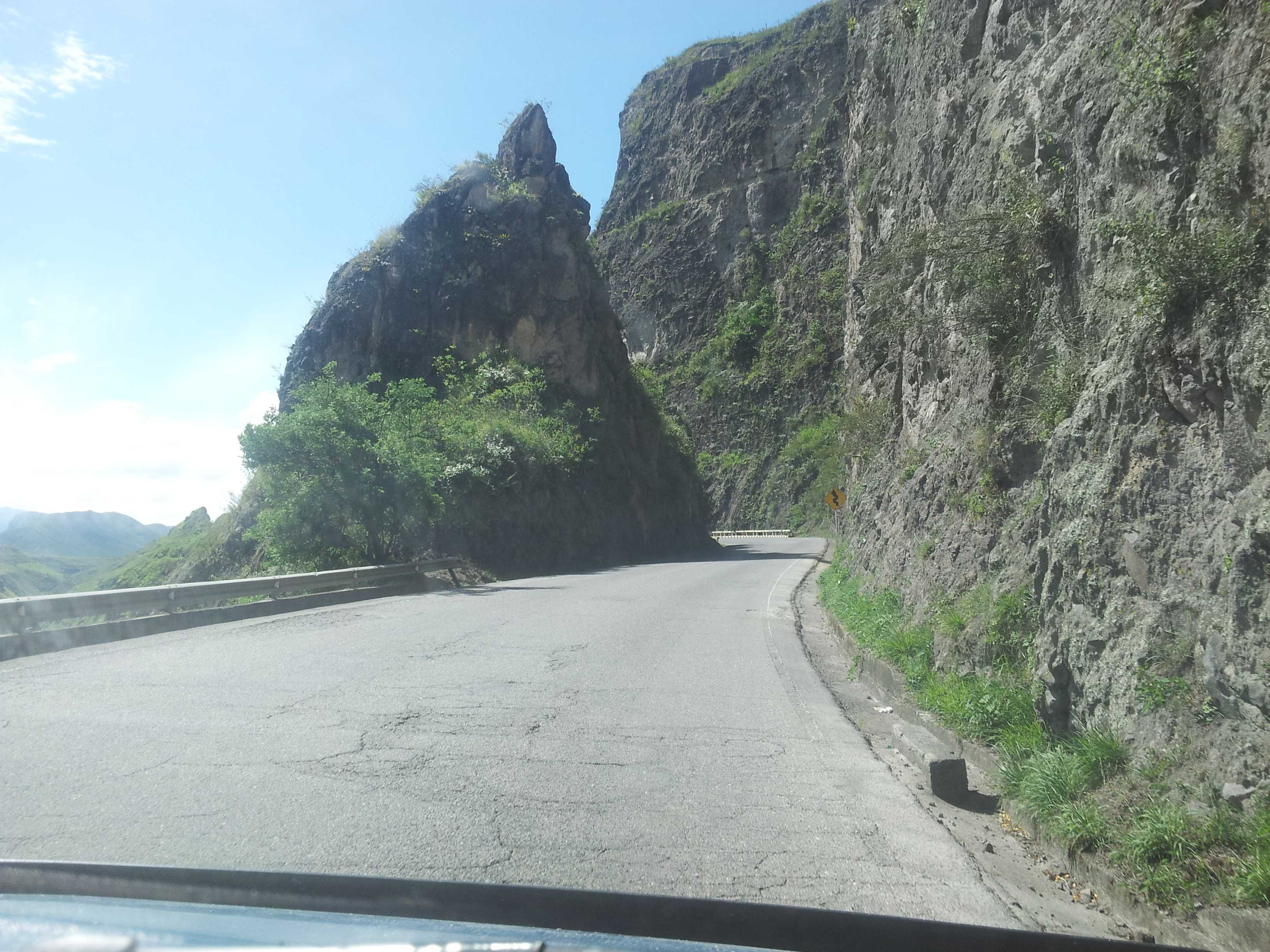
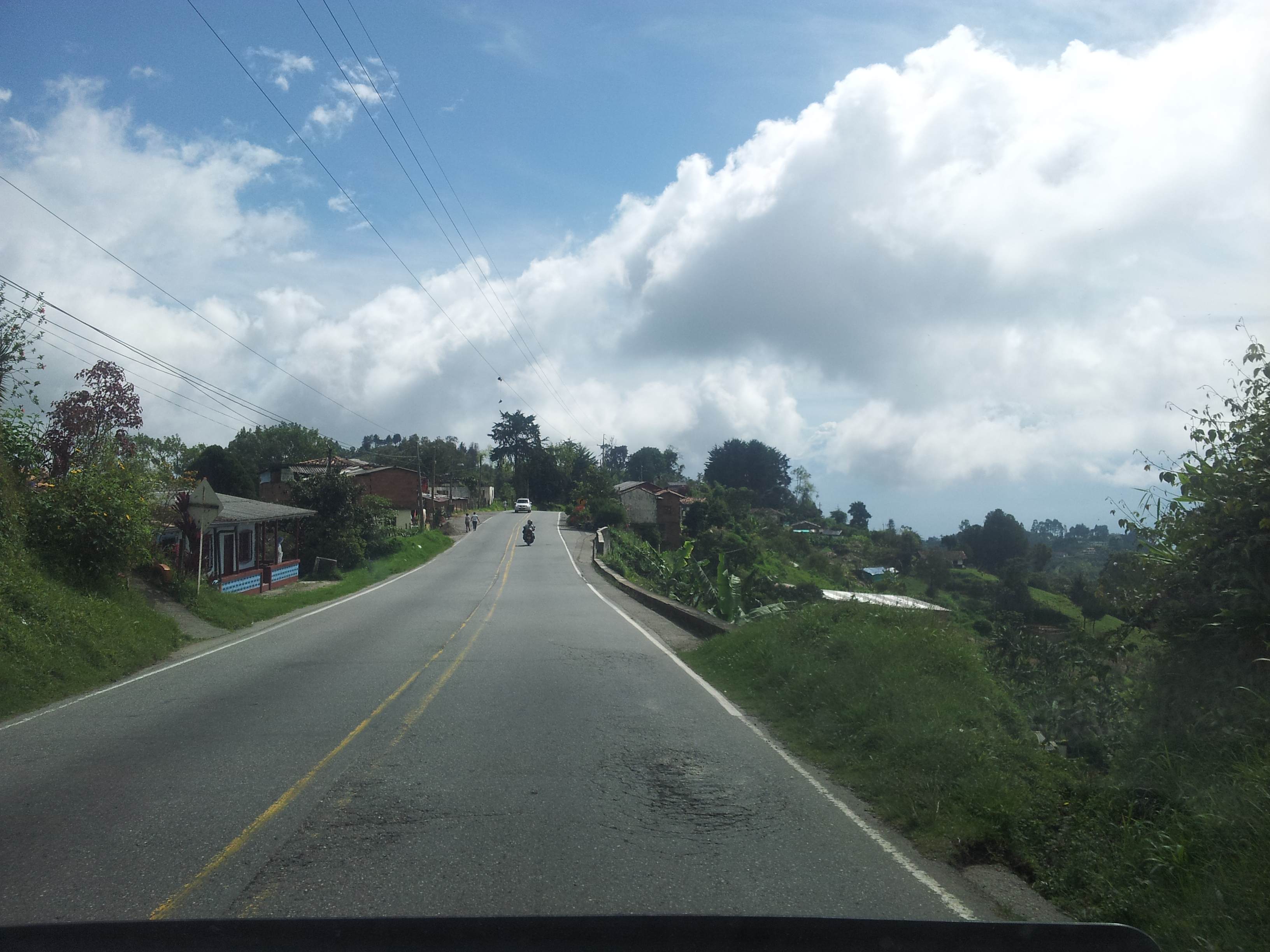
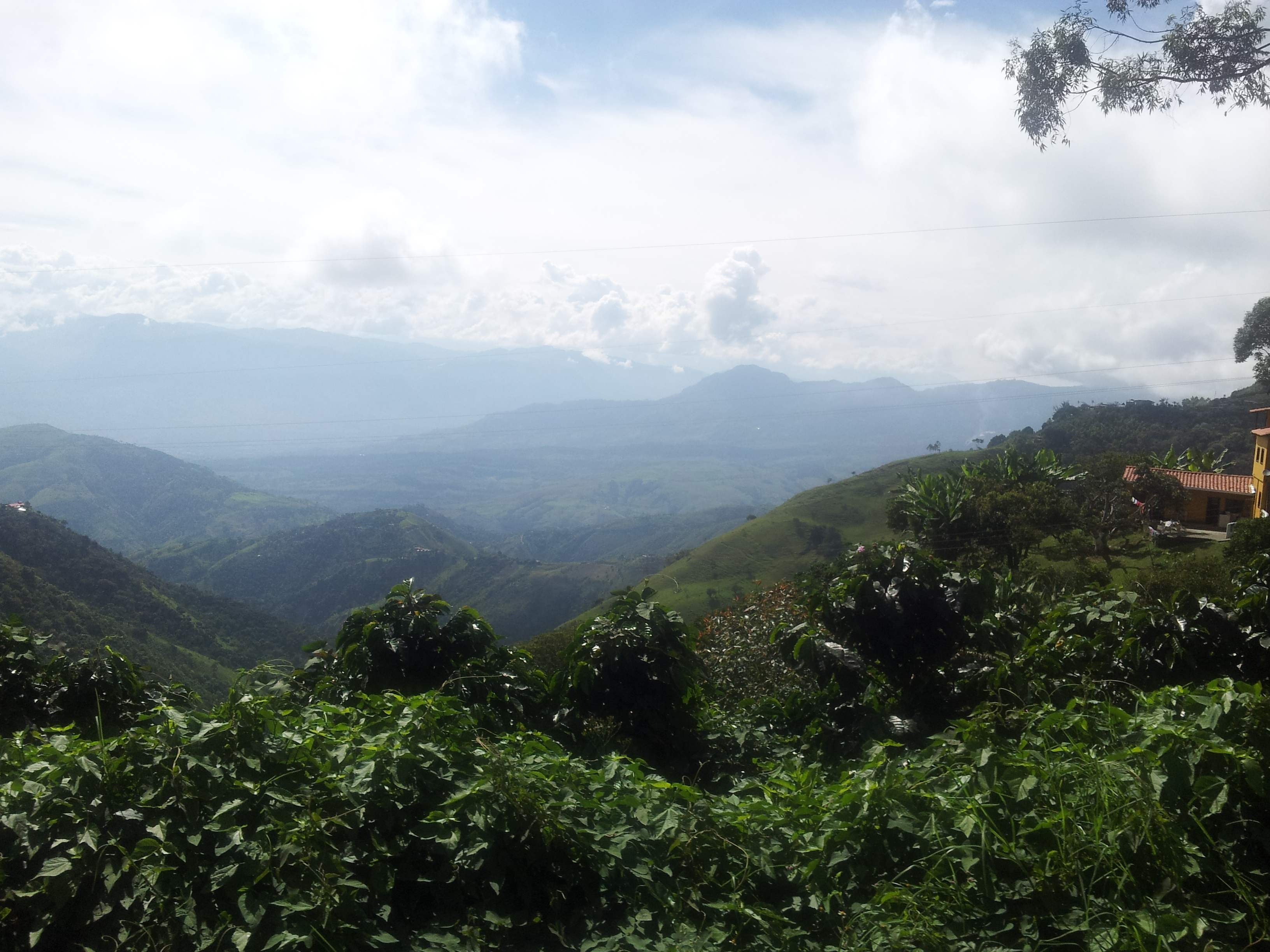
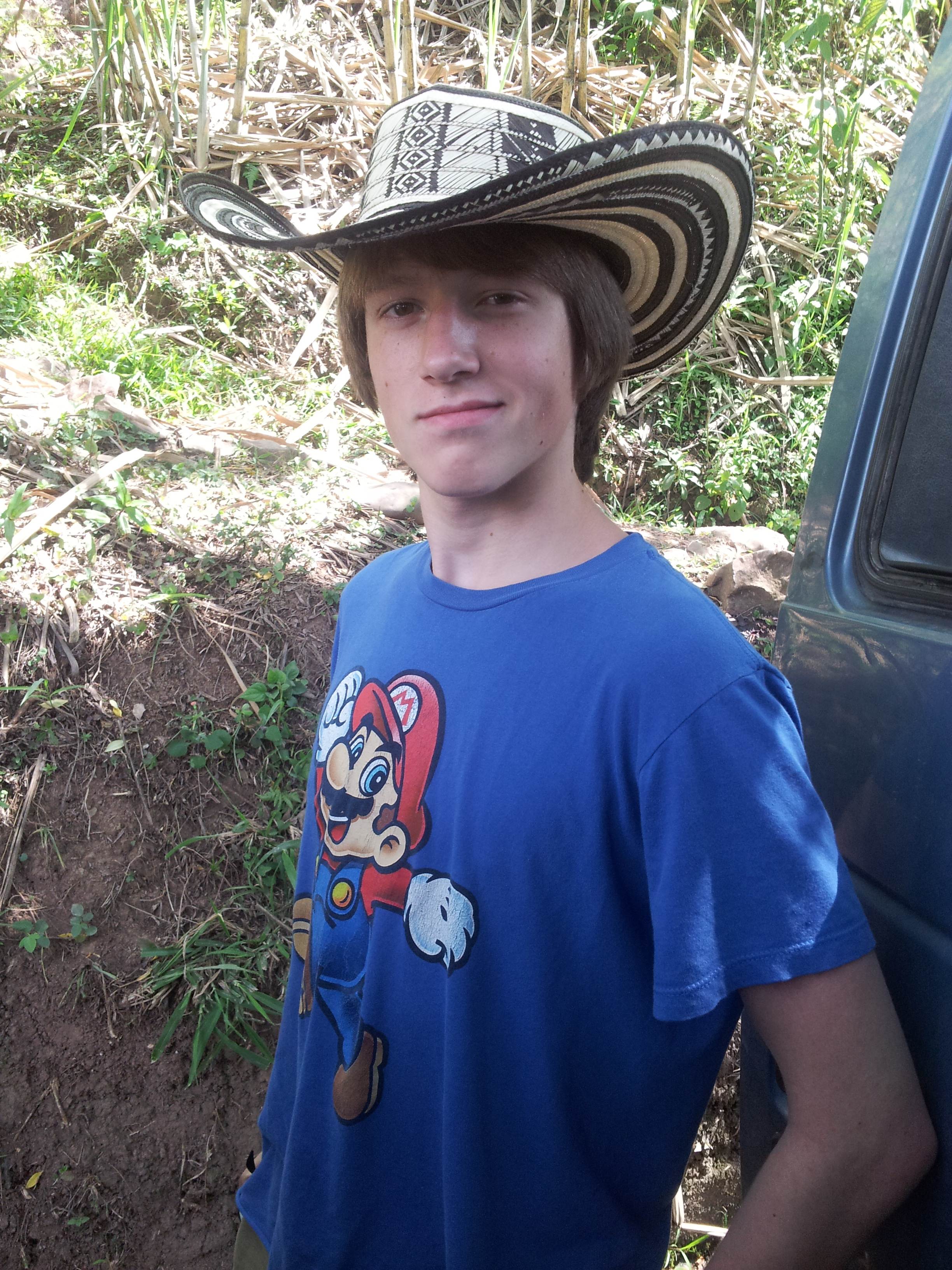
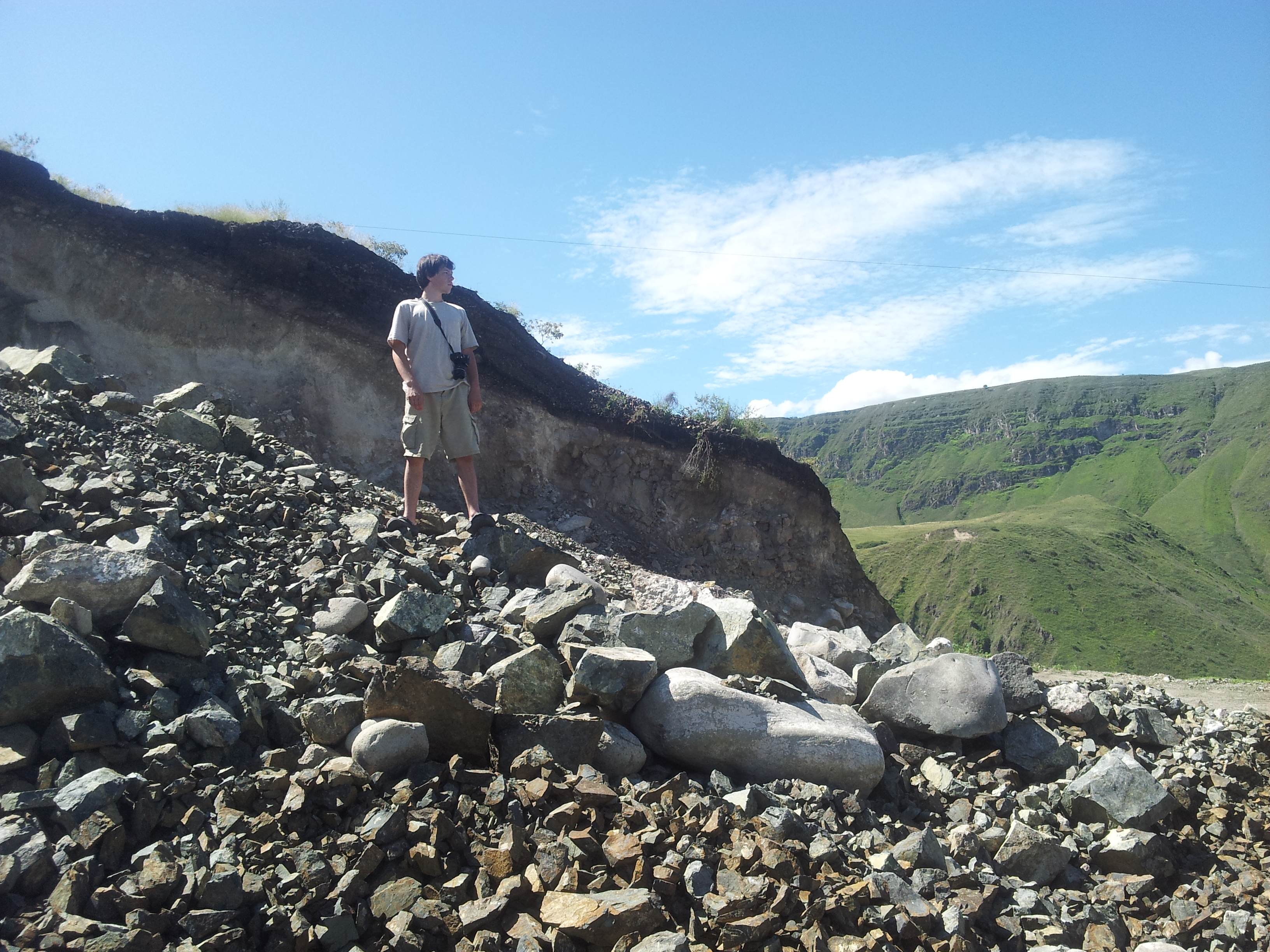
We camped at a very nice Texaco station that was quiet and about a 5 minute walk to town. The Texaco had free showers and water and a stunning view across the valley.
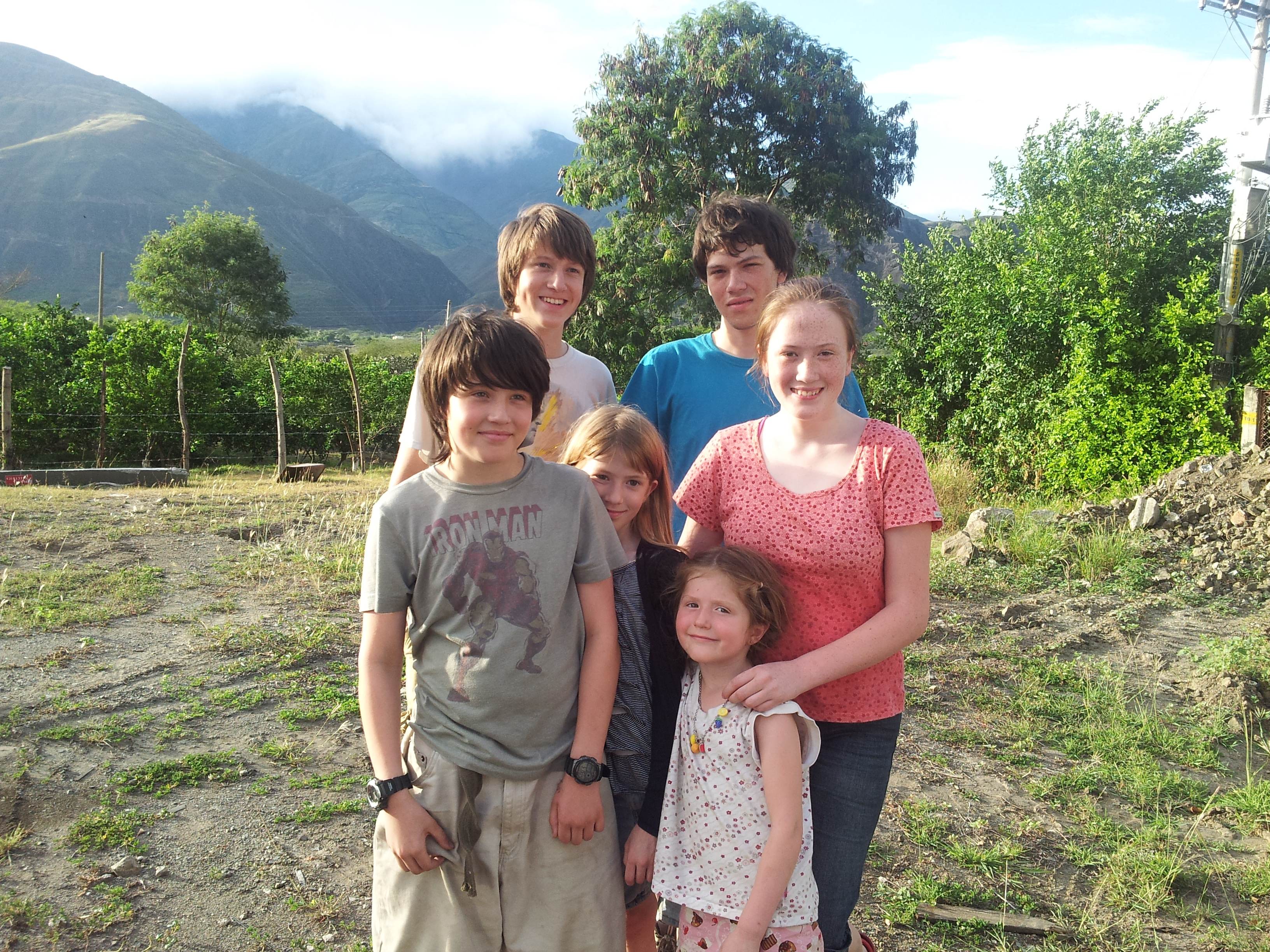
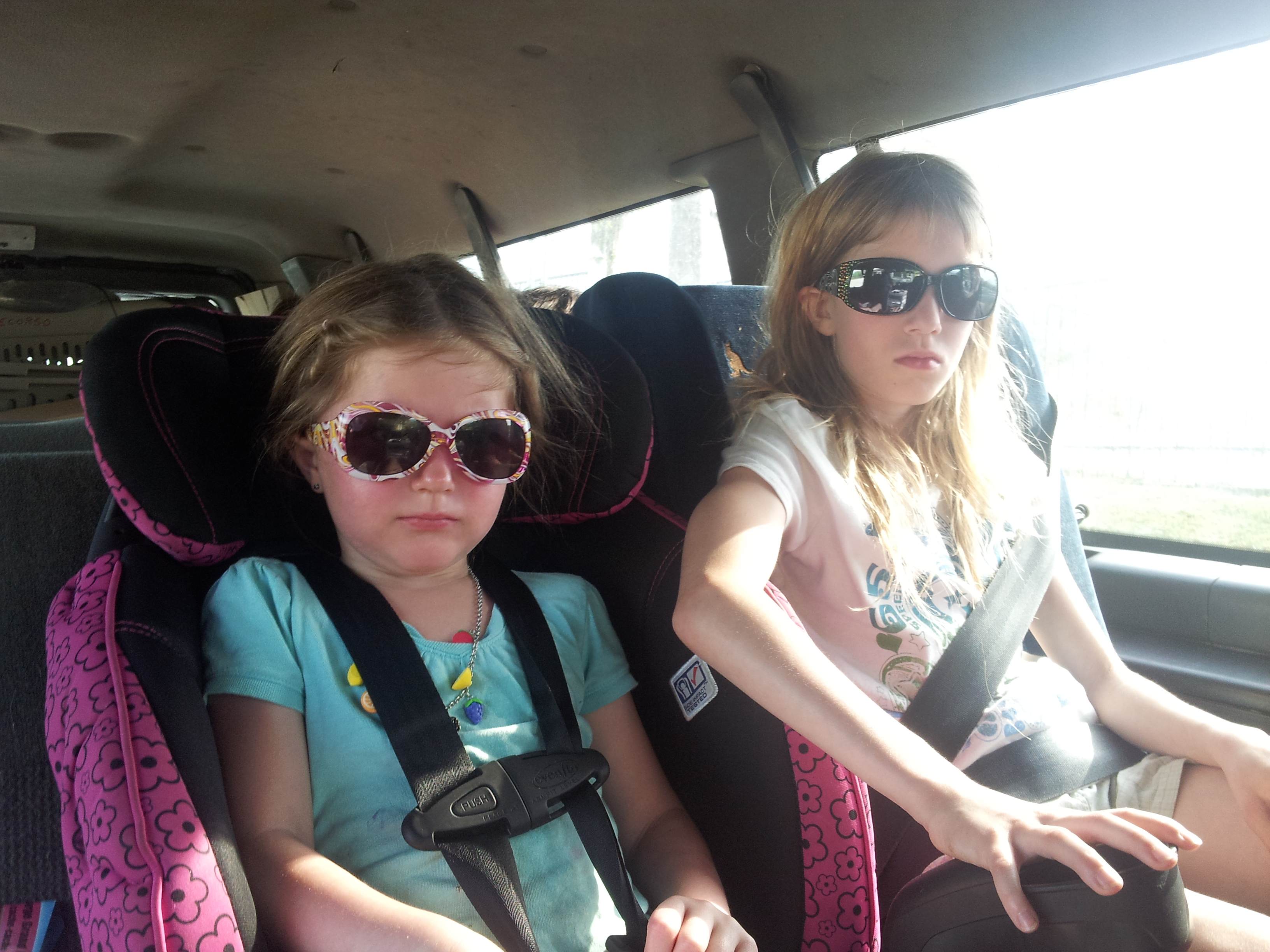
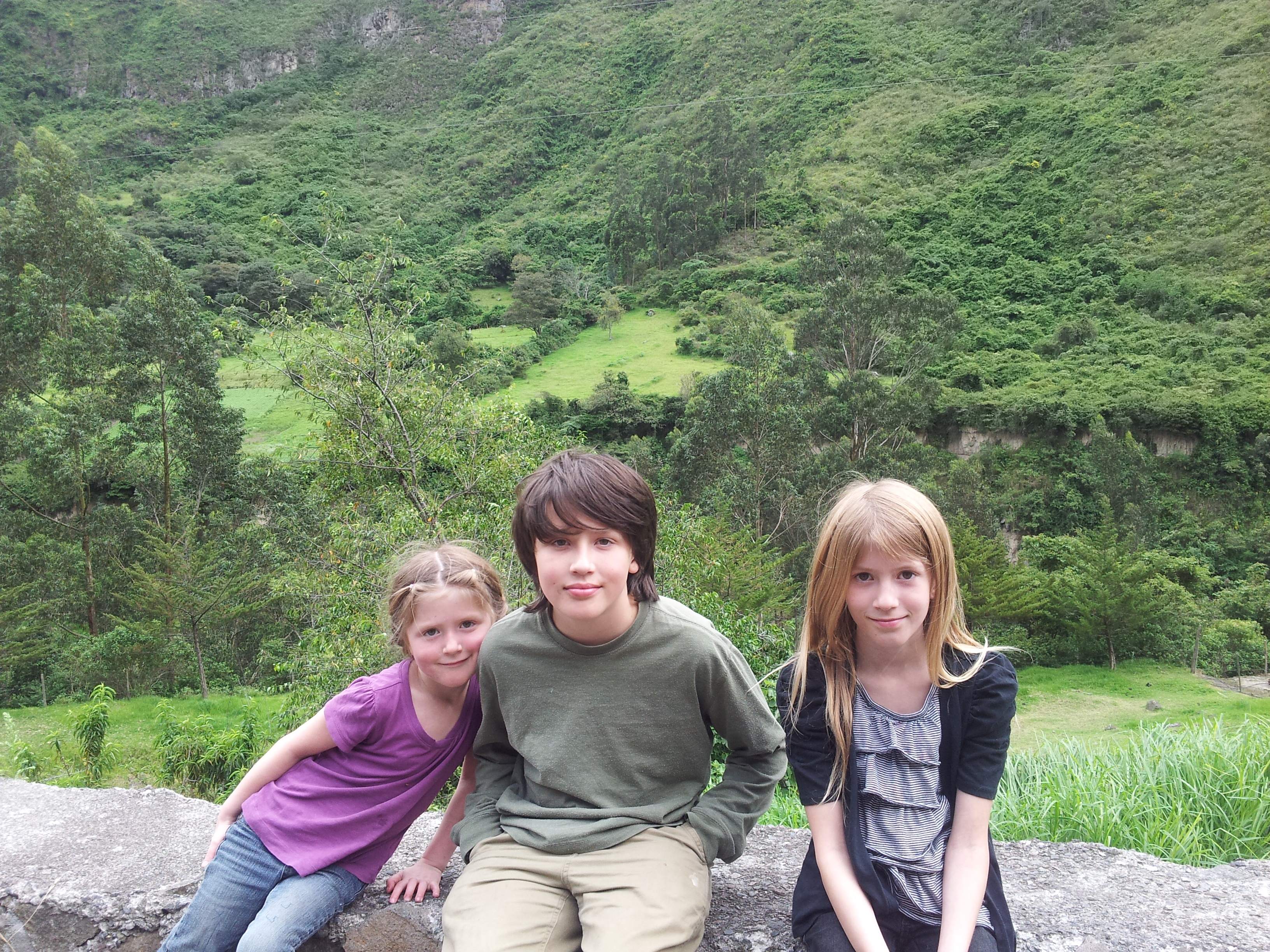
Pasto – Border of Ecuador
Pasto was a very nice city. It reminded us of Vancouver, BC.
In a perfect example of the lack of signs, the Pan American drives right through the center of Pasto and then turns right. The upcoming right turn is marked but when you get to the point of turning right, there are actually two right turns; one heads west and one heads more southwest. We took the wrong one. The GPS completely failed us here. It had us floating about 10 feet off the road anyway.
There was no gasoline and lines were long at the stations that did have gas. Diesel was not a problem. The price of gas drops dramatically here, from over $8000 pesos a gallon (yes, a gallon) to $5600 a gallon.
We camped at a Bio station with a huge empty parquedearo and disconnected the camper and drove into the small towns.
Ipiales is the Colombian border town. Driving through it was confusing and the streets were narrow and crowded. The border was easy, we had our passports stamped and we were on our way to Ecuador. It is funny how a few feet can make such a great difference. The Ecuador side of the border was much dirtier, buildings covered with graffiti and litter all over the place. We had to wait about an hour to get our passports stamped. Someone had thrown up on the floor and it was covered up with pieces of paper. The good part was that it was a little meet up of fellow travelers so we had some fun conversations with a man on a motorcycle from Scotland and another couple on motorcycles from Australia. The Ecuadorian border town is Tulcan and it was more narrow than Ipiales. Lucky we got behind a bus and just followed it out of town.
Ecuador
We were sad at first with Ecuador. It was dirty and covered with graffiti and litter and the people were not so nice. On the other hand, we were not such a freak show and no one seemed to care. It was New Years day and there were drunk people men everywhere, sleeping on the sidewalk and lying in the grass and stumbling around. Everything was closed. We drove up and up and up and up to more than 10,000’ and then down to 2,000’ and then we did it once more. It was kind of stressful. The roads are much better but there are many more drivers and cars in Ecuador due to the fact that gas is $1 USD a gallon. Ecuador uses the USD and we learned where all the $2 bills and Susan B. Anthony coins are – Ecuador. We were headed to Otavalo and Americas Overland said there were two conveniently located parqueaderos near the market but we never know what that means. We hired a taxi for $2 to lead us to one and we arrived at a huge parqueadero right next to the market with bathrooms and a nice level cement pad we got to park on.
Otavalo
Otavalo has one of the biggest (or perhaps the biggest) market of indigenous crafts in South America.
The manager of the parquedearo dug a grave for us next to a wall covered with flowers. Ryan walked to the market and bought a beautiful alpaca blanket to wrap him in. We left a candle burning there for him and brought back flowers.
Many people came by to tell us how sorry they were. A woman took Ryan to her house and tried to give him a puppy and another woman tried to give Ryan a baby guinea pig.
We had gone to the market to get vegetables for dinner. The dogs liked to bark at other dogs but never seemed capable of getting out the camper window. It was the fire escape window and it can be opened from inside if you press down on the handle and twist it. We leave the dogs in the camper with some music and the windows shut (we are high in the Andes so it is cool here) so they are completely secure. Somehow, they managed to twist the handle and then break it and push the window out, breaking the screen. It was unexpected and so, so sad. Louie never once ran away like that and the first time he did, he got hit by a car.
It was a very, very sad day.
Trek is also taking it quite hard. No doubt it was Trek who had the weight and the urge to jump out the window; Louie only followed. He sat with Louie until we got there and he is not the same. He is quiet and looks for Louie all the time. Louie used to sleep under the bed and Trek keeps going there searching for Louie.
We have all taken this very hard. We had Louie with us on our last trip and Sylvie and Annie were born after we got Louie so he has always been an integral part of our family. We spent a lot of time, effort and money to bring him here with us because we all loved him so much.
]]>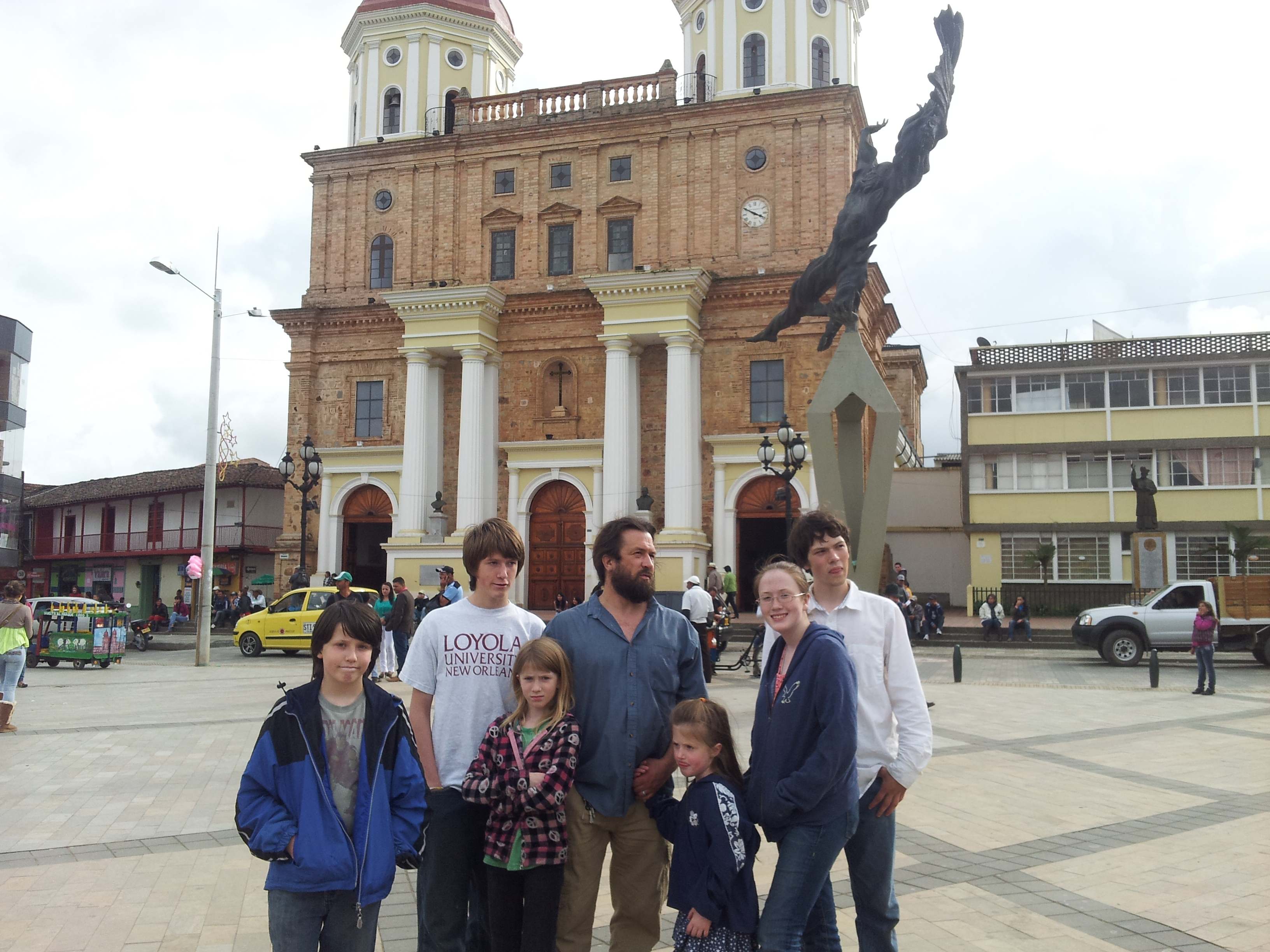
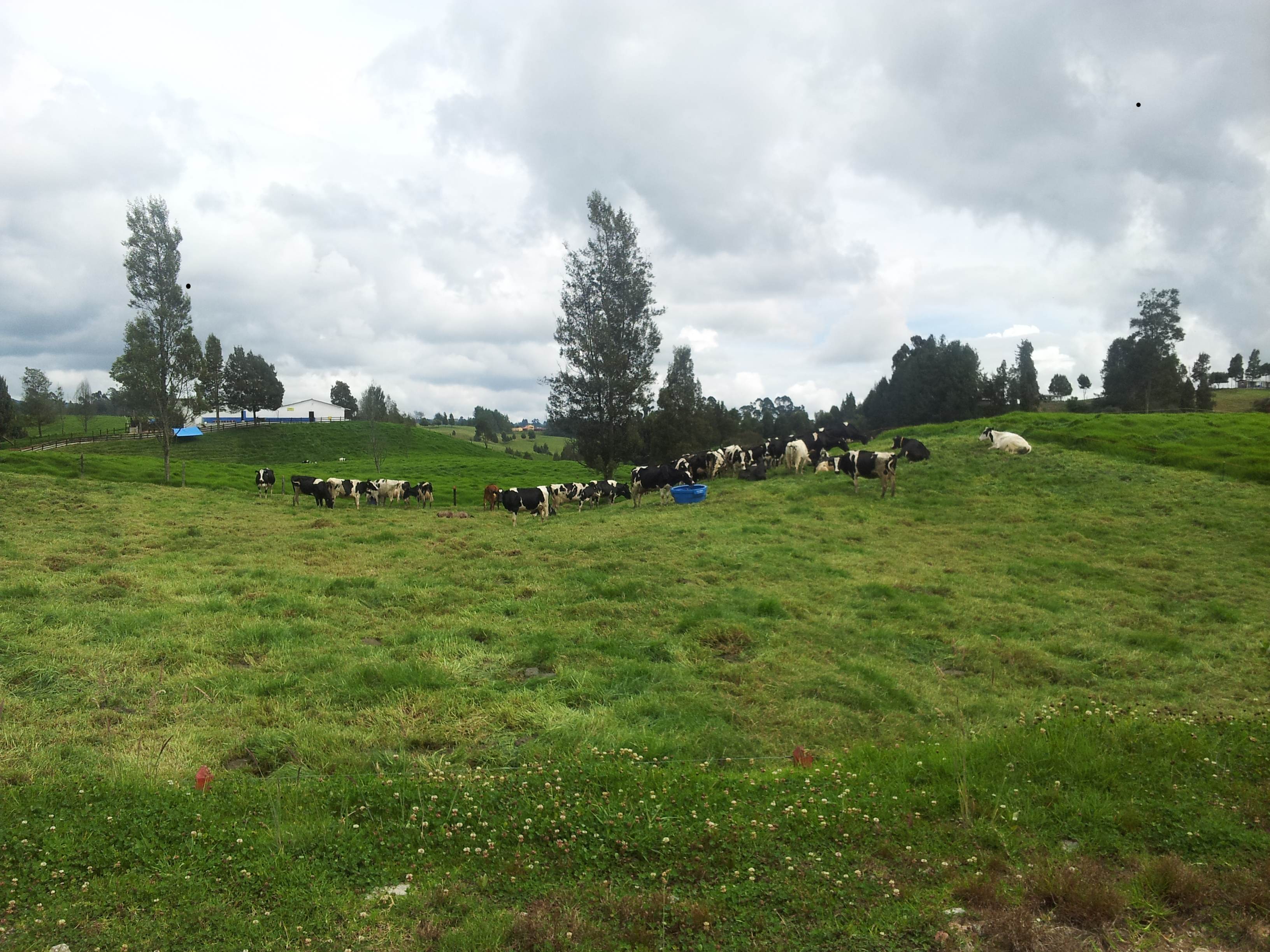
We decided to spend Christmas in Santa Rosa de Osos, a mountain town at 8,300 ft about 2 hours north of Medellin. We camped at a parquedearo that was beautiful and convenient, being next to a cow field and behind a cheese maker / bakery, near a 24 hour travel center and a 5 minute walk (all up hill) to the town square. Santa Rosa is surrounded by coffee fincas. We climbed steps up five blocks to the town square, a little bit like Minas Tirith.
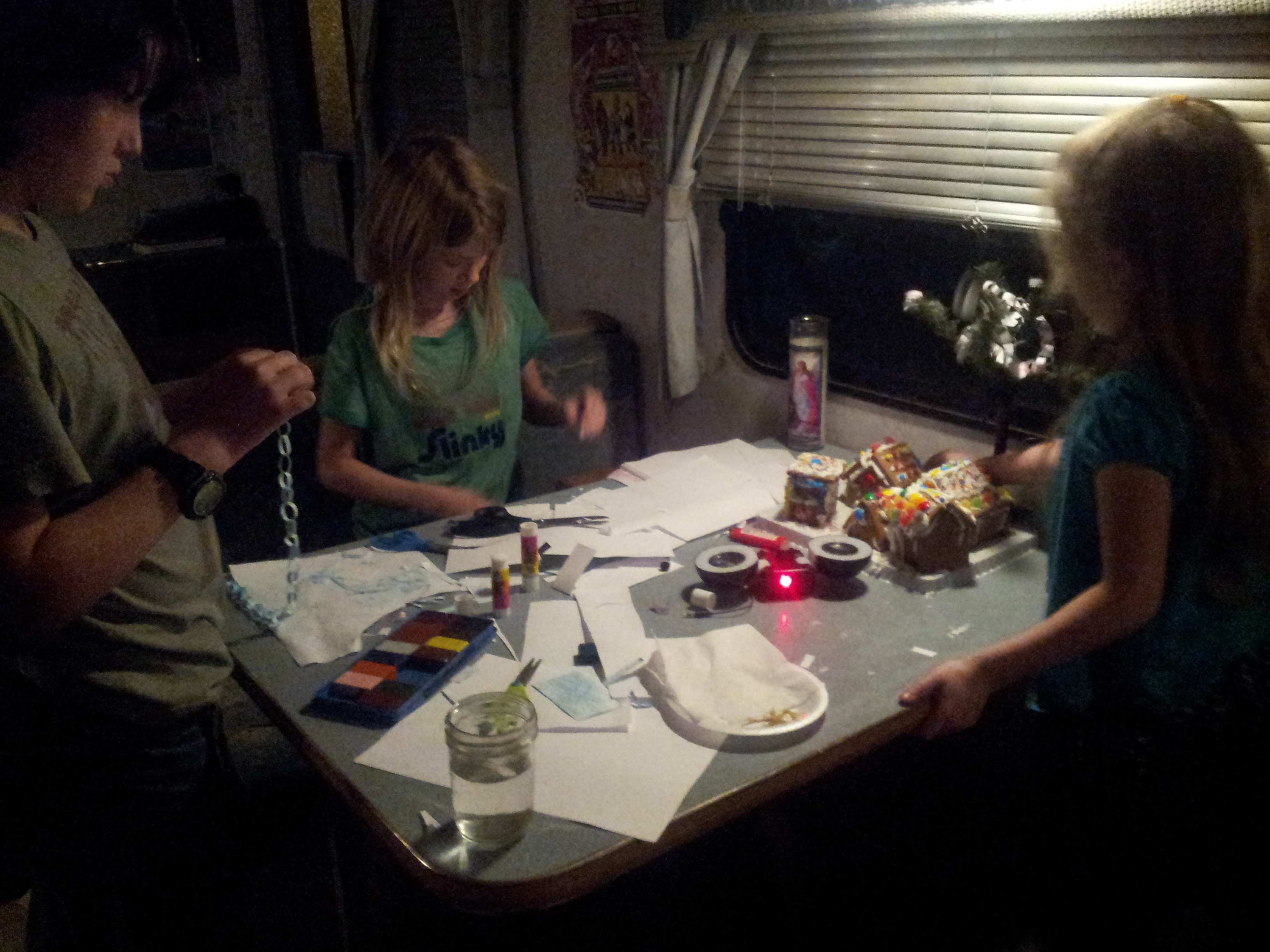
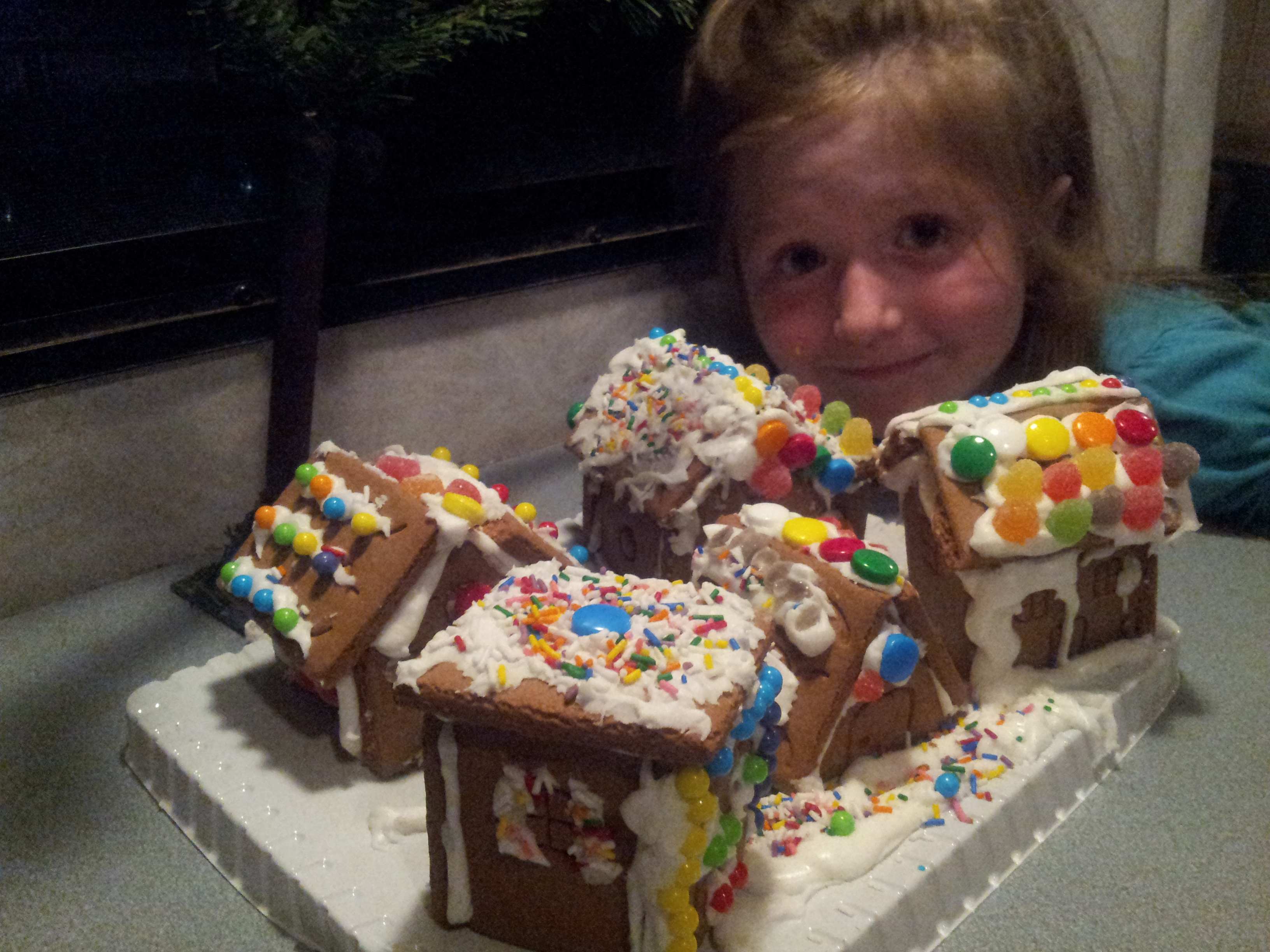
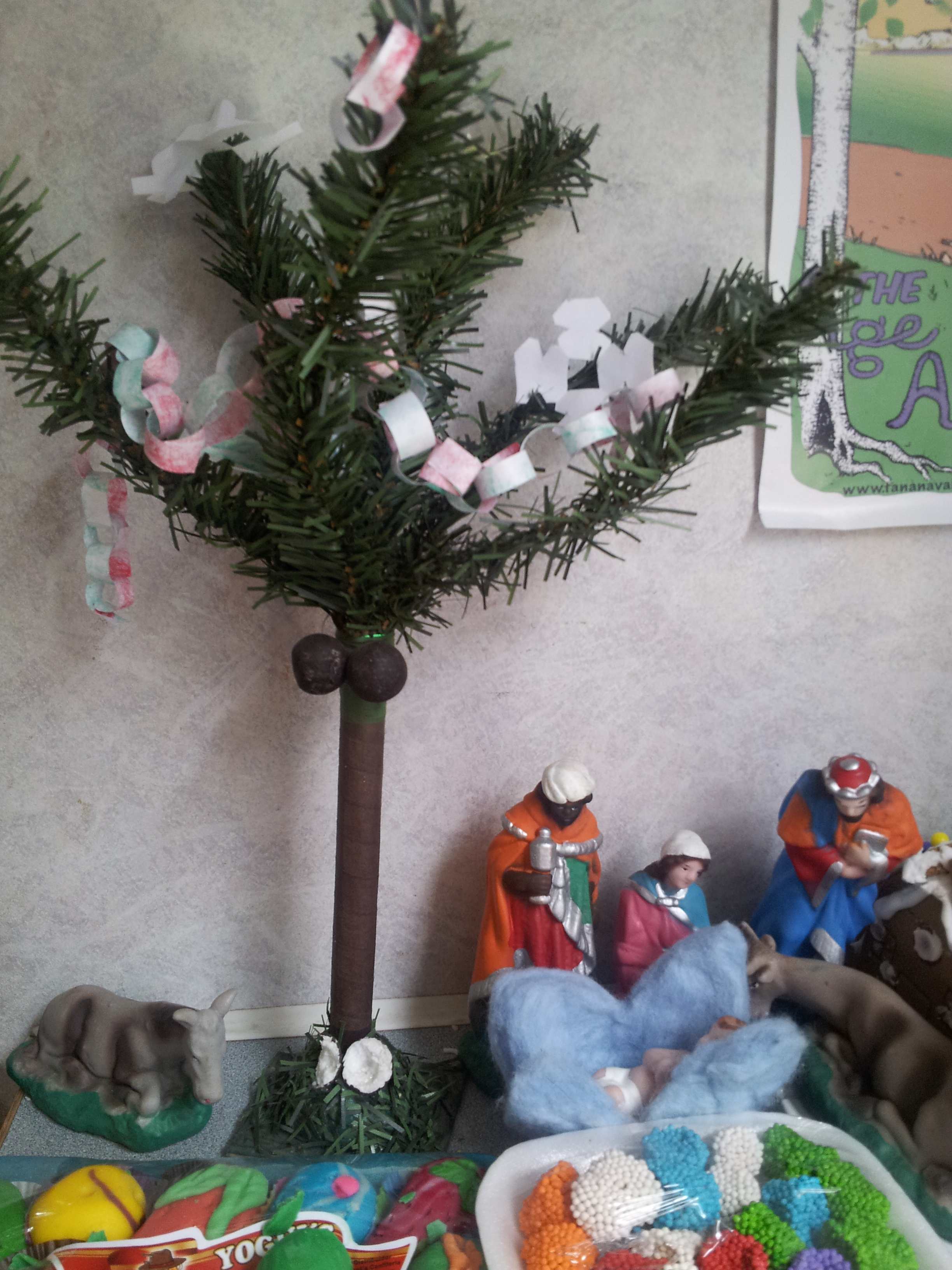
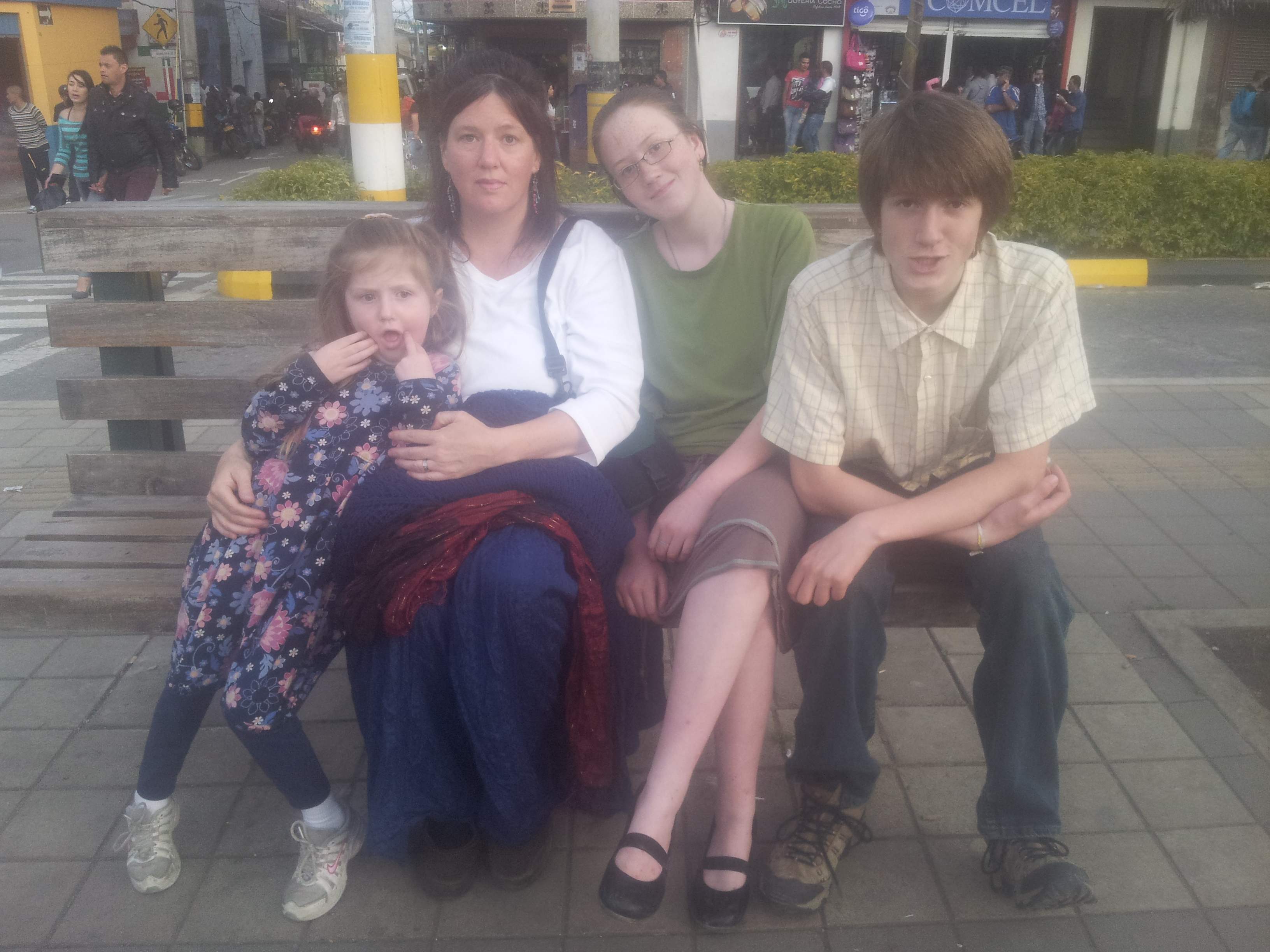
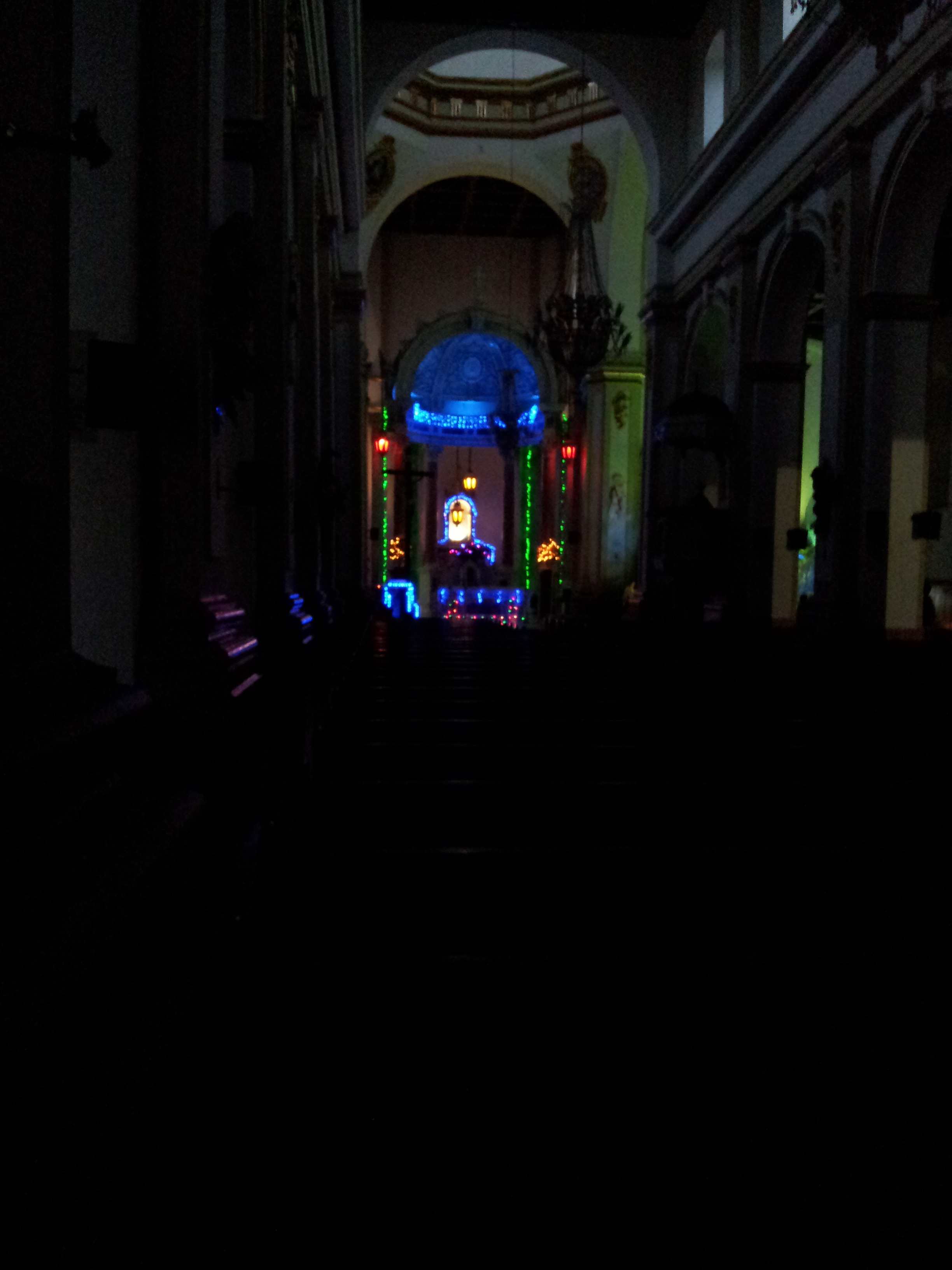
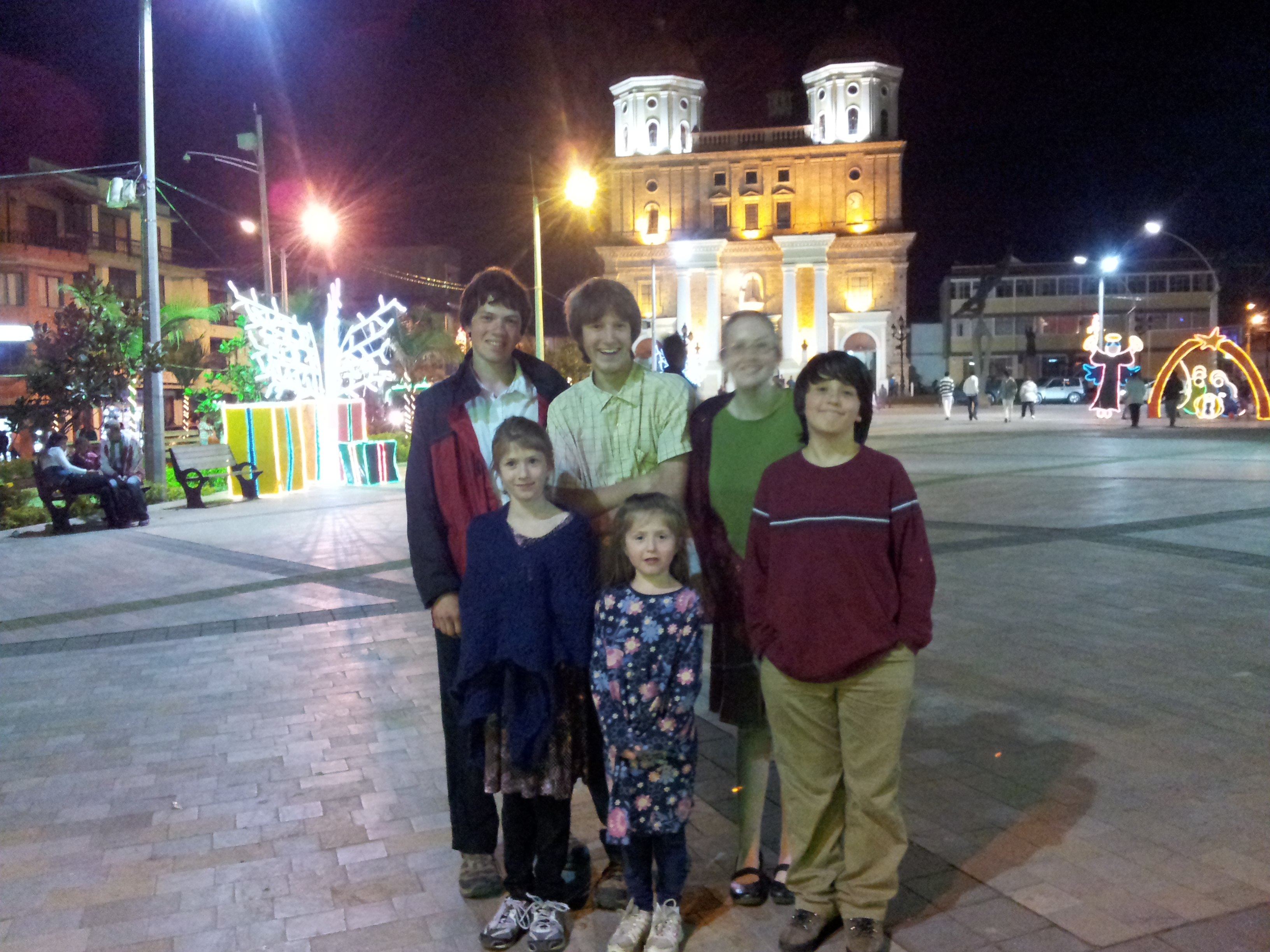
We had carted a gingerbread village kit from Texas to Florida and then carried it on the plane to Cartagena where it survived a week in a hotel room and then made it back to the camper. We built the gingerbread village and then made paper decorations. We found a perfect tree, a 12″ palm tree with fake coconuts glued to it. Sylvie, Annie and Max (and sometimes Jen) made teeny paperchains and snowflakes. We bought a fresh chicken and 3 kilos of potatoes for Christmas dinner. On Christmas Eve, we headed to the big Cathedral for Christmas Eve mass at 6:30. Mass was empty, surprisingly few people attended but the church was beautiful. The town of Santa Rosa did not seem to be much in the Christmas spirit. On the way home, the square was crowded but it was the same as it ever was with salsa music and people just hanging around.
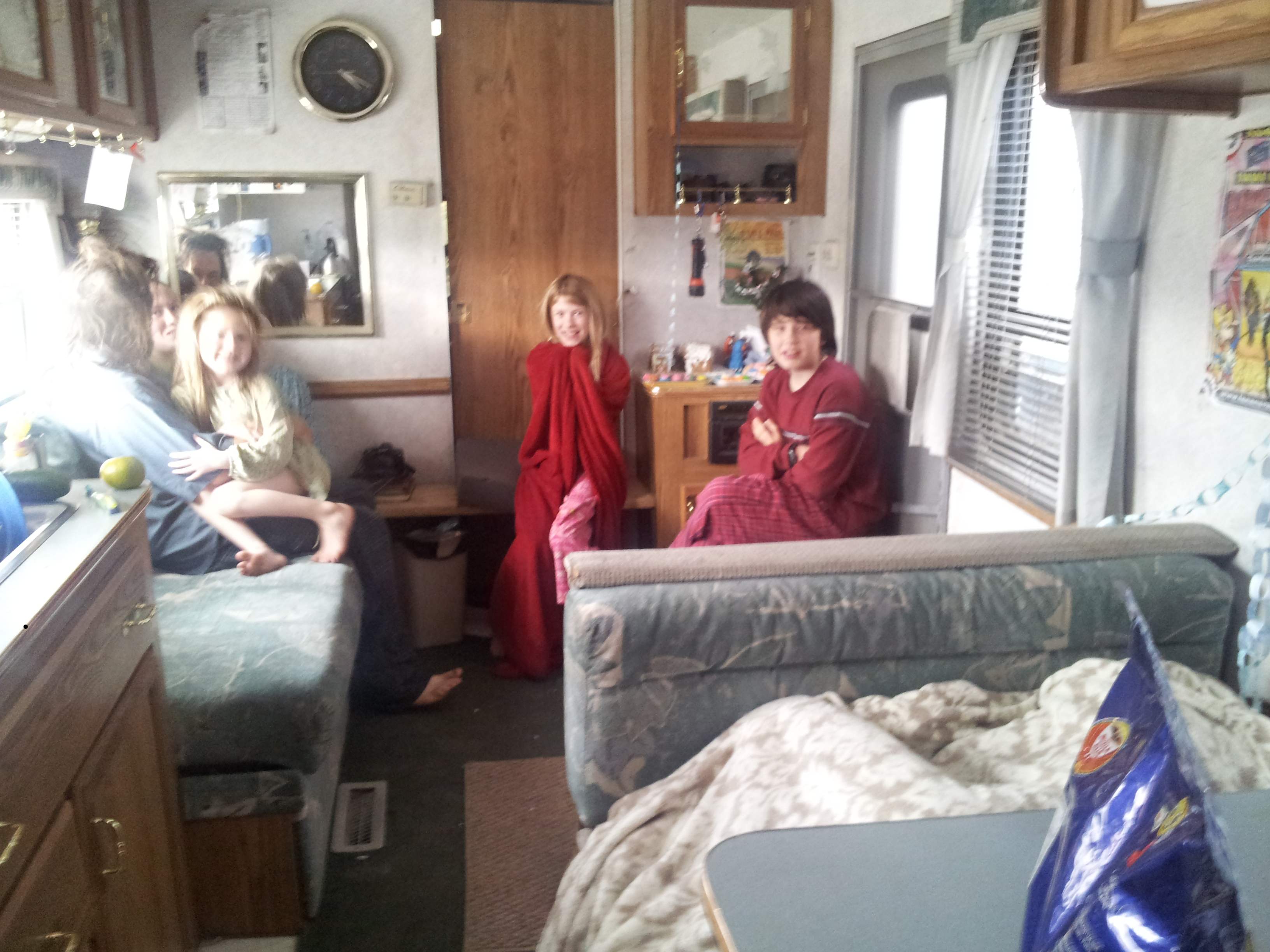
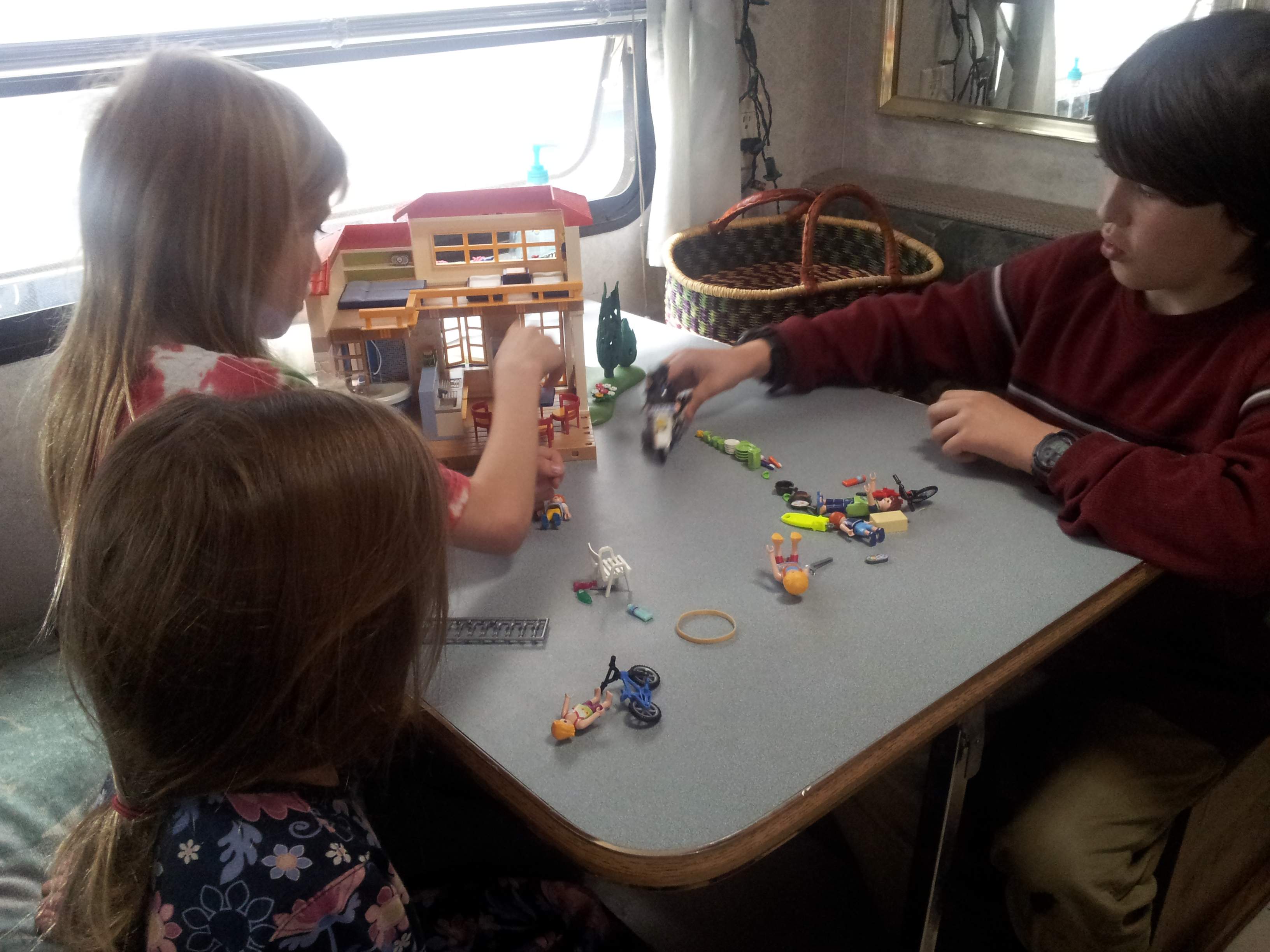
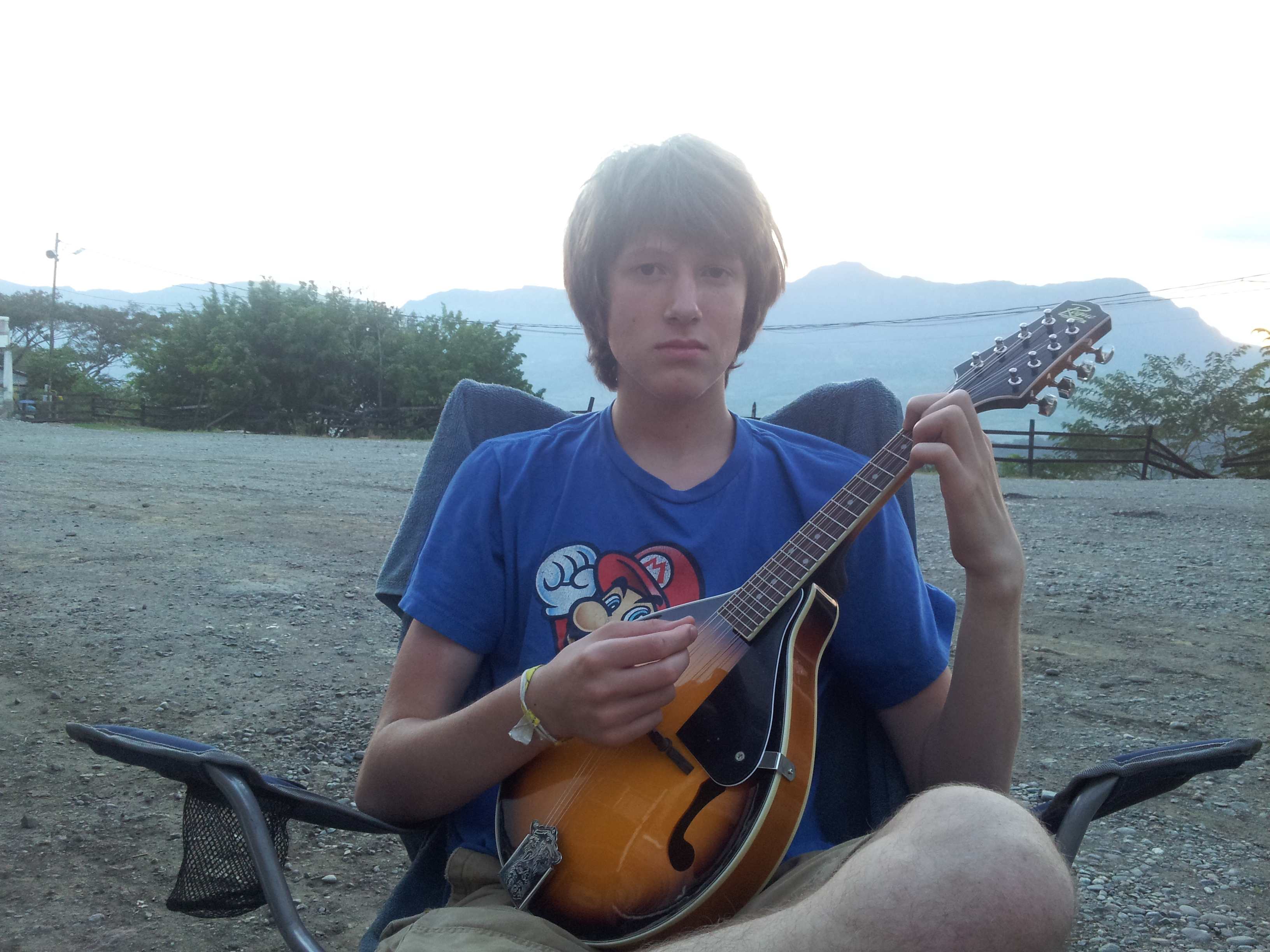
Santa brought a Playmobil house, a Holiday Barbie, a Desinger Barbie, a camera lens, a watch that tells you altitude, temp and barometric pressure, a pedometer and a mandolin. Jack was sick on Christmas morning (that is him wrapped in the blanket) but he was better by the afternoon.
]]>
We left the twisting, sweltering streets of Cartagena and went on. All was going okay, despite the fact it was hot in the cart. Around twilight, a cop pulled us over and said we couldn’t drive anymore due to our broken wind shield. Luckily, Mom whipped out the faux-tears and we were able to get away. We camped at a lot and started to make dinner. It was then that dozens of children started to hover around. We invited them in, and we hung out for a bit before they left so we could eat dinner. Whilst we ate they set up chairs around the trailer and we had a party.
Jack and I were hanging out with a girl named Wendy and she asked for Jack’s phone number. Jack thought she was talking about llamas. “Llamas? Llamas? Where?” He started saying stupidly, whilst glancing around as if expecting llamas to pop out from behind a chair.
Wendy gave me a ring and a pair of earrings, both of which were very pretty. Thank you!
We ate breakfast with them the next day, which consisted of bollas, bacon, cheese and guacamole all of which were delicious.
We wished them goodbye and headed out, passing little villages and the like.
That night, we camped in a lot and played Frisbee with Trek for a while. The next morning Mother allowed us to get snackies from the gas station. I got a Colombia chocolate bar, but Mother dearest didn’t let me eat it <exactly when I demanded that I eat it* mom edit>. Blasphemy!
We started up the mountain. There dangerous, snakelike roads that ran along a steep cliff face. The only protection between us and death was a barbed wire fence. There were only about two feet between the cliff and the fence, and I saw a cow that had somehow defied death and was perched precariously on the tiny strip of ground.
The view was amazing, a mix of mottled greens with a few dashes of yellow. Sometimes you could see a river at the bottom as we drove higher and higher into the mountains.
And then… The car stopped moving.
We were going up a hill and it just wouldn’t move
Dad was able to back up and get to semi flat ground and started doing car stuff and we were moving again.
It was much, much cooler here than in hellish Cartagena, thank God.
We camped in a truck stop, and I was actually cold that night. Father got Mom a thingy that was filled with chicken and potato. It was really good.
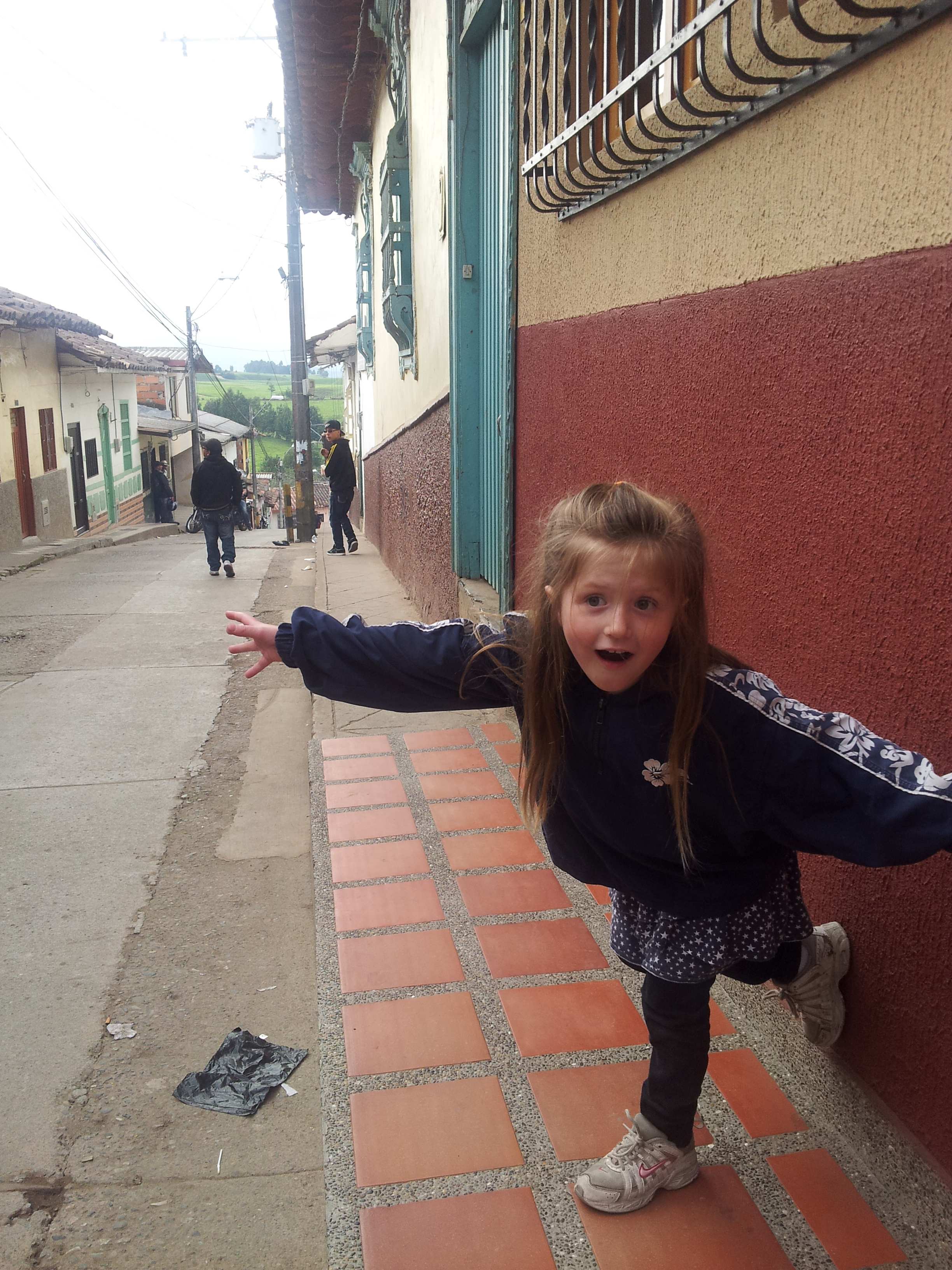
The next day, we chilled for a while then walked into Santa Rosa, which was the town we were in. It was really pretty. We walked into beautiful church, and it looked like it had blood in the doorway. Dad, Annabelle, Max and I went shopping whilst Mom and the rest of the fam went somewhere else. We got a few Christmas presents, then switched up. Once we were all back together, we went to this little food cart that sold potatoes, and they were delicious.
We got a seven inch tall palm tree for our Christmas tree, then stopped briefly at an ATM and a market. Finally, we got home around six. Mother made black beans and rice for dinner, then retired for the night.
Merry Christmas!
Jennah
The trailer was in this dirt lot surrounded by semi trucks and broken glass. Someone stole the license plate off of the trailer while it was stationary. After a few minutes of doing something (I forget exactly what we were doing) we were off and heading out of Cartagena.
It took longer than I would have liked to leave the city; in retrospect Cartagena was kind of horrible and nasty. A few wrong turns were made but we eventually we got out onto the country side. The day was starting to turn into the night by the time we got to this one town where a police officer stopped us and almost took my father’s passport away because our windshield was cracked. After taking care of the cop, we pulled out of town and headed towards the next. All along our way we past plenty of military check point things and toll booths. It was now dark and we were pulling into yet another town. We took a few lefts and a few rights and then boom, we were stuck in the middle of the main road. A kind stranger helped us out of our trap and took us to an empty lot where we could rest for the night. This lot was framed by the Pan American highway on one side, and by a small bunch houses on the other. We were parked for about an hour and already a crowed of interested children had gathered right outside our door. Mother invited them in and then the crowd grew from fifteen kids to fifty four mixed aged peoples. We gathered outside and were fed fruits that grew in the area. I am most certainly not fluent in any other language other than English so communicating was difficult. I have loved llamas since the day I was born and when a girl said something about llamas to me, I sort of got really excited and happy, until I learned that ‘llama’ means phone and she really just wanted my phone number. Anywho. The night went well and we were invited to eat breakfast with them tomorrow. We woke up and headed out to meet up with our new friends. Someone took a toucan bird out of their house, you probably don’t know this about me but I have been drawn toucan birds for years so this was also really exciting for me.
The people who were feeding us had a really nice and big sound system. Our breakfast consisted of cheese, bacon, bollos, guacamole, and juice. It was then time for us to go, we went into our van and then headed off for new lands.
The new lands we headed towards were just as painfully hot as the lands before it. We took a wrong turn down a horrible road for a good thirty minutes until we realized what we did. Once back on the right road, we passed through a ton of small, colorful towns. The first five or so had about fifty booths selling hats and baskets, and then the other towns had mostly fruit stalls. That night we camped inside a parqueadero.
When we awoke we started to ascend up the mountains to a cooler, more enjoyable, temperature. The mountain drive was awesome. Houses were built on top of stilts that stuck into the sides of cliffs. The valleys were covered in fog, and the cliffs were covered in thick, green, pretty, jungle foliage. I spent most of the ride looking for monkeys out the window but sadly there weren’t any. Once we made it over the top of the one mountain we were on, we came to a small town which we then drove through. We descended until dark and stopped in Santa Rosa for the night and Santa Rosa is where I am writing this from. I think I’ll go now. Merry Christmas.
]]>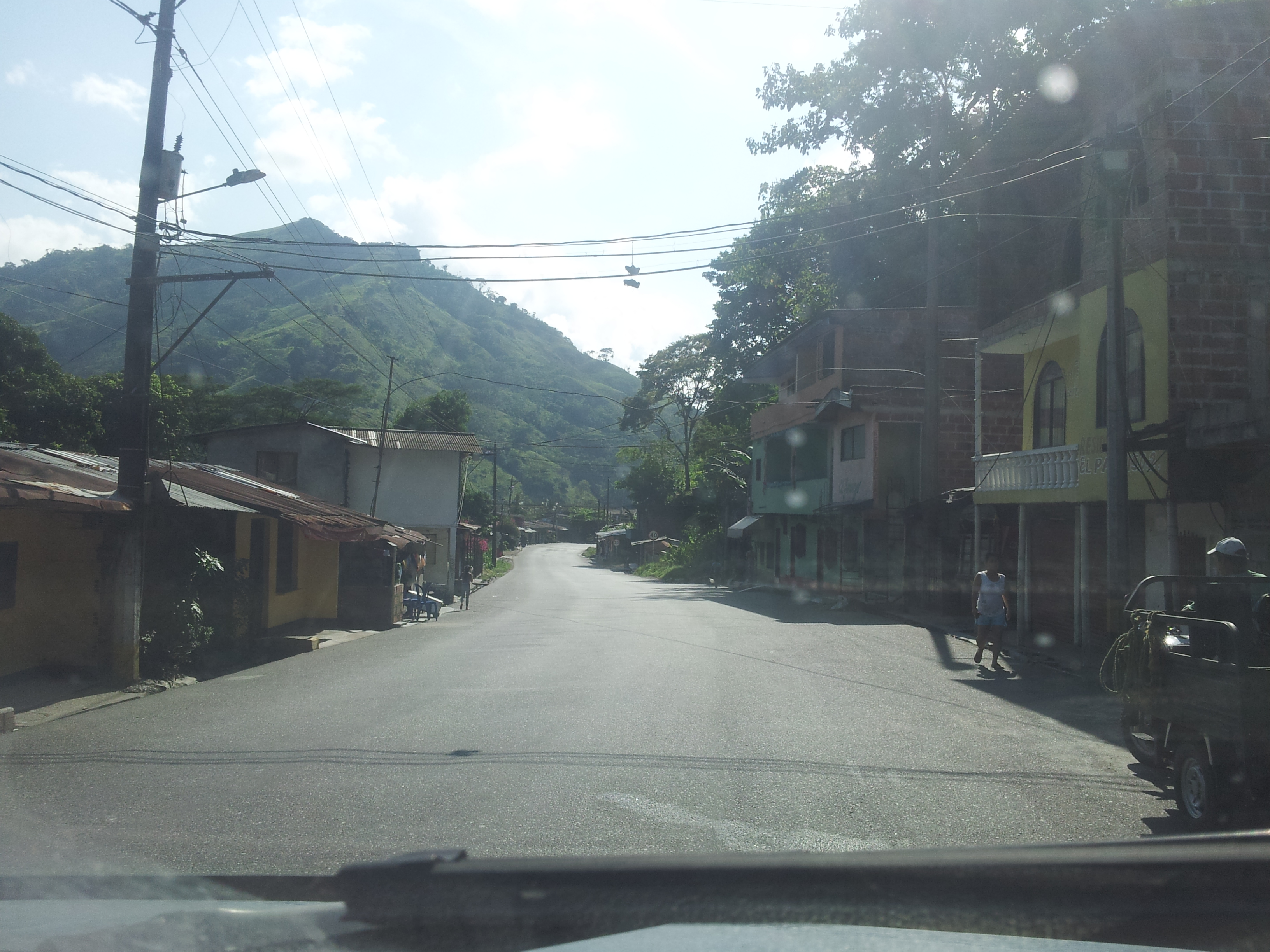
requires driving over two gigantic speed bumps at each end of the town where you literally have to come to a complete stop and then slowly get back up to 60km and then slow back down for the next town. We are not in a hurry so the slow pace is good for us. We were also worried about driving Expedition Vehicle – would it be too slow? too big? too long? We can now definitively say that we are not by any stretch the slowest, biggest, or longest vehicle on the road. We left Arjona around noon and drove (slightly uphill) the next
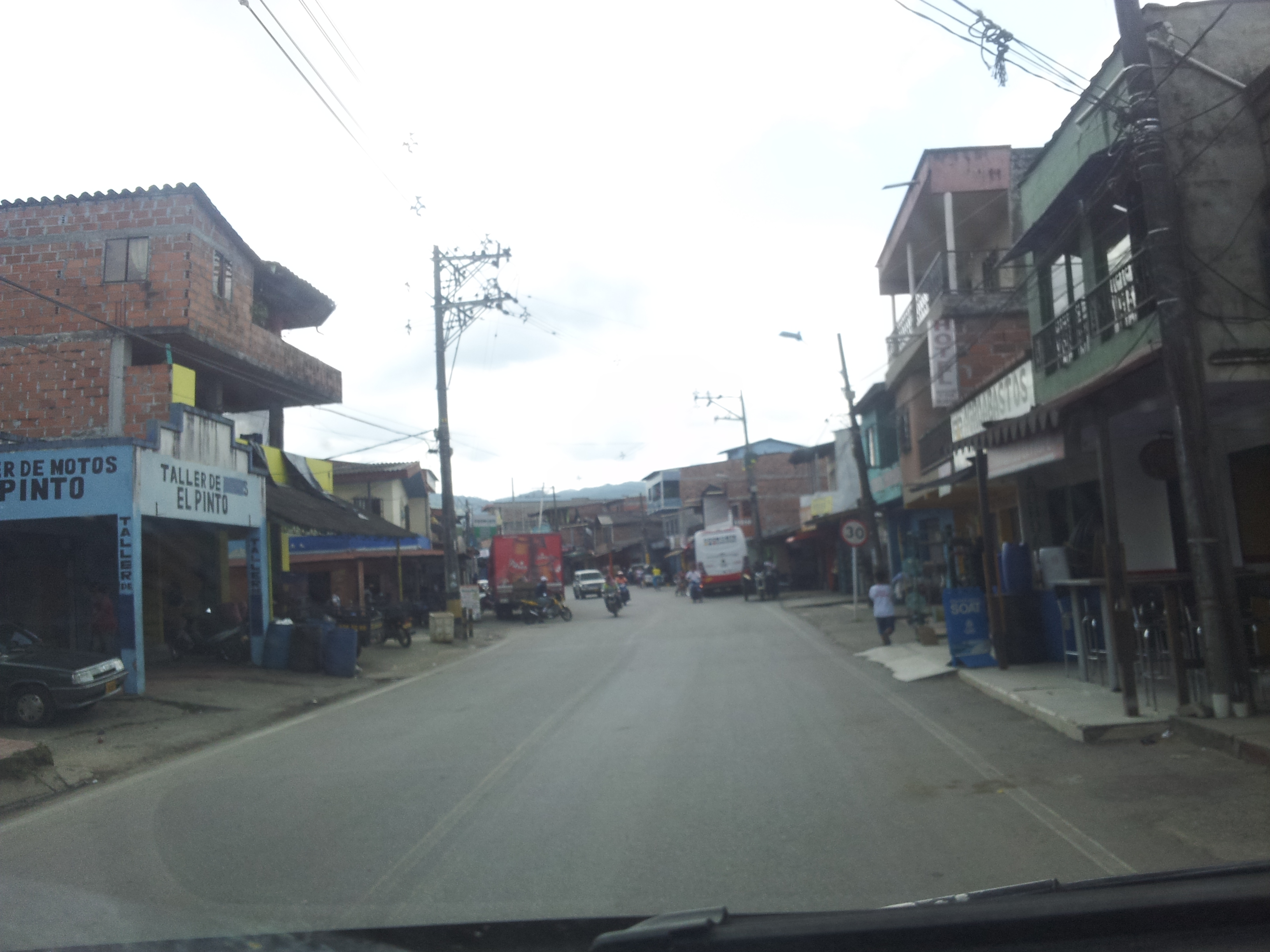
day until about 4pm when we camped (I mean overnight parked – here camping means tents and fires) in a big field on the edge of a town. The field had a small market and a restaurant at the town end. We tossed a frisbee for a few hours for the dogs and went to sleep early. The next day, we left by 8am. This part of the drive was the start of the Andes. The highway is two lanes and we continued to ascend. The scenery was beautiful. Photos do not capture how beautiful it is here. 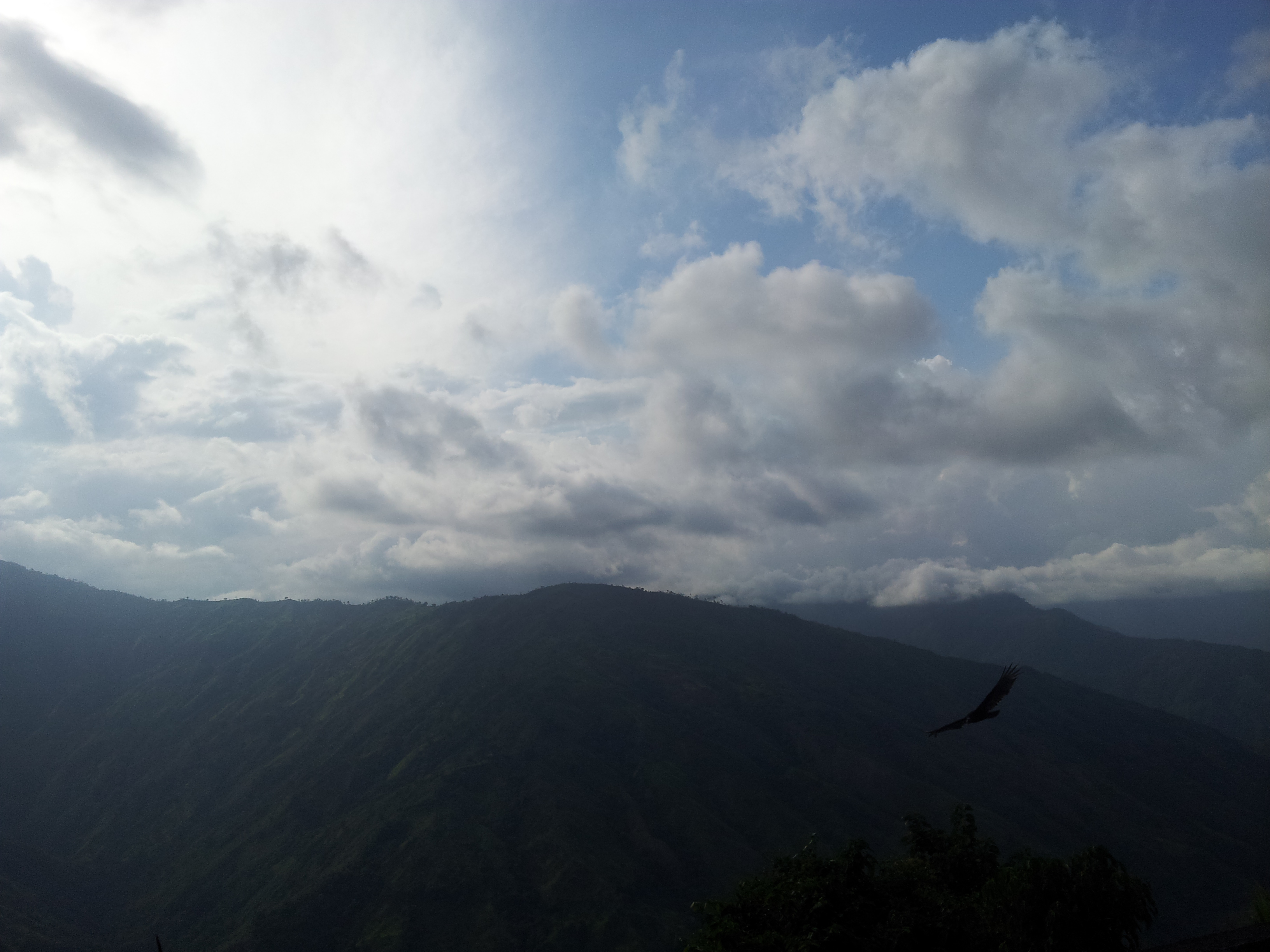 We ascended for 7 hours. More or less straight up and variety of grades, generally around 10% but as steep as 15%. Steeper than we have ever seen in the US. We kept thinking we had reached the top but we still have not reached the top here in Santa Rosa de Osos. Houses are built right on the side of the road, on stilts over the cliff below and landslides have caused piles of rocks in the road making it one lane in some places. And on this road are gigantic vehicles: first class buses, car carrier trucks, cement trucks,
 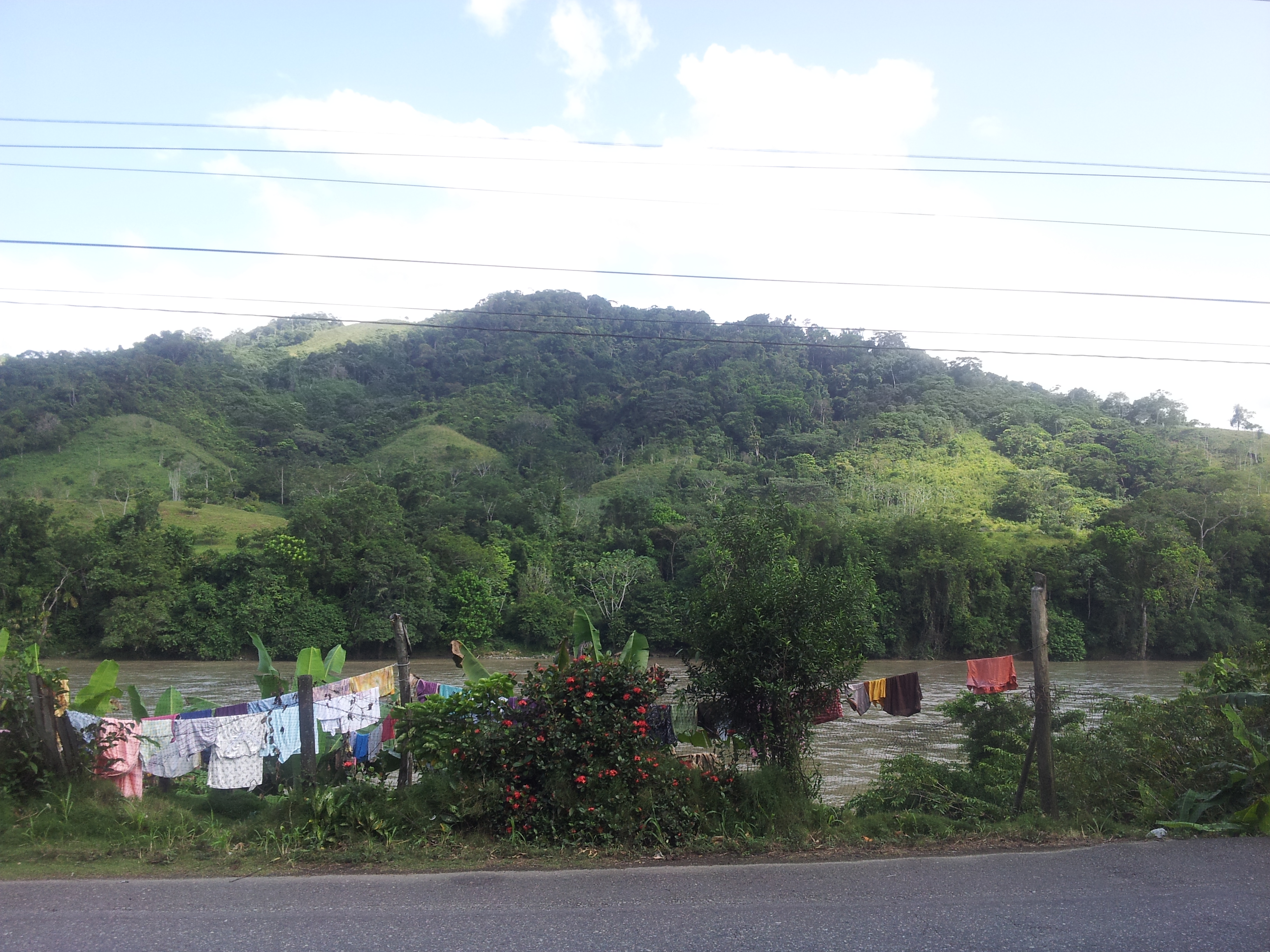 container trucks, trucks filled with cows, a semi truck filled with scrap metal as well as motorcycles and donkeys and children. The van was close to overheating (we had this happen in Death Valley). Jack ran out and poured some water on the radiator. We continued to drive because we could not really stop. There are no shoulders. Or parking lots. Or anything really. The road got steeper and steeper and we entered the clouds and visibility reduced to about 10 feet and we came to a place where the road had washed out and it was one lane and very steep, like a grade of 17% for 200 ft, and buses and trucks going in both directions were queued up to shoot the gap. We are stopped
 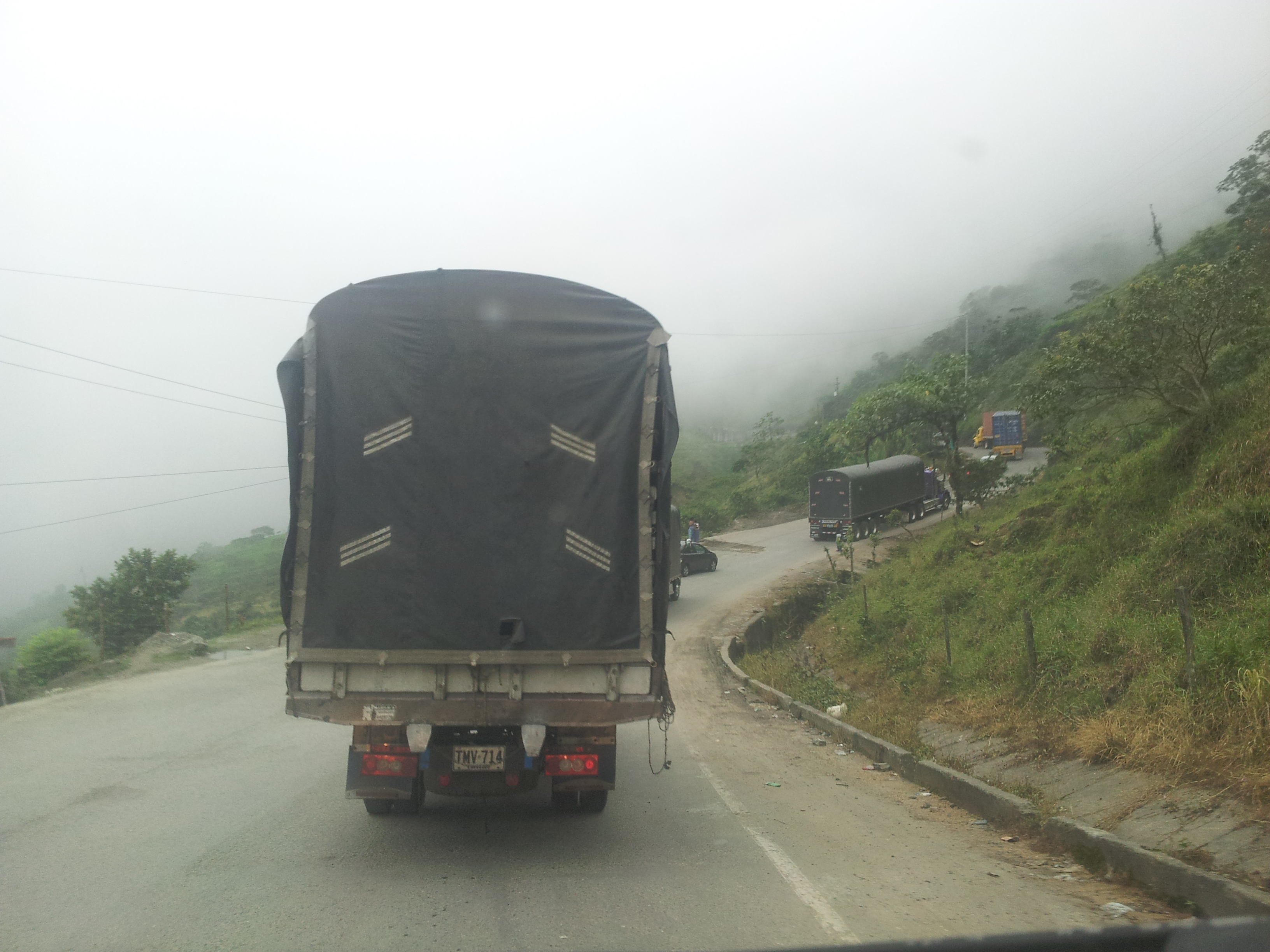 on a steep hill on the side of a cliff with trucks and buses all around us waiting for our turn and when it came – the van would not move. Like it would not drive forward. We had to back down the steep hill to a more or less flat spot (around buses and trucks and children) and then Mark had to figure out what was wrong. It was a tense 10 minutes. What was wrong? We needed more transmission fluid. Mark fixed it and we headed on our way. We had to stop once more to let the van cool down a bit but the road was flat and wider and there was a great view.
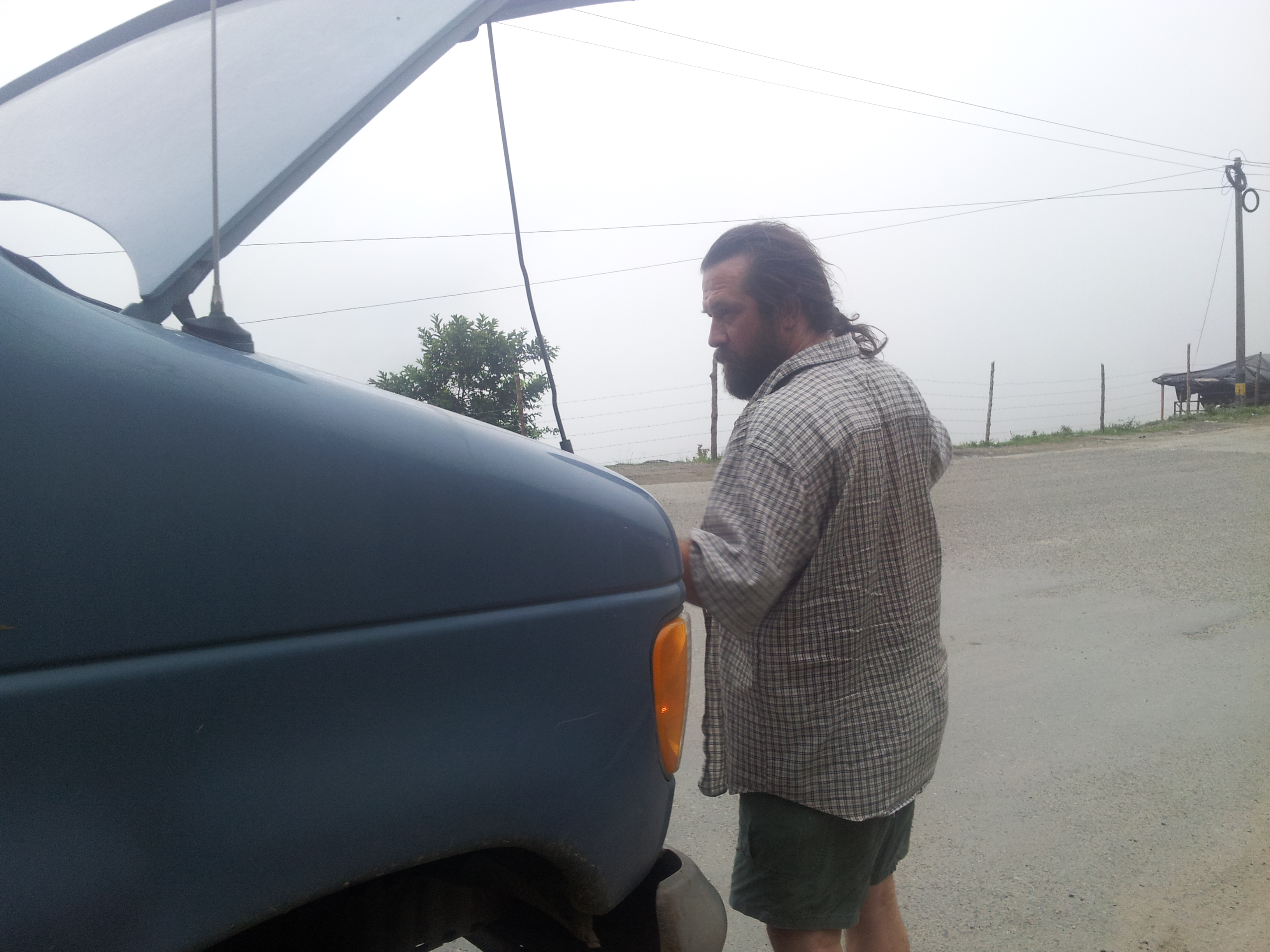
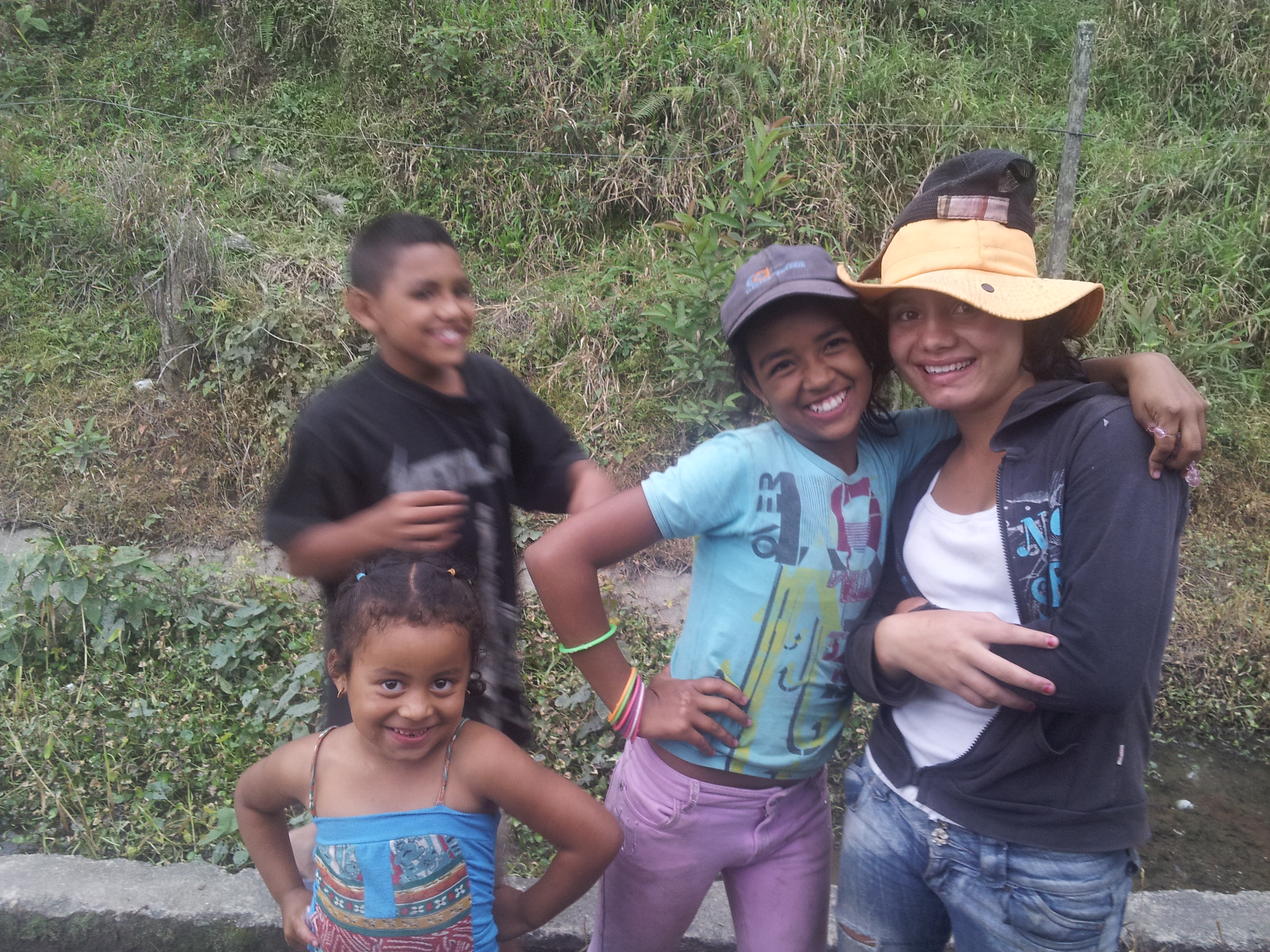
- When the van would not move, we made new friends.
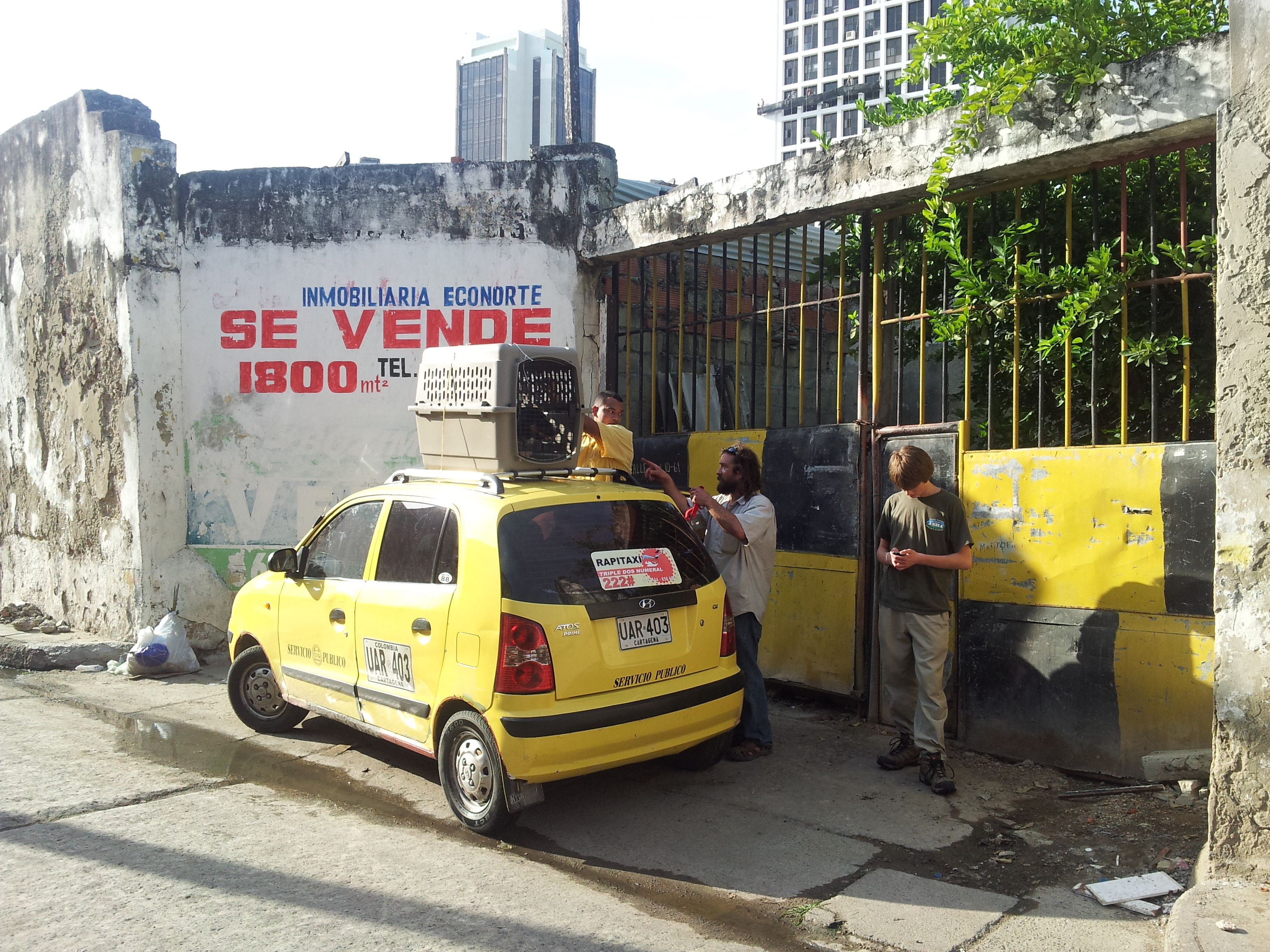 Leaving the hotel in Cartagena was as complicated as we thought it would be. Mark had moved the van and camper to a parqueadero near the port, which was a half an hour cab ride away. He had to go get propane tanks and hook them up so we could run the fridge and the stove. He had to get mandatory Colombian car insurance. He had to take many cab rides on the back of the motorcycle taxis. We had to get the dogs. And we could not drive in the dark. By 4pm, the dogs, the kids, the bags and the propane tanks were at the parqueadaro. Mark noticed someone had stolen the camper license plate. We thought we might spend the night there and leave early the next morning but it became clear that we could not do that. The camper had been in the sun since it left Florida. The inside of the camper was 123 degrees. Even with all the windows open we could not be inside for more than a few minutes. The dogs were frantic – they had another cab ride (this time Trek rode on top) and they had been kenneled at a great vet office with a dog courtyard and other dogs but they were just literally freaking out. The heat did not help the dogs either. We had to move and get some air circulating into the camper and van and get the dogs and kids out of the sun. So we piled in and plunged into the Cartagena traffic. We are following the Pan American highway the entire time. All we had to do was find another parqueadero before dark. A parqueadero is a lot where you pay a small fee to park overnight and it has a guard that keeps an eye on your vehicle and sometimes services. Parqueaderos are everywhere.
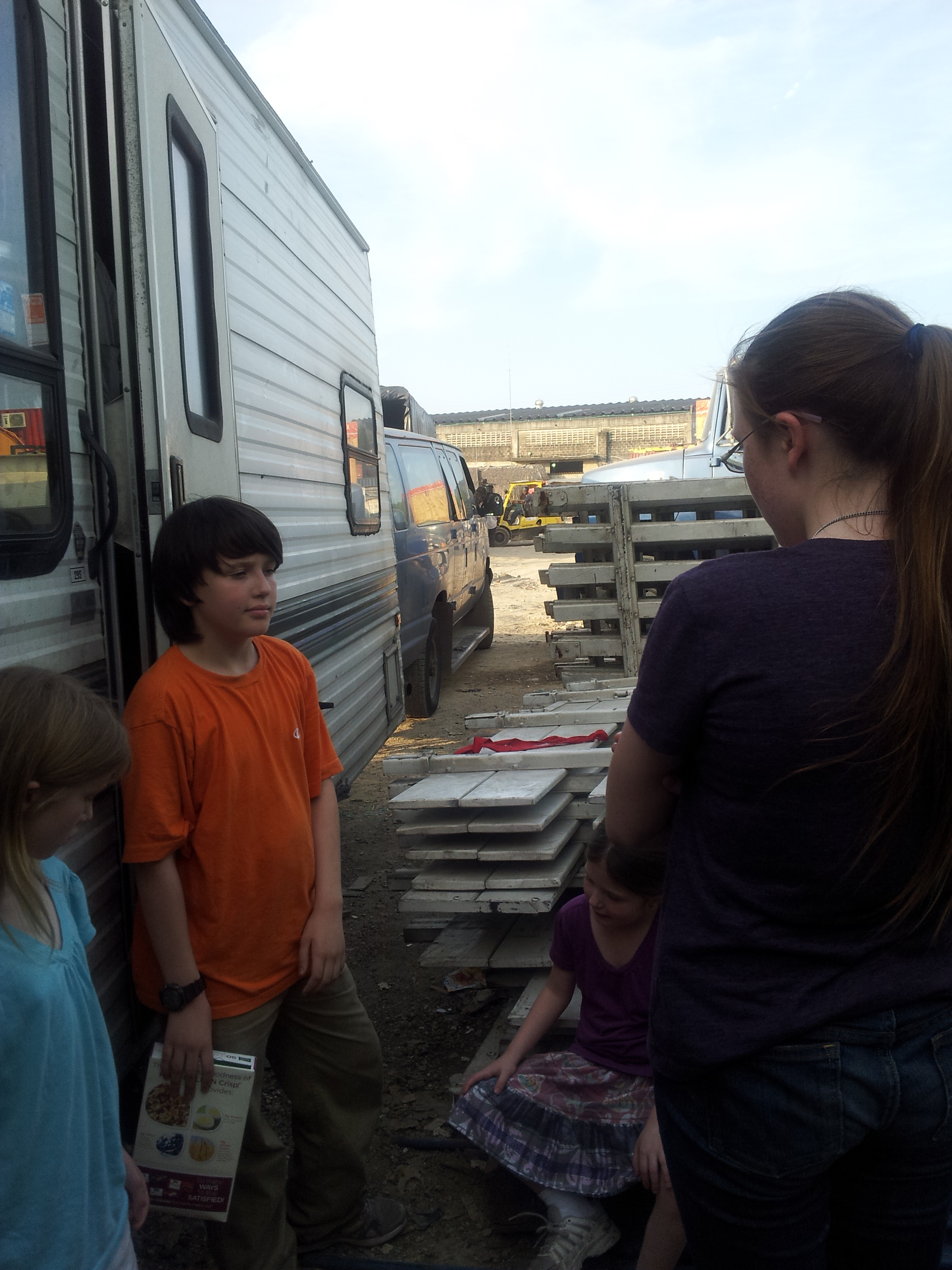
The drive was fine. The van cooled down and the dogs relaxed and all was going well. Until it appeared the road had divided and we might be going the wrong way down a one way road so Mark pulled into a gas station and we realized we were right on course so he had to go around the block to turn around. Around the block was through a small town and it was a little tricky. Busses, cars, people, donkeys – and motorcycles are everywhere, literally tens of thousands of motorcycles weaving in and out of traffic. We drove through h the small town and at one point a buss passed us going in the other direction. At that exact moment, a motorcycle decided to try to pass us on the left and squeeze between the bus and our vehicle. It did not work. The motorcycle got stuck. No one could move – the bus, the motorcycle and Team DeCorso were frozen there and people were yelling and gathering and then there was a loud THUNK (did someone hit the camper?) and the motorcycle was free and we could all move. We moved about 100 feet and we came to where we had to turn left. A policeman was standing there with a whistle and he stopped the traffic so we could make our turn – and then noticed we had a crack in the windshield. We turned, he pulled us over and began explaining how we needed to get the windshield fixed. Right then. Except it was Friday at 5pm so we would need to stop driving immediately and get a hotel for the next three days. He had Mark’s passport, driver’s license and vehicle paperwork. The van, he said, was immobilized. It was 93 degrees and the sun was setting. A hotel meant the dogs would go where? How would this work? So I resorted to a lesson learned in the classic book A People’s Guide to Mexico. I begged him. And it worked!! He smiled and gave Mark back his passport, wished us a merry Christmas and waved us on.
But now it was nearly dark and we were nowhere near the parqueadaro. We drove on, nervously, because YOU ARE NOT SUPPOSED TO DRIVE IN COLOMBIA IN THE DARK!
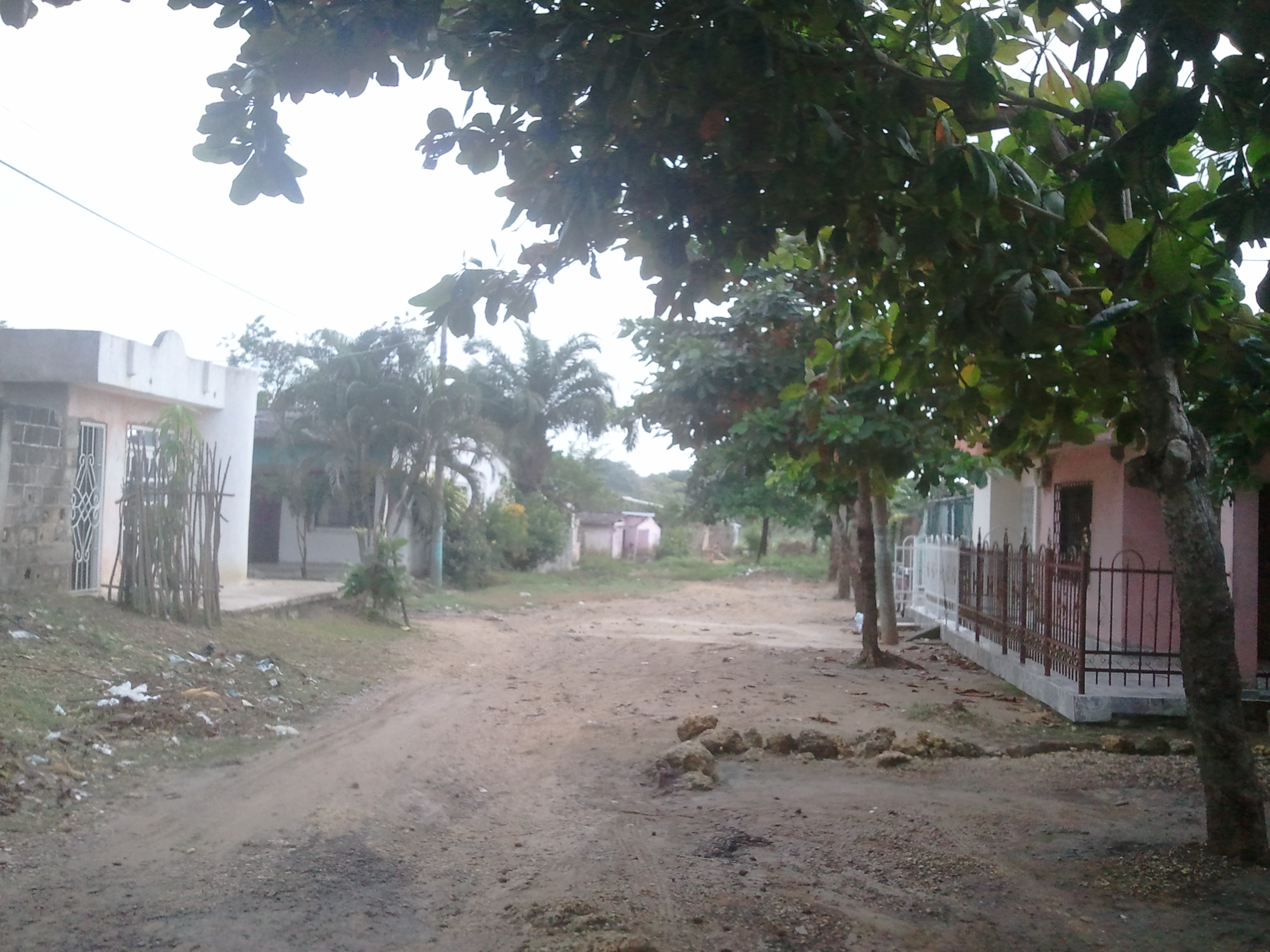
The next town we came to was Arjona and it had a gas station so Mark pulled in but it was closed and we couldn’t get in and we couldn’t turn around so we had to head down the narrow the road until we could go around the block. The road where we could turn had a metal blockade at it and we were stuck. The only option was to back up about a mile through the donkeys and motorcycles and children. We were near a little store and a man there came to check us out and he said he knew a place where we could park overnight, we could follow him. A bunch of guys moved the metal blockade and we headed off following the guy on a motorcycle. He took us to a field ringed with small houses and told us to park. Then he went and told some people in a house that we were staying. He asked for 5000 pesos, about $2.75, and he left.
We got out. It was even hotter here than in Cartagena. The air was so thick with moisture we could almost not breathe. The camper had cooled down to about 100 degrees and we had to make dinner. We had some food in the cupboard but the fridge had not cooled down yet so we made some pasta. We sat in the camper, sweating and hot and feeling kind of overwhelmed and down. Our license plate was stolen. We had a motorcycle stuck on us. We had gotten stuck twice. The police had nearly immobilized the van. And we had not even gone 35 miles. It was suffocatingly hot and we were just literally dripping with sweat.
We needed water (sold in bags here) so Mark and Jack headed off to find water and returned to tell us that there were a bunch of kids outside. I peeked out and there were about 20 kids looking at me. So naturally I asked them if they wanted to come inside. And of course they did. And then their parents came over and came inside. We talked and they said there was a man in the town that spoke English so they dispersed some children to get him. He came over and we all began to talk. It was clear we were about to eat so the English-speaking man, whose name was Hilo, said we should finish eating and then come outside and sit in a circle with them. We agreed. As we finished our pasta, we could see them bringing chairs and chairs over and setting up a circle 2 feet from our door. We went outside and there were more than 50 people smiling at us. They had brought eight chairs for us. We sat down. And then the best Solstice Party ever began. They brought us gifts and snacks, using English / Spanish phrase books to ask us how to say things. Jack and Ryan were flanked by girls each. Girls were putting earrings on Jennah. Laptops appeared with Google Translate and Facebook. We tried to ask if avocados grew there – we had seen these gigantic ones in Cartagena. The word for avocado did not translate with the phrase book or Google Translate and in the process they brought us a bunch of exotic fruit we had never even heard of. One had skin like an avocado but was hollow inside except for a blob of jelly with some seeds and it was delicious! Tangy and sweet. There were berries with hard skins and seeds that Sylvia loved. And then at one point, we had a group realization about avocados and it was a beautiful moment. They gave Sylvia a teddy bear and at one point Annabelle asked for the Spanish word for tag and when she learned it, all the kids took off to play. Annabelle and Sylvia went off to play inside a house. Several times, the girls began chanting beso (kiss).
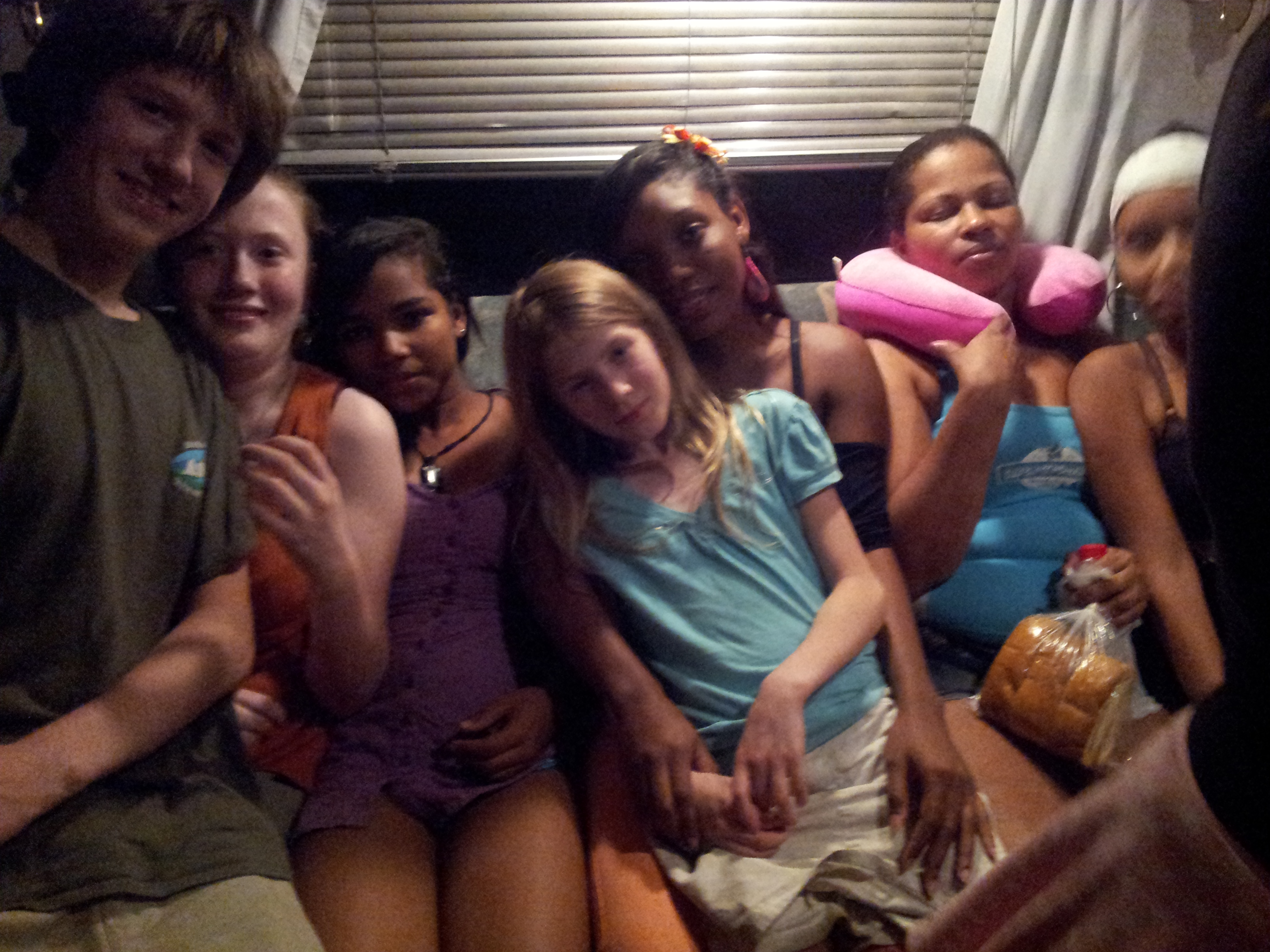
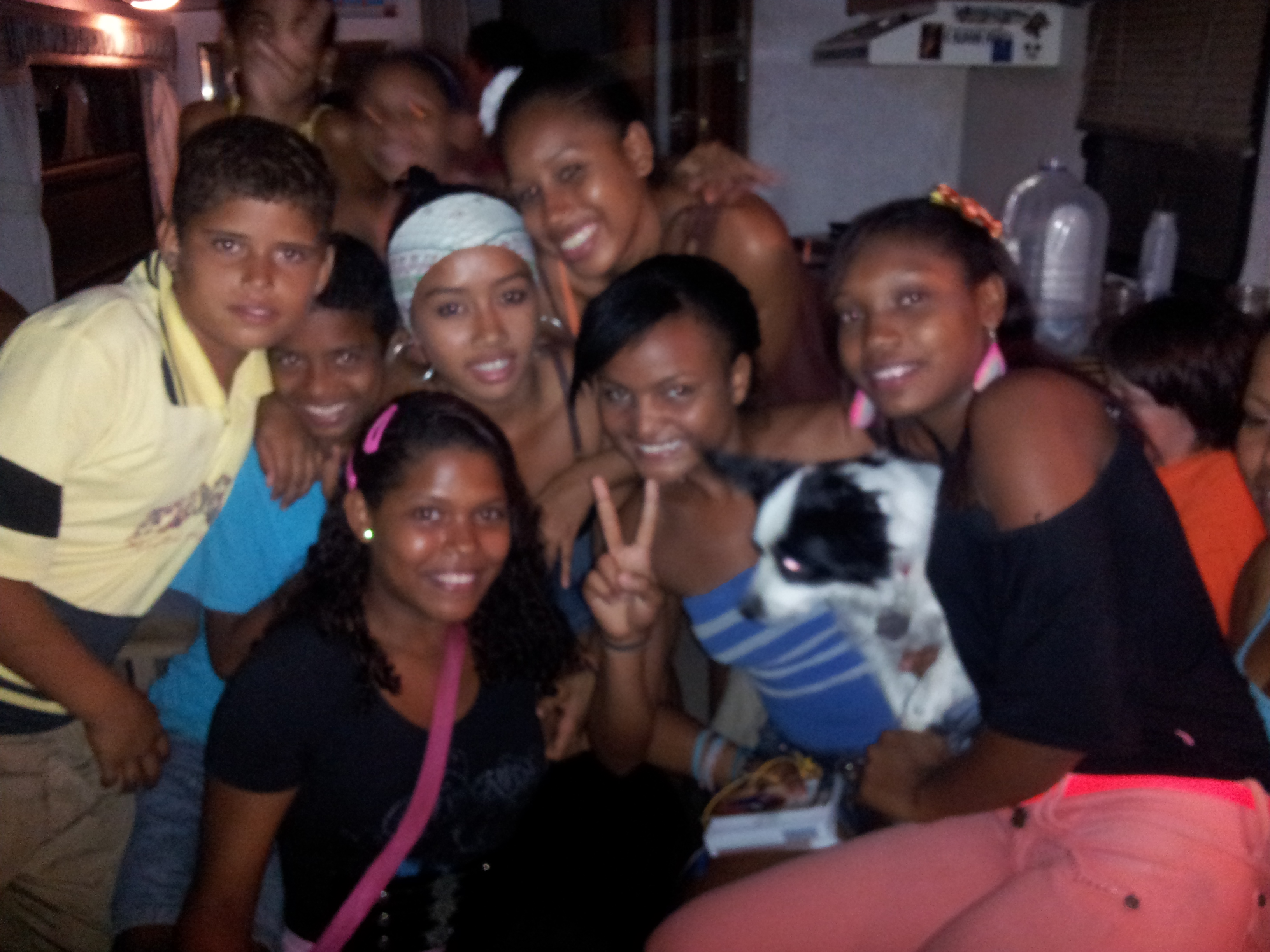
Many, many photos were taken. We had 59 people inside the camper. They asked us to stay for Christmas. Many times. We stayed up until midnight. One woman wanted to make us breakfast and we tried to decline because we did not have any breakfast food to offer at all. The woman who made us breakfast gave us 15 beautiful peacock feathers.
We woke up in the morning and one of our new friends brought us a pot of strong, sweet coffee. Then they brought us to see a toucan!
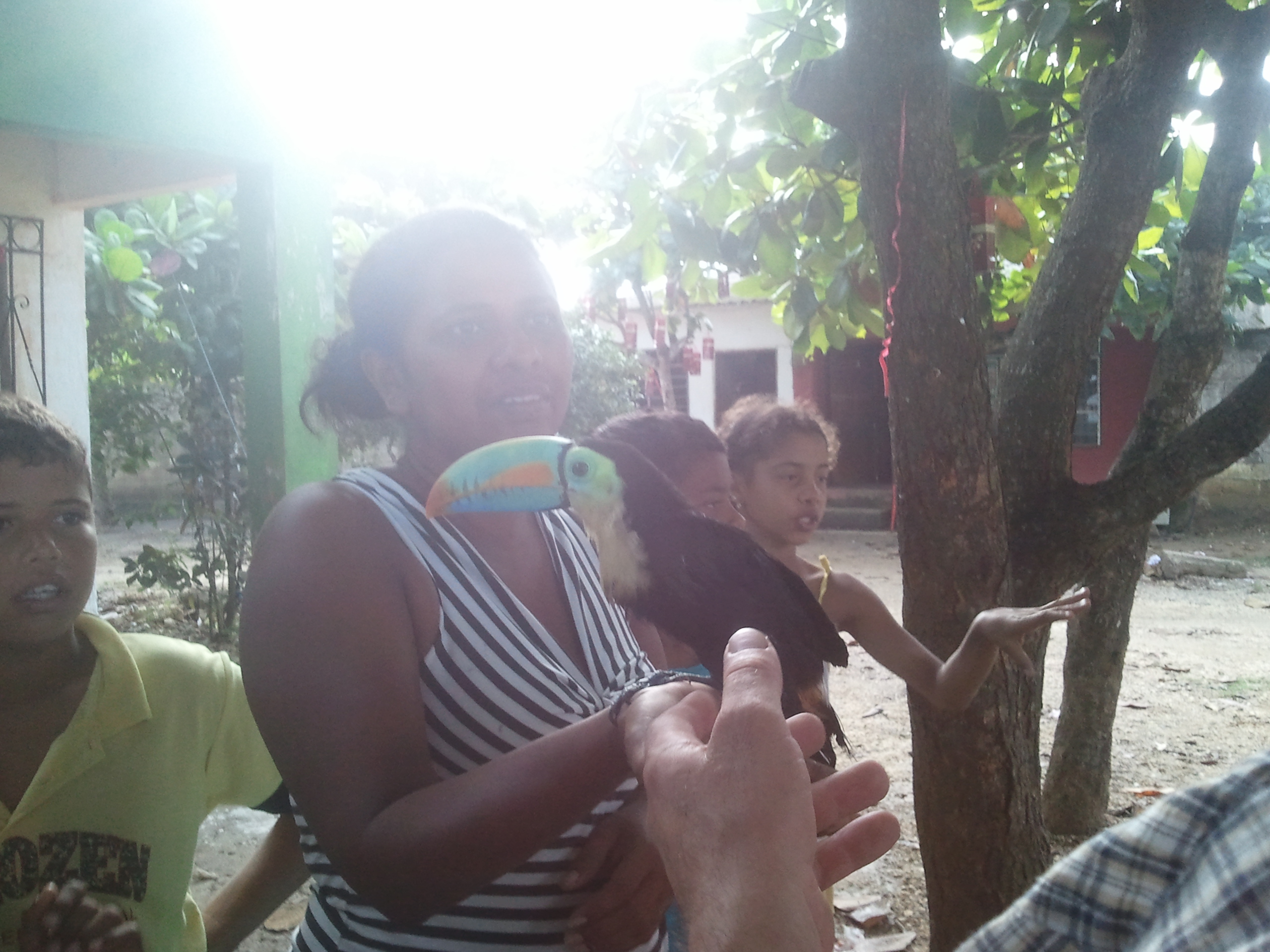
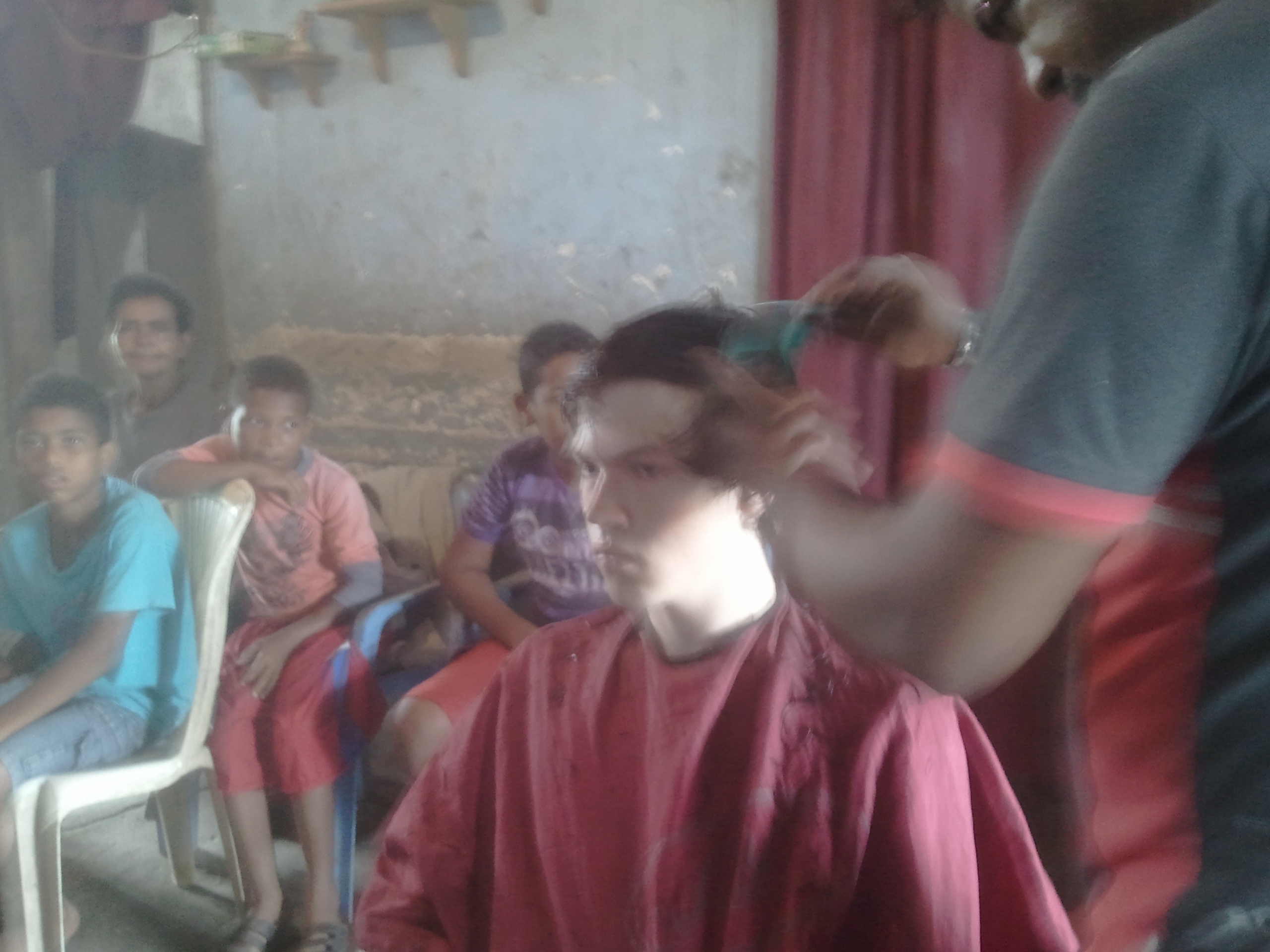
We headed to a house where they presented us with the best breakfast I have ever had – bacon that was thick and tasty, bollos, fresh homemade cheese, a HUGE amount of the best guacamole ever and fresh ice cold juice made from the sweet & tart unknown fruit. After breakfast, Hilo cut Ryan’s hair. Hilo was a really neat and interesting person. He had learned to speak English himself, some from American music. He was a hair stylist and he did a great job on Ryan’s hair.
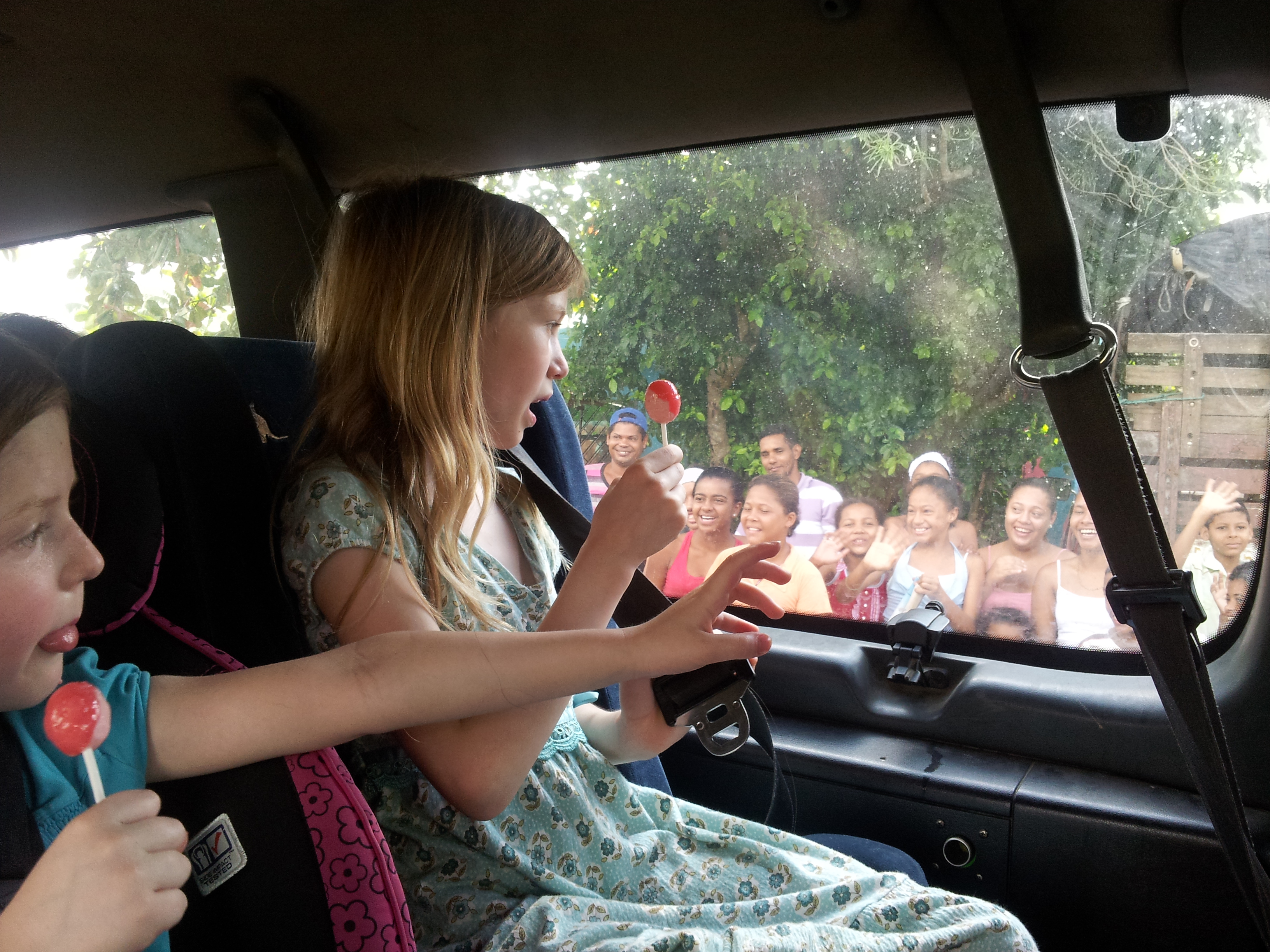
We wished we had some things to give them because we had been given so much from the people of the town. We had been kind of bummed and feeling like maybe the trip was a mistake and the people of Arjona completely turned our day around. We didn’t have very much with us, most of the stuff we had was not so cool (like spoons) but I dropped a penny on the ground and the kids were amazed at the penny so we handed out a bunch of American change and there was a lot of explaining what the English word was and how many pesos each coin was worth. We were able to fill up our water tank from someone’s house. We left to a waving crowd of people. It is impossible to describe how wonderful our short stay in Arjono was. This had truly been one of the most amazing experiences of our lives!
I wanted to say how easy this has all been. For a year, we researched how to get the van & camper here, reading many other travelers accounts of shipping across the Darien gap. People got robbed, vehicles got damaged, folks got fleeced. None of this has happened to us. In fact, the cost of shipping turned out to be $1000 less and faster than we anticipated. All of the details that seemed so stressful when we were planning the trip have simply fallen into place. Everyone has been kind and helpful.
We were worried about so many things. It turns out that we will be traveling with trucks and there are places trucks stop to spend the night – just like in America! It turns out that there are parking lots with big walls around them and you park there and pay a small fee and your stuff is guarded.
Officially clearing customs with your shipped vehicle takes three days and port costs are $350 per vehicle. Our bill was $700+ and the two vehicles arrived Monday morning at 8:15am. Mark, the Awesome Latin Negotiator, somehow got the port fees reduced to just $200 and got the vehicle out in a day and a half.
]]>Cabs, buses, walking, and carriages are the main forms of transportation here in Cartagena. The sidewalks are thin and is a lot of the time taken up by locals trying to make a living off their wares. People have carts with tanks mounted to the top which they fill with ice and squeeze fresh lemons and limes into, then discard the fruit skin on the ground, causing the streets to have a citrus smell. Every liquid is sold in bags. Milk, water, ketchup, mayonnaise, it all comes in plastic bags.
I found a music store that has melodicas for sale. I’ve been looking for a melodica at every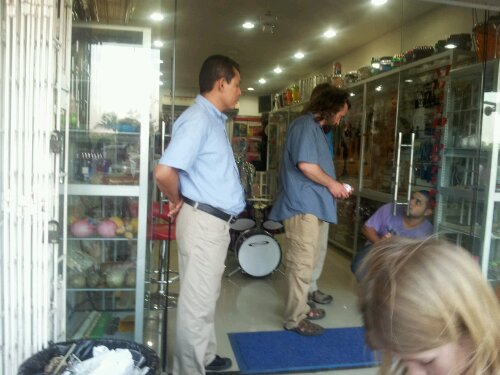 music store I’ve been to and now I’ve found one. I haven’t bought the instrument yet but I might in a day or so.
That’s all for now; bye.