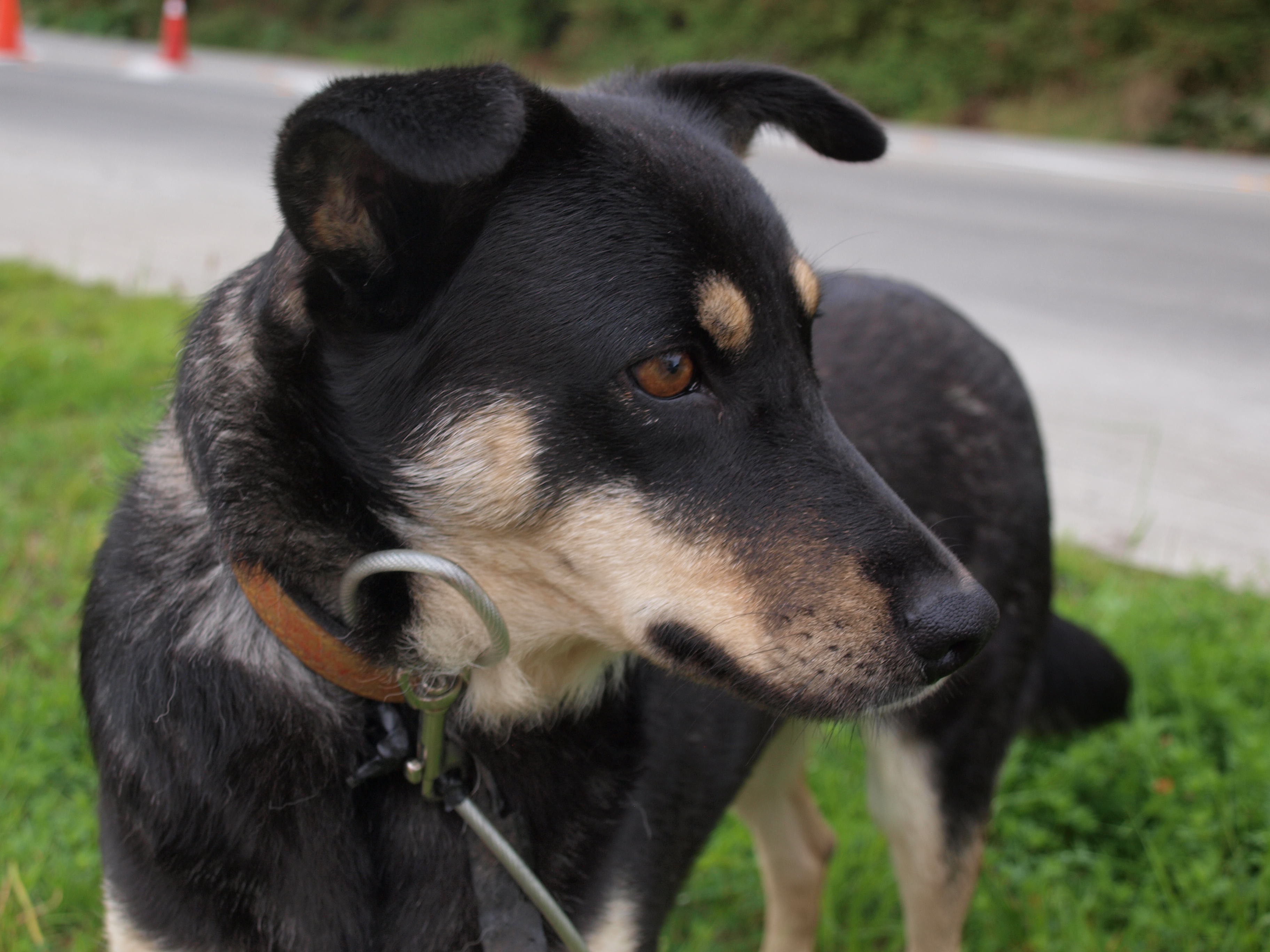
We always meant to write this post but we never seemed to have the time. In Otovala, Ecuador, our dog Louie got hit by a car. He was beloved by all and one of the clearest memories I have of the trip is all of us crying and kneeling around Louie’s body in the grass in the little park where we were camping. The people who saw it happen helped us find a site to bury Louie and one man even dug the grave for us. It was a sad time.
We stayed in Otovalo for more than a week. And a strange thing happened. Otovala was filled with street dogs, like everywhere else we had been. We were camped one block from the main square and people sold street food there all day and into the night so dogs congregated there. One day, as we walked back from the market, a dog followed us. We wouldn’t have really noticed it except it kept happening. Every time we walked anywhere at all in Otovala, the dog would show up and follow us, She really followed Ryan. He would leave the camper and walk anywhere and within 10 minutes, the dog would be walking right next to him. We would walk into a store and the dog would lay down outside and wait for us. Eventually she started sleeping in Ryan’s camping chair out front of the camper. Ryan asked if we could keep her and of course we all said yes! There was a vet across the street and we took her there to see if the dog was healthy and if she belonged to anyone. The vet said we should take her and his daughter suggested we name her Luce, like the word for light. So we called her Lucy but mostly we call her Salchi because she is so fat.
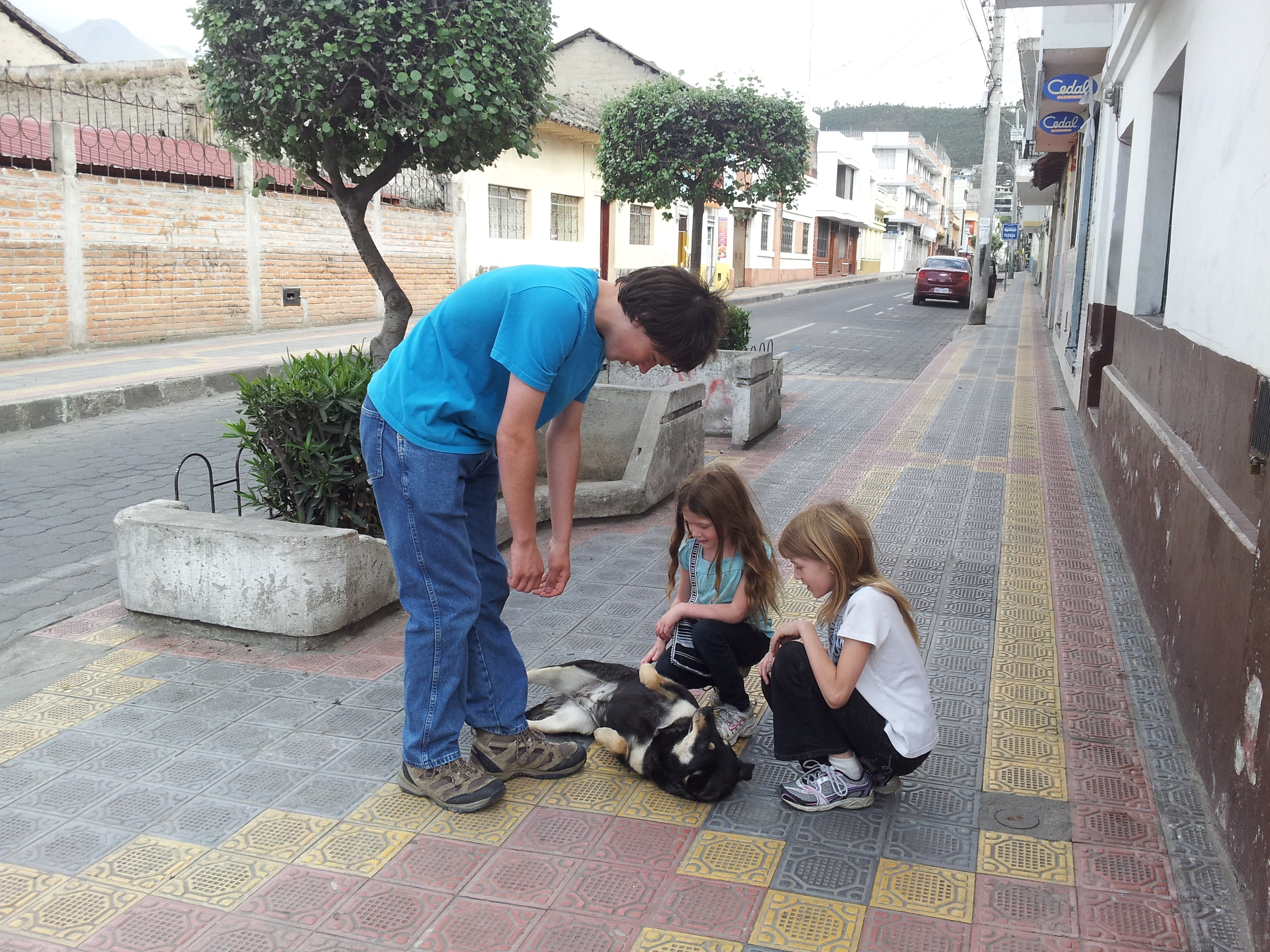
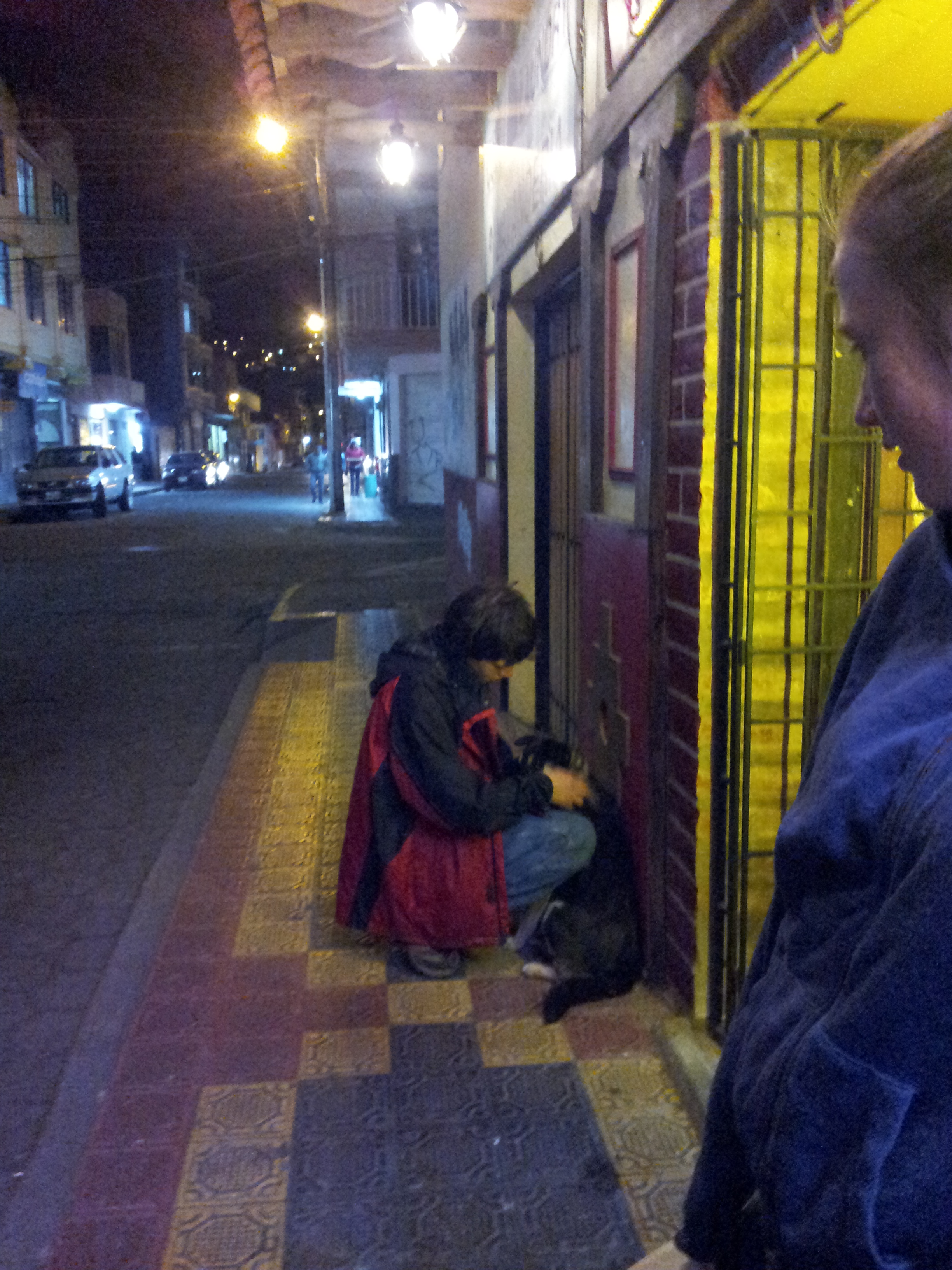
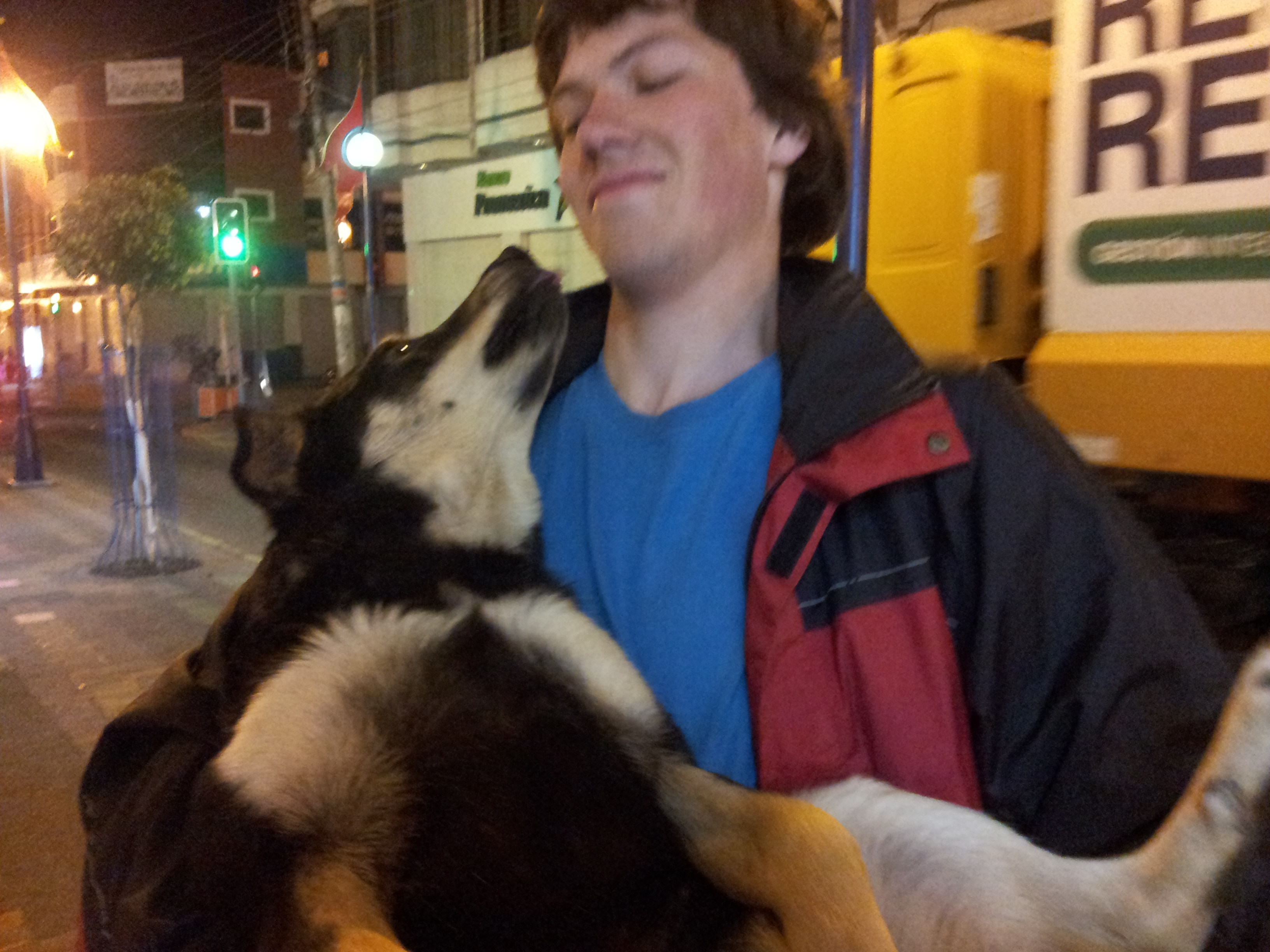
She is a sweet, gentle dog. She spent a few trial nights with us in the camper and could not seem to believe her luck. She quickly figured out the whole bathroom thing and was instantly house trained. She is very smart and quite savvy and will walk next to you without a leash. She still has some food issues (which is why we call her salchi, she is really fat as she cannot NOT eat). She will eat anything, dry pasta, raw potatoes, onions, anything. It took her months to stop eating everything at once without stopping. She was like a goldfish, she would eat until she threw up. Luckily she is much better at this as she seems to understand that we are going to continue to feed her. She was scared of the broom. And if you made a sudden movement around her, she would scream. We figure she subsisted her entire life on dropped french fries and old salchi (hot dogs). She joins Trek, the Canadian Border Collie, as part of our international pet crew. We have to use Spanish to give her directions but she is slowly learning English. She had some trouble understanding our strange customs (like water bowls and dog food and the car, especially the car as she would go inside and time would go by and the door would open and we would be some place different).
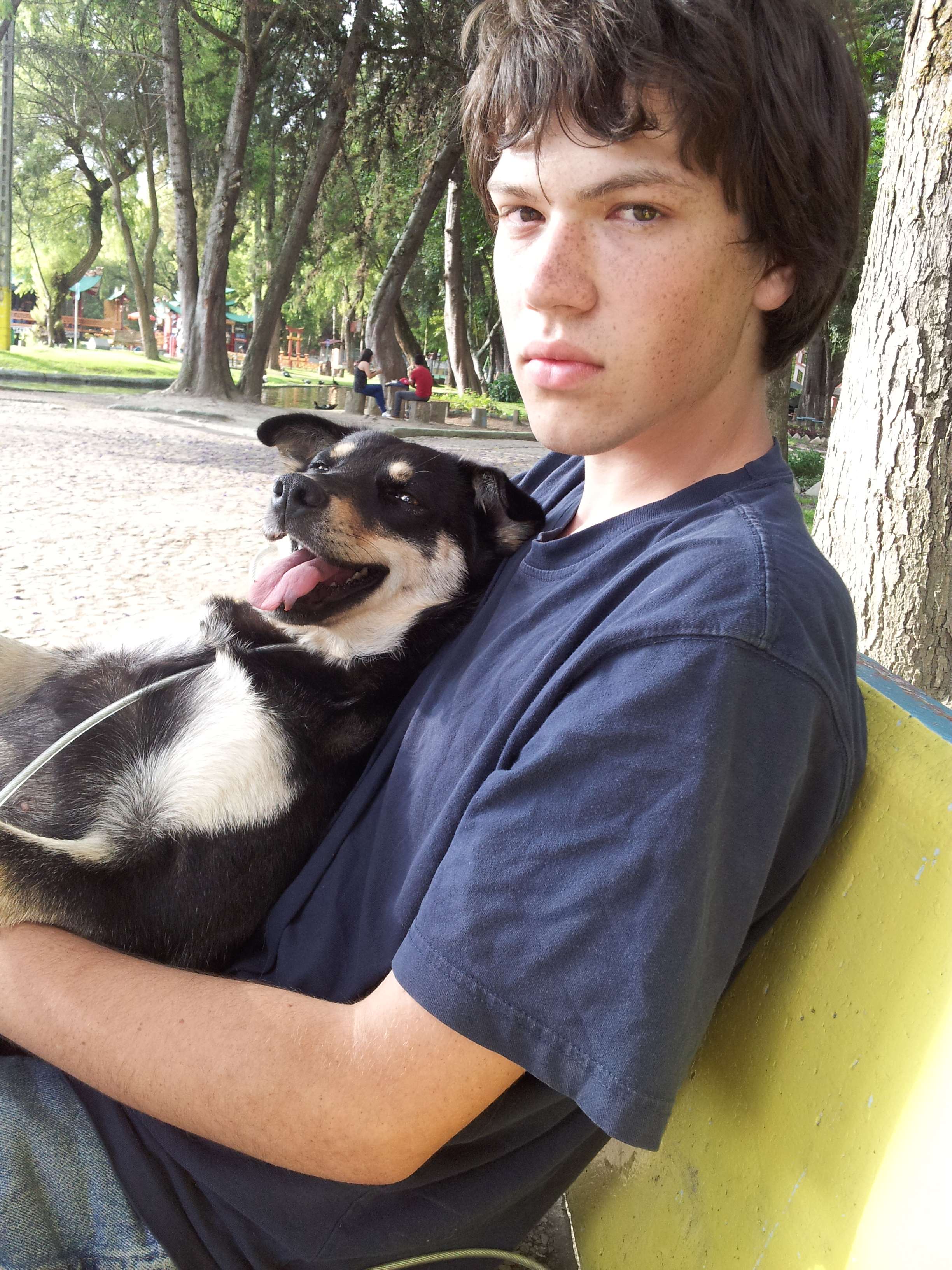
The stray dogs were one of the hardest things in all of South America. They were everywhere and sometimes they were starving. In the Atacama, we would leave bowls of water outside at night for the stray dogs. In every city, we fed the dogs that turned up at our camper. Some dogs were mean. We saw a dog bite a little boy in San Pedro. Max got bit by the dog in Puno. Most dogs were nice. Some cities had happy, well-fed dogs but most had skinny, sad looking dogs. It was a lot harder than it sounds to walk away from many of these dogs.
]]>
The border crossing was pretty easy, except on the Peruvian side some paper work had to be done and that slowed us down a lot. Once we started driving through the Peruvian lowlands and deserts, it became apparent that litter and trash is kind of a problem down here. Plastic bottles and grocery bags are everywhere and are constantly blowing through the wind for all eternity. A lot of the litter seemed to be doing exactly what it was supposed to be and did a fine job of spreading all along the side of any road.
We were in a kind of hot desert and we decided to head north to the desert coast to enjoy some beach time and whatnot. The drive to the coast took longer than I thought it was going to take but we still managed to make it before sundown. The road ends at a very “hip” and “happening” town called Mancora. Mancora is wonderful for “cool” younger peoples. It has a really stereotypical beach with people sun bathing all over it and surfers “chillin’” on the sand. There are a lot of stalls and road side shops set up that cater to the surfer “dudes” and those kinds of people. There was tons of male jewelry everywhere. Leather and hemp bracelets, necklaces with teeth bigger than a baby’s head, brown bead necklaces, just manly jewelry. I bought a really cool hat made with some part of some kind of tree. I like Mancora and when I get older and find myself older “friends” we can all go down here and “party”. Desert coasts are cool. There isn’t all that much to say about desert coasts for descriptiveness. It’s a desert with coast, there’s water and then no water, one side’s really wet and the other is really dry. The desert was pretty though. It reminded me of the badlands but with more trash.
We left Mancora and headed south towards the south. I can’t remember anything noteworthy happening between Mancora and here except my headphones broke. *sadface*.
Right now I’m at a beach in Trujillo looking for new headphones and writing a blog post. Trujillo is pretty cool (not in quotation marks). We got to see Simon Bolivar’s house and desk. I like houses that have courtyards. I saw the first “real” (there are some McDonald’s that are only ice cream stands here) McDonald’s since Florida here. I haven’t eaten a burger in a long time.
This blog post is over. Good bye, good day, have fun.
]]>A lot happened in Otavalo. Our dog died, I fainted, I bought a few things, bad surgery was performed, and all in all, it was a pretty dramatic and stressful week. Otavalo has a major market that sells things that tourist typically buy, like jackets and blankets and low quality instruments and marijuana cream. The people all wear shawls and ponchos which adds a very authentic atmosphere. We visited a few shops that were outside of the extremely large and vacant seeming market, one of the paces we went was a wool works shop. Everything there was semi expensive and we left without buying anything. Next we headed to this music shop where they make Andean instruments for selling. I bought this flute like thing called a quena and a pan flute like thing called a rondador. I still can hardly play my quena but my pan flute and randador playing has gotten better. We adopted a stray dog and took both her and our remaining male dog to get fixed. The vet who did the job wasn’t very good at neutering animals or giving stitches. I’m a gentle man and the whole thing caused me to faint a little bit, but the vet had a nice wife and daughter who gave me some chamomile tea and took me to their plastic surgery office so I could lie down on their operating table. Our dog is still recovering and has a massive gash on his swim suit area.
We finally left Otavalo and headed towards the town of Banos. Banos is Spanish for bath or bathroom and the town was named this because it was built on a volcano and had several hot springs. We camped outside of a small restaurant that had a few, kind of big spiders on the ground and in the shrubbery. I was slightly disappointed with the public baths, they were extremely developed and were built into pools, plus they were full of the elderly. Banos had a lot of this drink made out of some kind of cane plant. I really wanted some but it probably had alcohol in it so I never got to taste it. One time, during our stay in Banos, I bought lunch inside a giant food building where people would set up small restaurants. I got rice with and egg on top plus a little bit of pork meat.
South America, or at least Ecuador and Colombia, have a really nice attitude towards hitchhikers. People hitchhike everywhere. You don’t even have to put your thumb out you just have to stand on the side of the road and you get picked up. Everyone hitchhikes. Someday, I’m going to come back and hitchhike all over South America.
Right now we’re outside of Cuenca at a gas station. I’m leaving now. Bye.
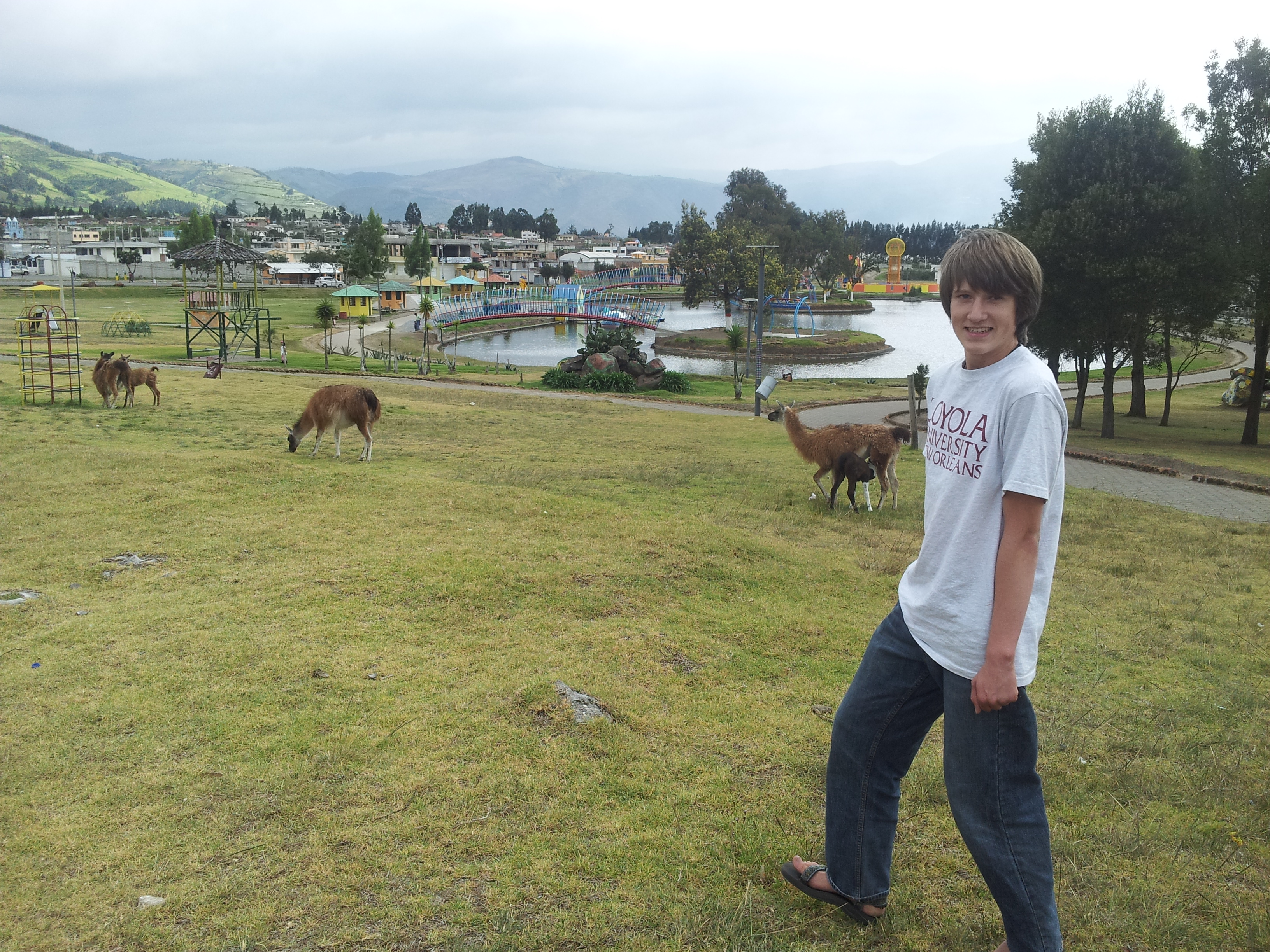
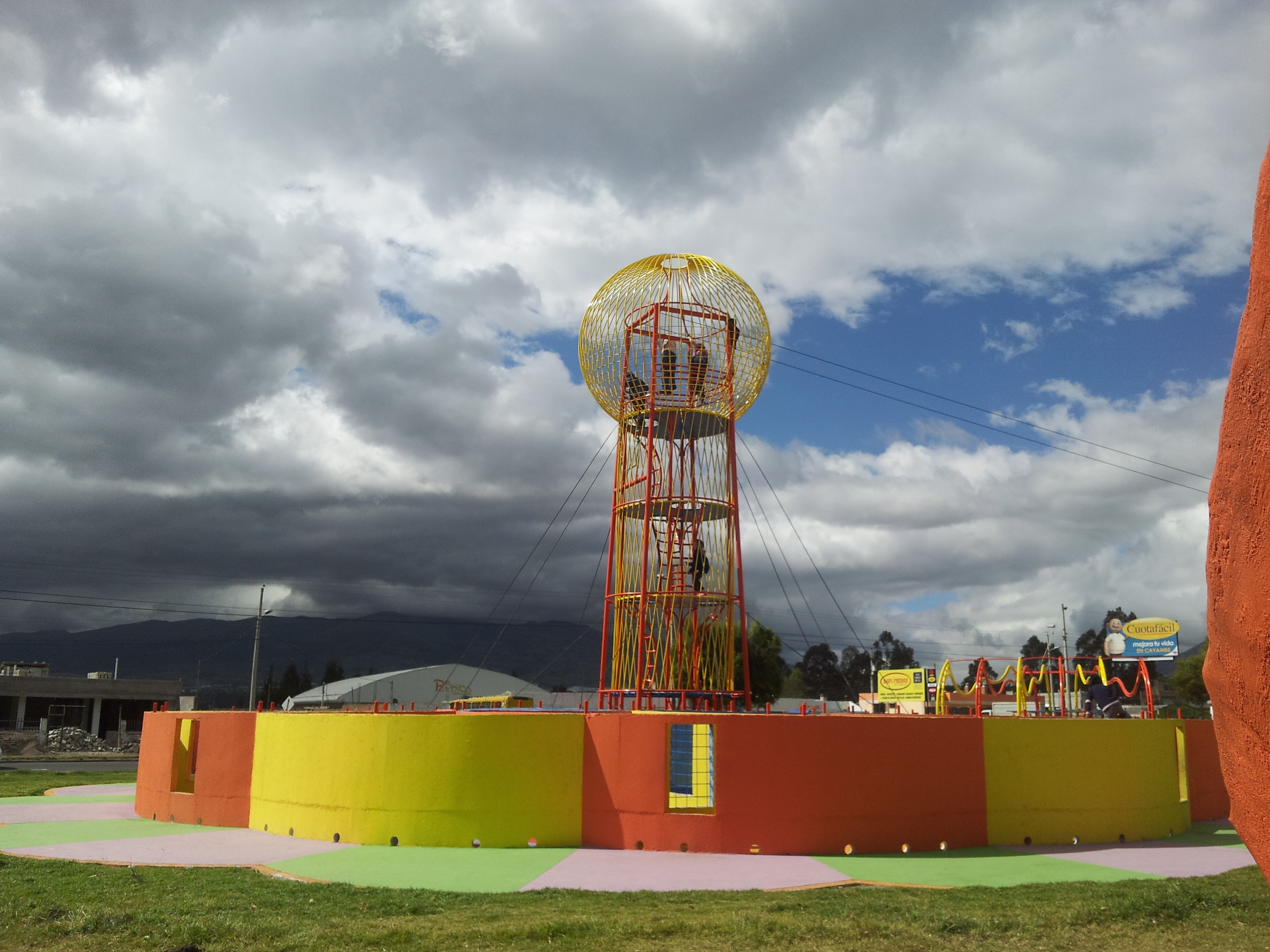
The next day we drove through a town that had a huge park with interesting playground equipment There was a maze, a rock climbing wall, a bridge that crossed over a little lake to a circular island, and across almost the whole park was an unused zipline. There was also a chain tunnel that led to a tower like thing where slides led back to the ground that resembled a giant Dalek. Llamas were walking around the rock climbing wall. We stayed there about an hour and then left.
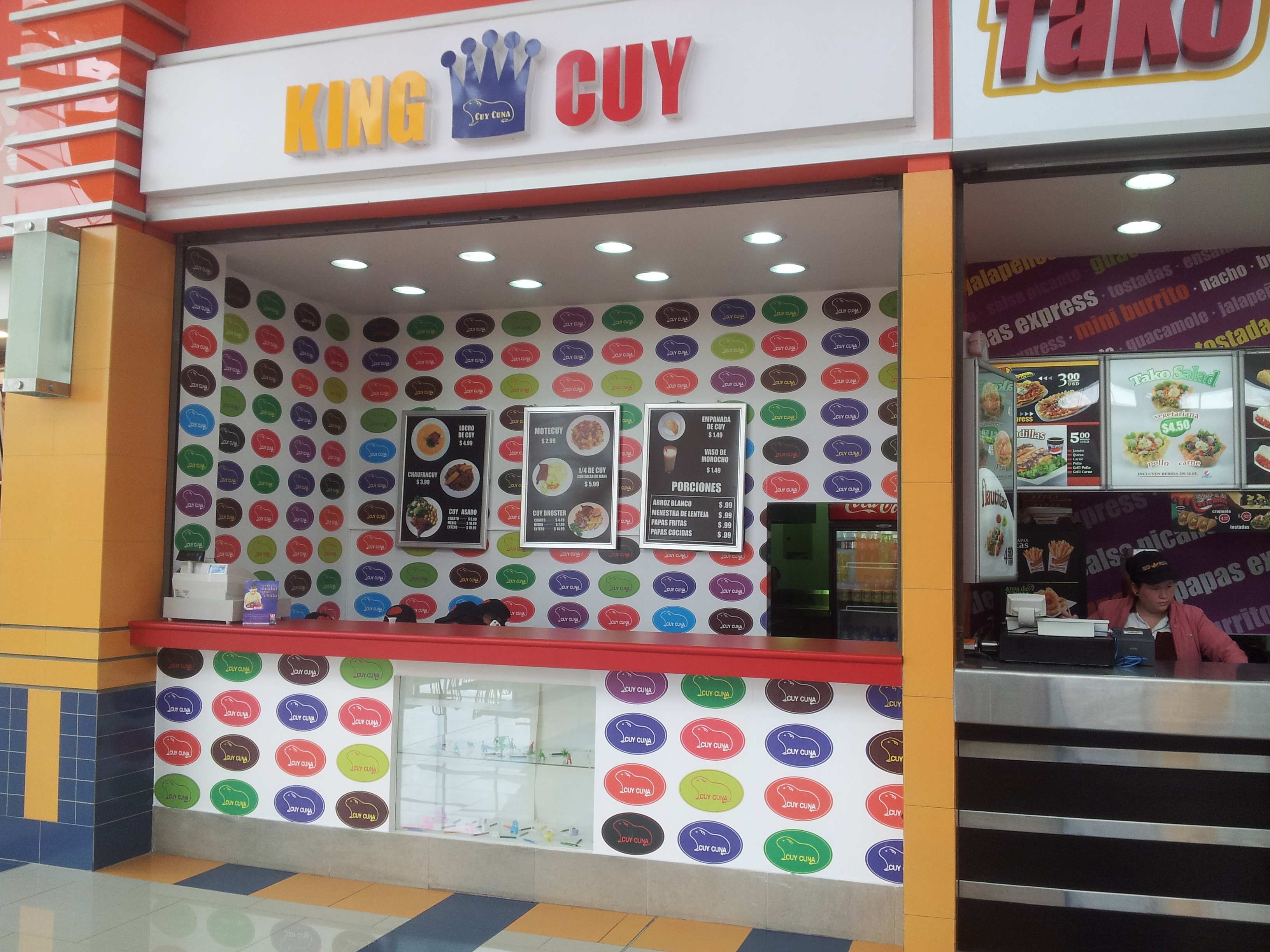
We stopped at a brand new mall. At the food quart there was a restaurant that sold only guinea pig, which wad quite expensive. The mall was empty and new, with hardly any people.
Father went to a Ford next door and went somewhere with the trailer. When we were finished at the mall the security guard at the Ford store led us to where Father was. We had a while before he was done, so Ryan went out and found a vet.
Our next destination was Baños, which means ‘bathroom’ in Spanish. Baños was on the edge of a sort of gorge, with a river through it. We left the trailer at a restaurant and started driving around. There were ziplines across the cliff which I really wanted to go on but Mother did not let me.
We drove to Tena, which was about seventy-five miles away from Baños. It was considerably hotter there than in Baños. It was a nice town, with a park and whatnot. We couldn’t stay there long since we had to be back to our camping spot by dark.
The drive there was beautiful, right along the cliff fringed by leafy plants and the like.
We got home and retired.
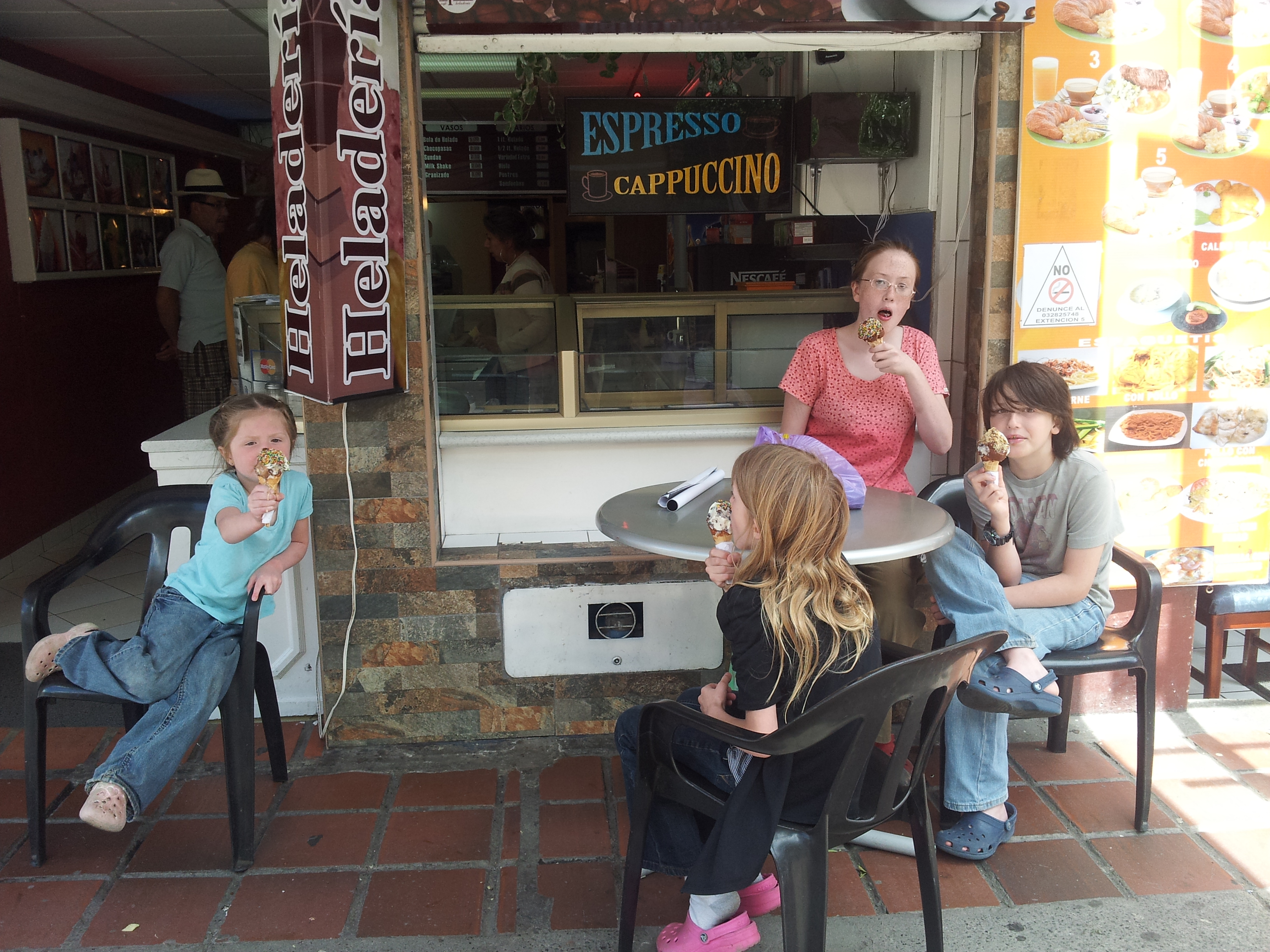
The next morning we went to the hot springs there. Some pools were cold, most were tepid, and there was one that was very hot. The water was cloudy with minerals, and it healed some of my cuts. Afterwards, we walked around Baños. We went to an ice cream store, which had tasty ice cream, such as coconut, chocolate, passion fruit and blackberry. We left Baños and drove along. We were in the tepid jungle now, with jungle pigeons! Jungle pigeons seemed prettier then feral, city pigeons. Something we had seen a lot was clown-head garbage cans. They all had creepy, sinister looking clown-heads stuck to the top.
Once again, we ascended into the upper Andes. It became much cooler. We drove until nightfall, unable to find somewhere to park for the night. We finally found somewhere, and camped. The next morning it was rainy, and we planned to head on, until someone wanted to buy the trailer. We conversed with them about it and decided to contact them when we came back up.
Jennah
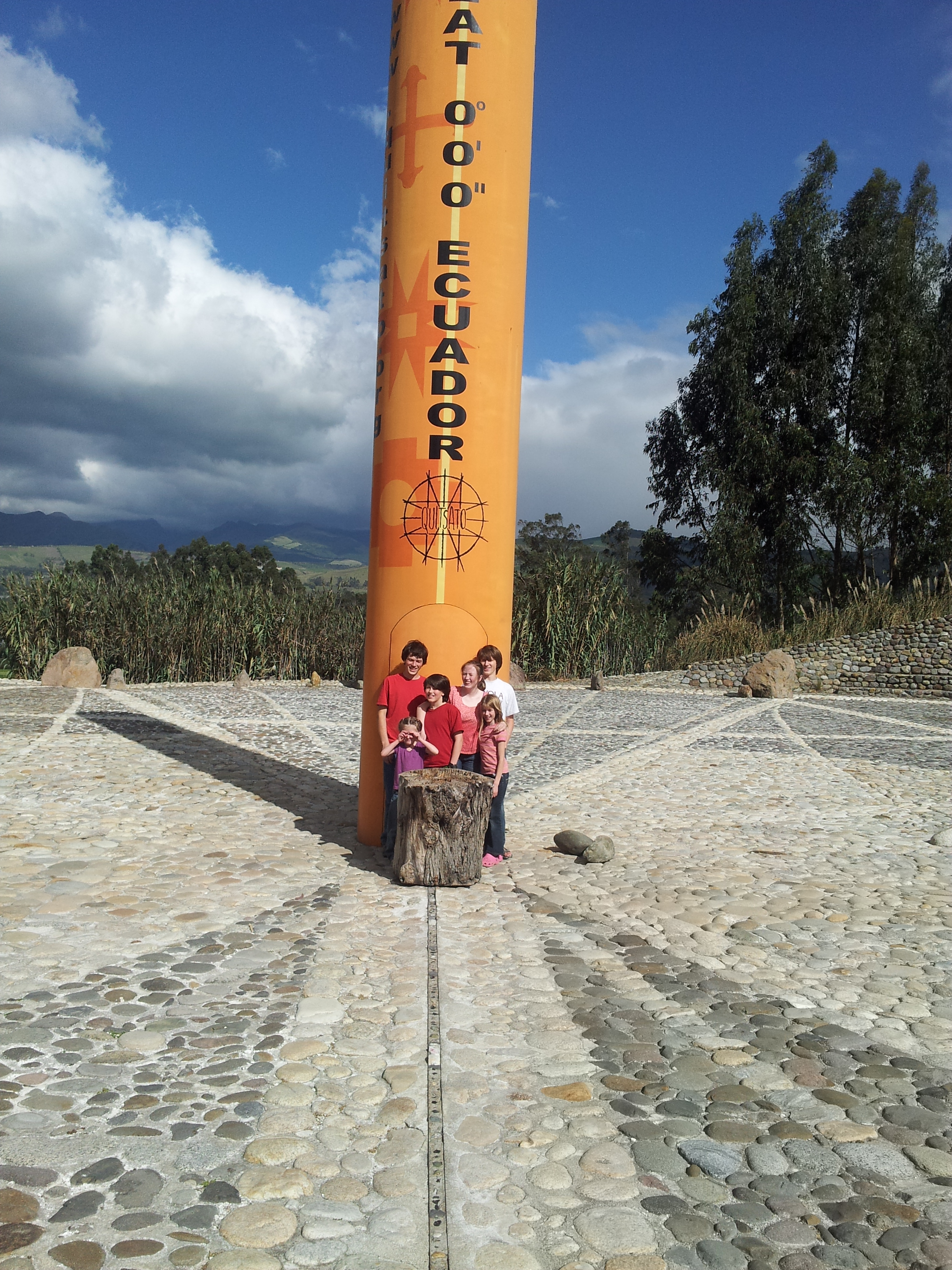
We crossed the equator – which is very exciting. It is summer here now. When we got there, several old British people were planking across the equator and having their photo taken. The water goes down the drain in the other direction. It’s pretty exciting.
What was also exciting was that we came across a Ford dealership! This is exciting as we needed new rear leaf springs for the van. Apparently it is hard work, pulling a 29 ft camper over the Andes.
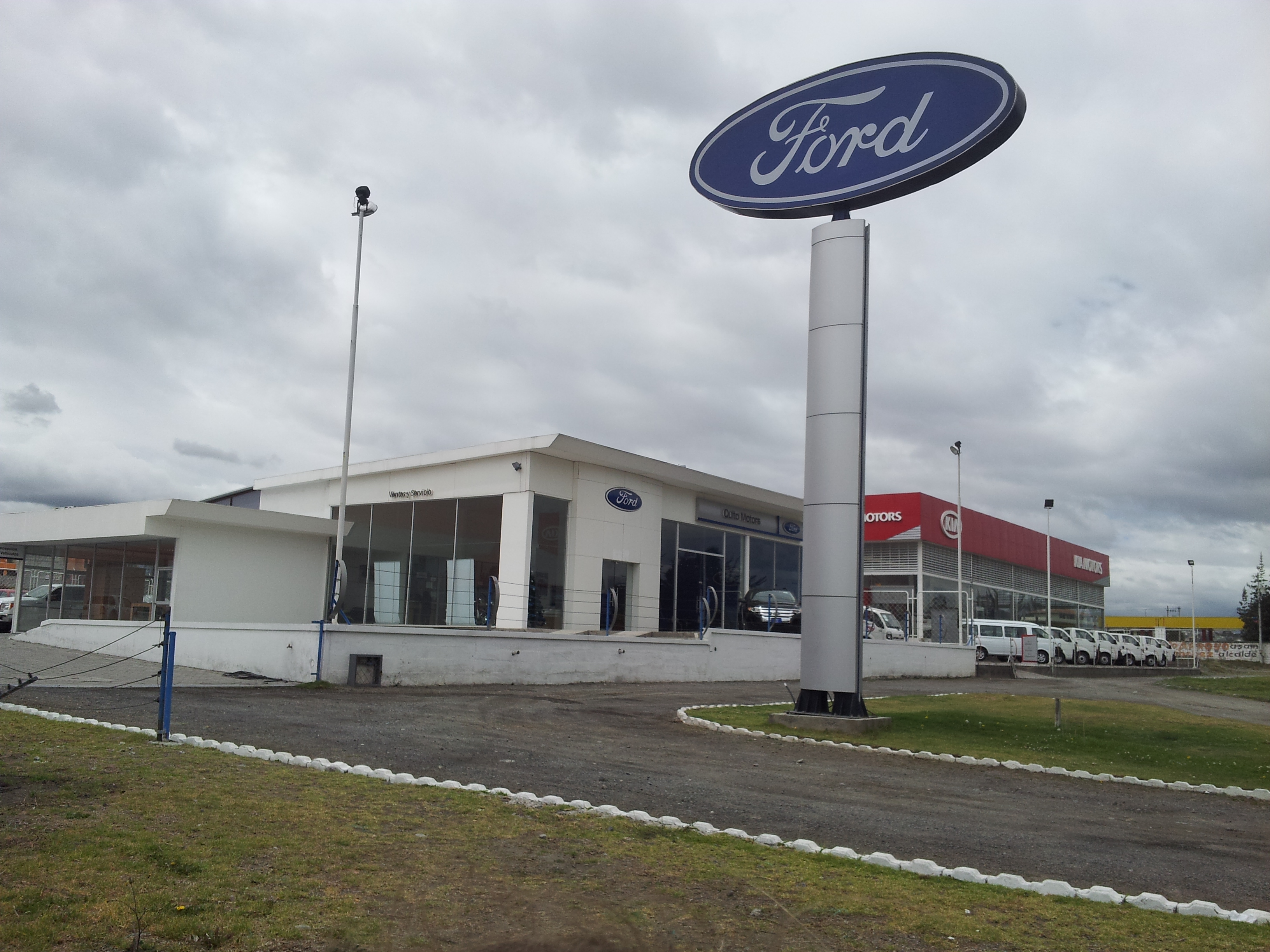
Mark ran inside Ford and we headed to the Latacunga Mall where we shopped in a glamorous, new and nearly empty mall. The food court had a restaurant called King Cuy Cuy (kwee) – that means guinea pig.
After shopping, we went looking for Mark and the Ford guys said he was around the corner in the shop. Which was here, in the street by the train track.
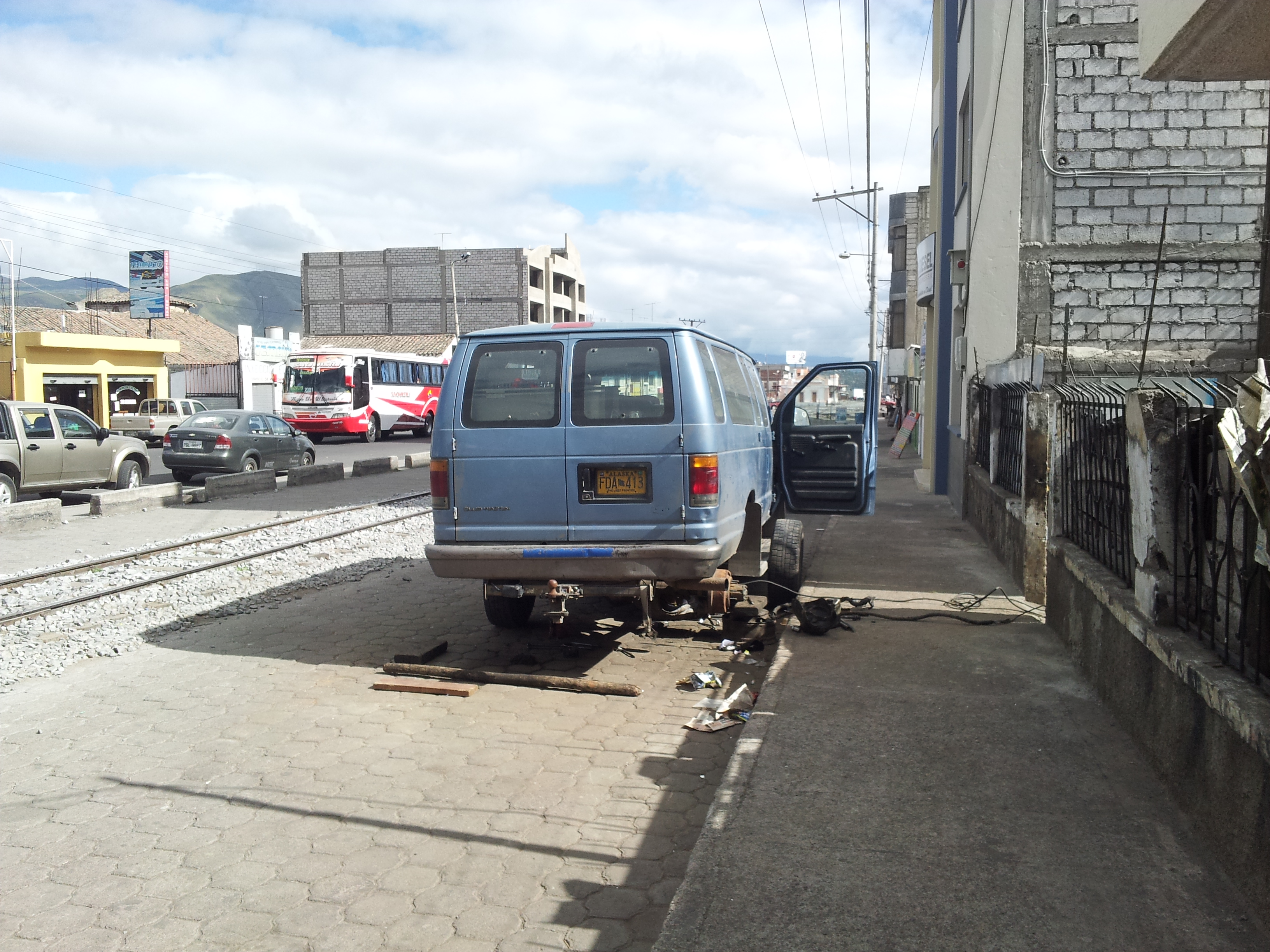
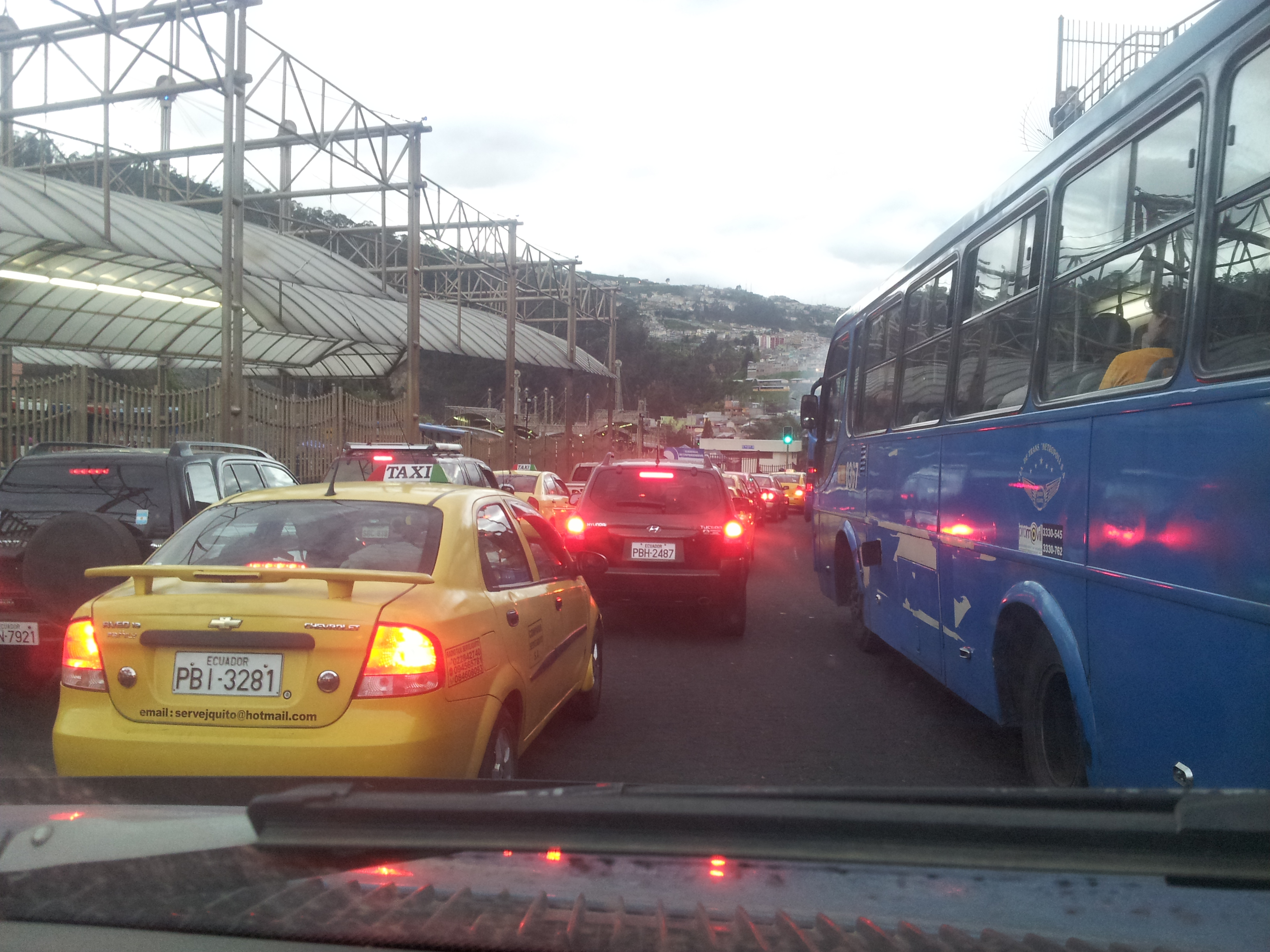
Ford fixed the leaf springs and then somehow jacked them up to be modified leaf springs while Ryan wandered around Latacunga. Here is a photo of driving the Pan American through Latacunga. It can be pretty stressful, bigger cities.
We drove on and found a weird playground with weird, dangerous (actually deadly) slides and such. Alpacas lived there too.
This slide was built on cement and the ladder up is widely spaced monkey bars. I wouldn’t let anyone but Jack & Jen climb up.
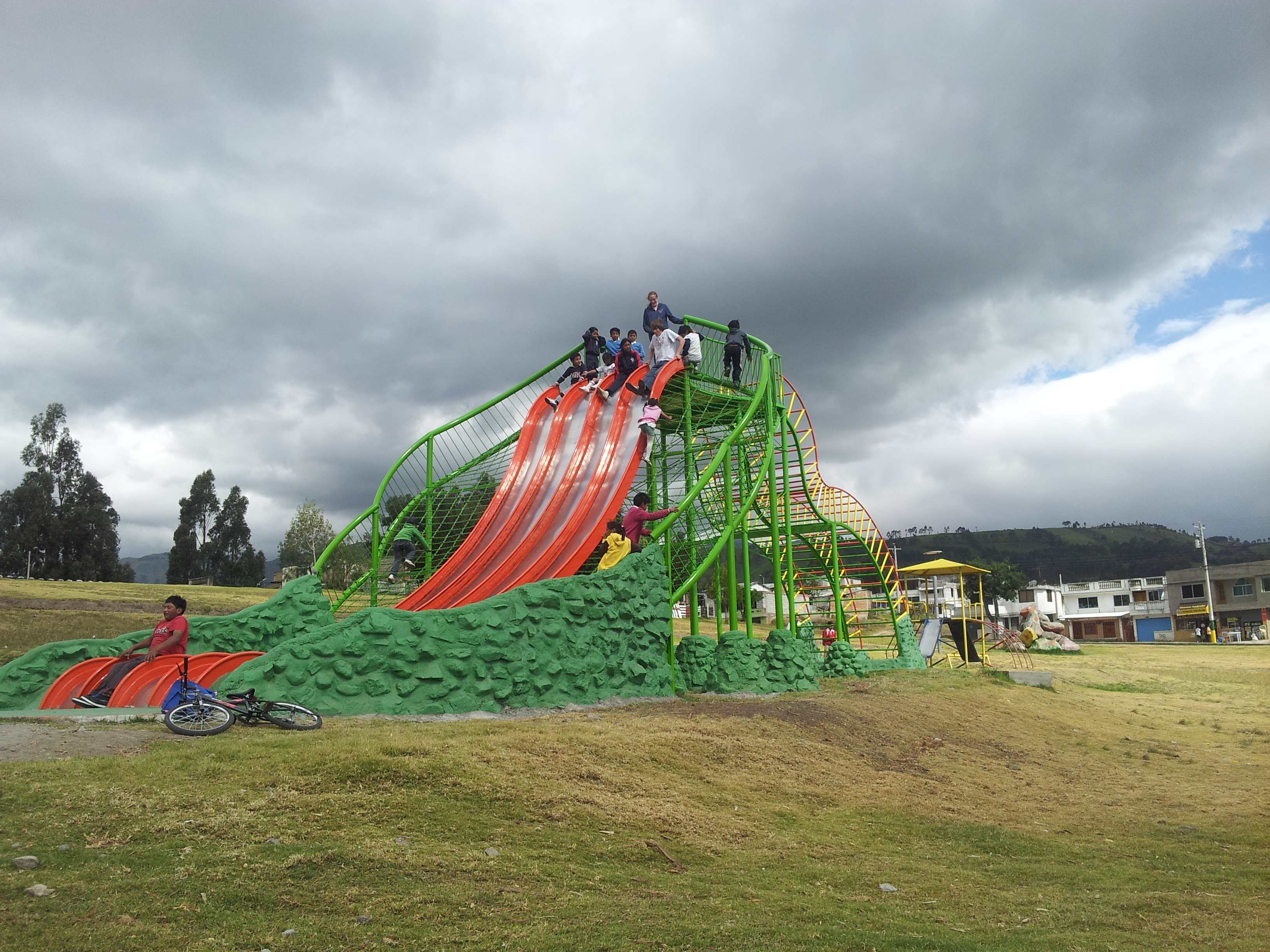
Jack went to the top of this thing which is like 30 ft high and has a hole at the top so you can climb out – and then fall to your death as it is a ball of wire above cement. A little kid kept trying to climb out. I couldn’t watch any longer – I had to leave.
We drove to Baños to soak in the thermal springs by the volcano – on the advice of Mary and Brian. We found a great parking spot, a restaurant parking lot that was only open for lunch. We disconnected the camper and drove to Tena (again on the advice of Mary & Brian). It was a great drive through these handhewn mountain tunnels and such. The jungle was beautiful.
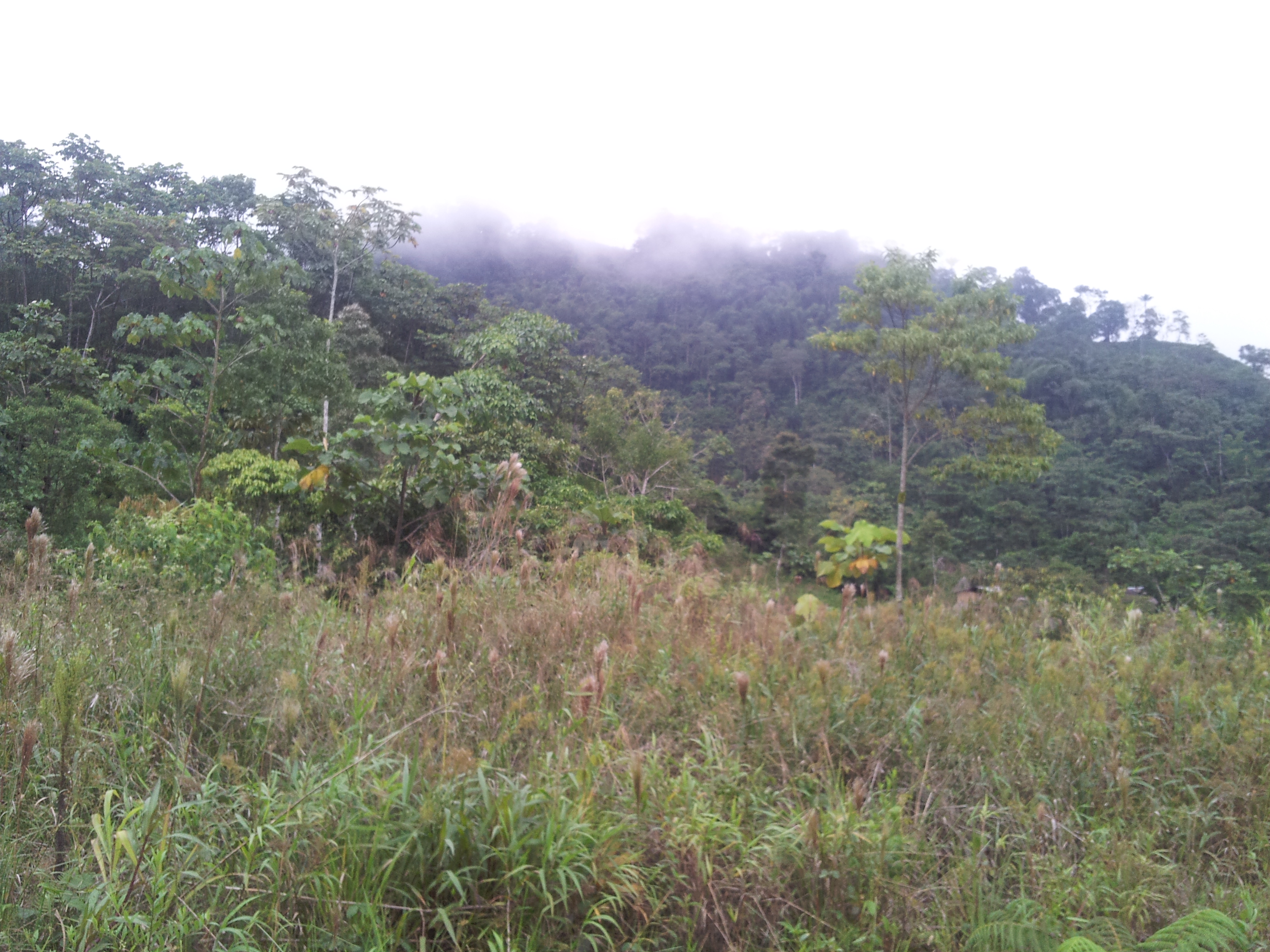
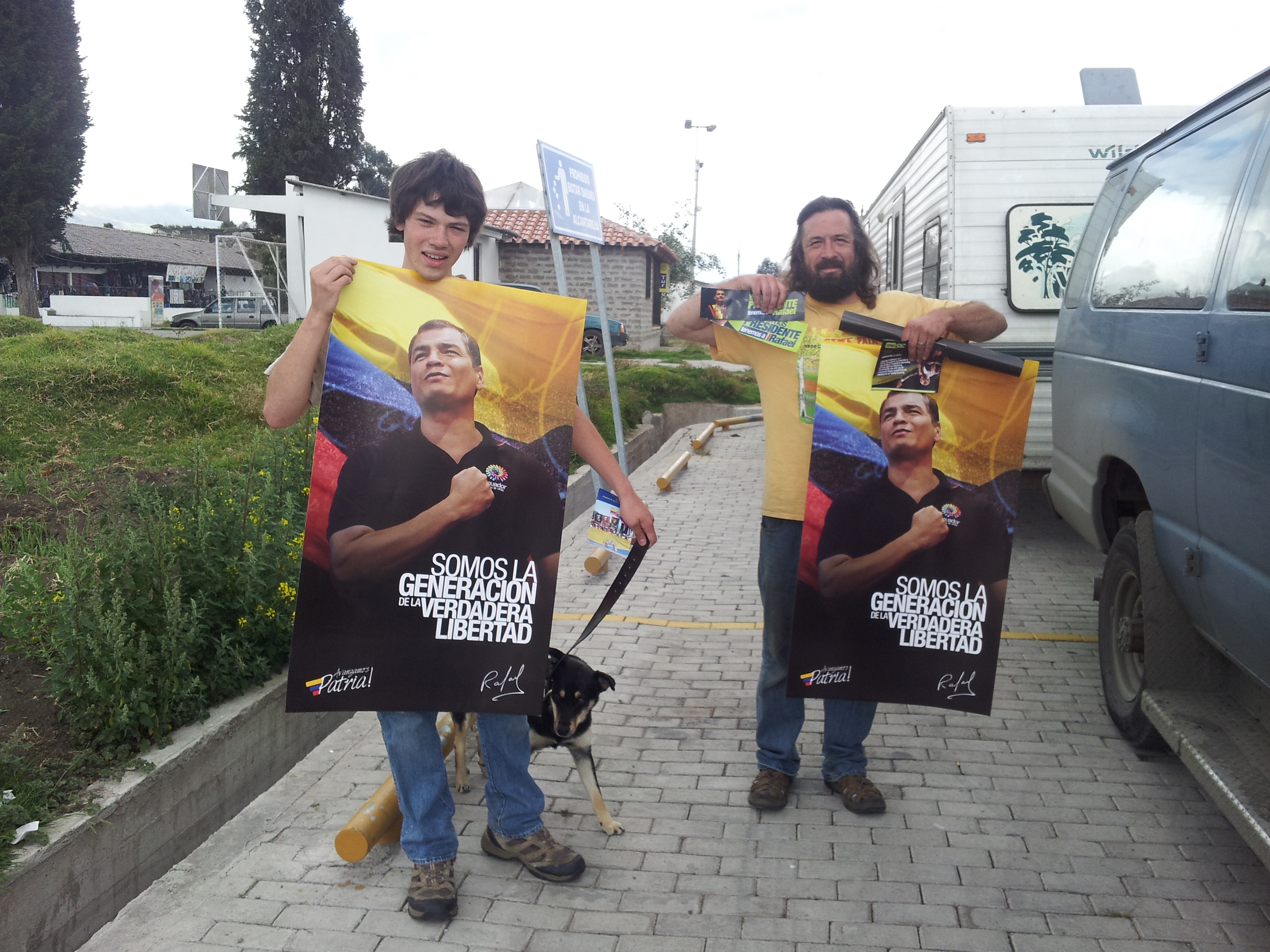
Mark and I liked Tena so much, we talked about retiring here! Ryan got a poster of the President of Ecuador Rafael Correa from the campaign office in Tena – he had wanted one for awhile.
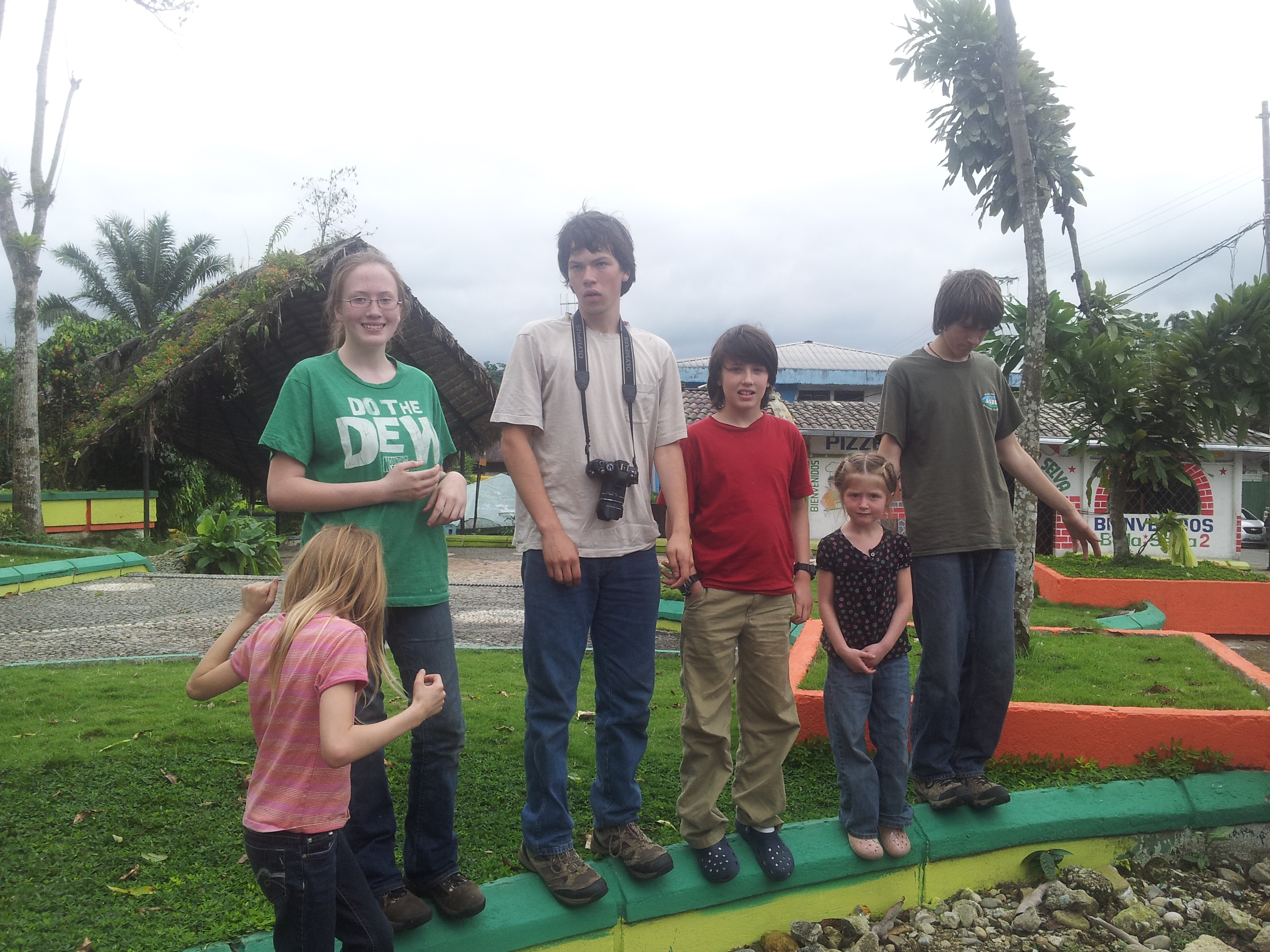
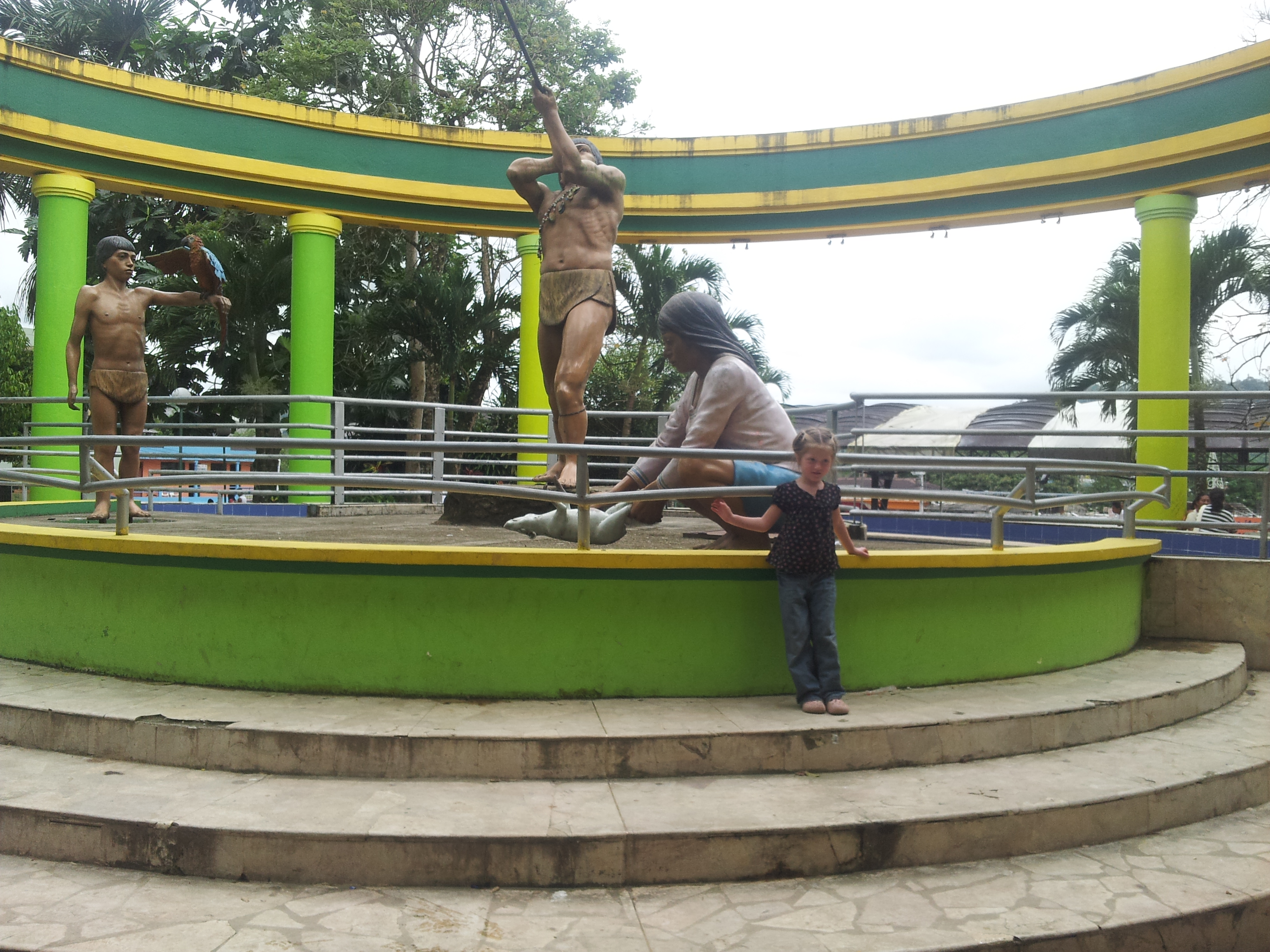
Then it was date night in Baños which was not as fun as it may sound. Seems like everything in Ecuador closes at 7pm.
Ecuador has a lot of ice cream which keeps Sylvia happy.
Ryan got more posters of Rafael Correa when we stopped at the Oldest Church in Ecuador and camped in the massive parking lot. At 7pm, the police set up a road block directly next to our camper so for the next three hours we were extremely safe but the police had their lights on the entire time. And there was a lot of megaphone talking. People here love megaphones.
We were unsure if we wanted to continue across the Andes to Peru or head down to the lowlands and cross into Peru that way. Both had good and bad points. Driving through the Andes is beautiful but slow. Driving through the lowlands is fast but hot. We finally decided on the Andes route.
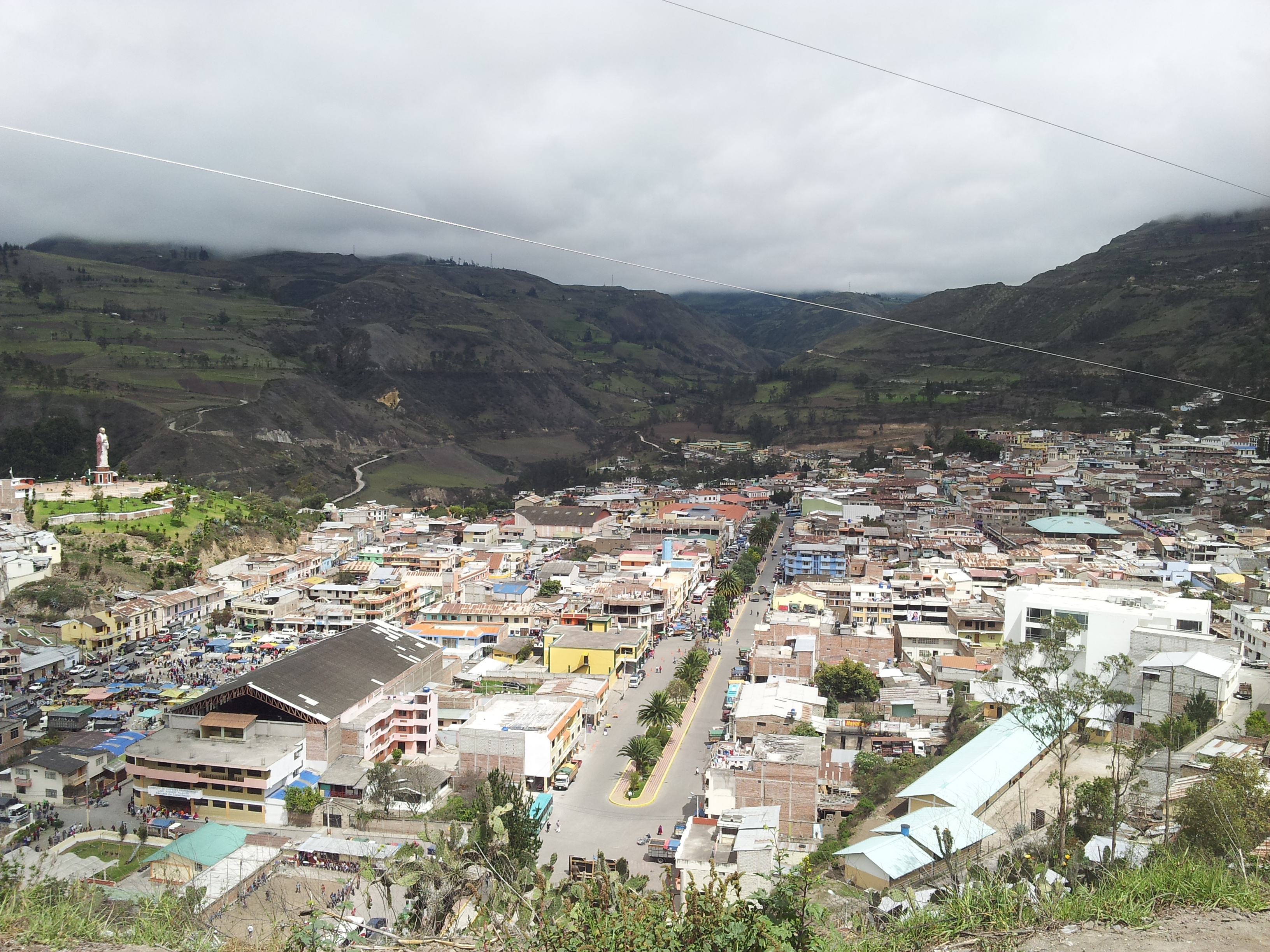
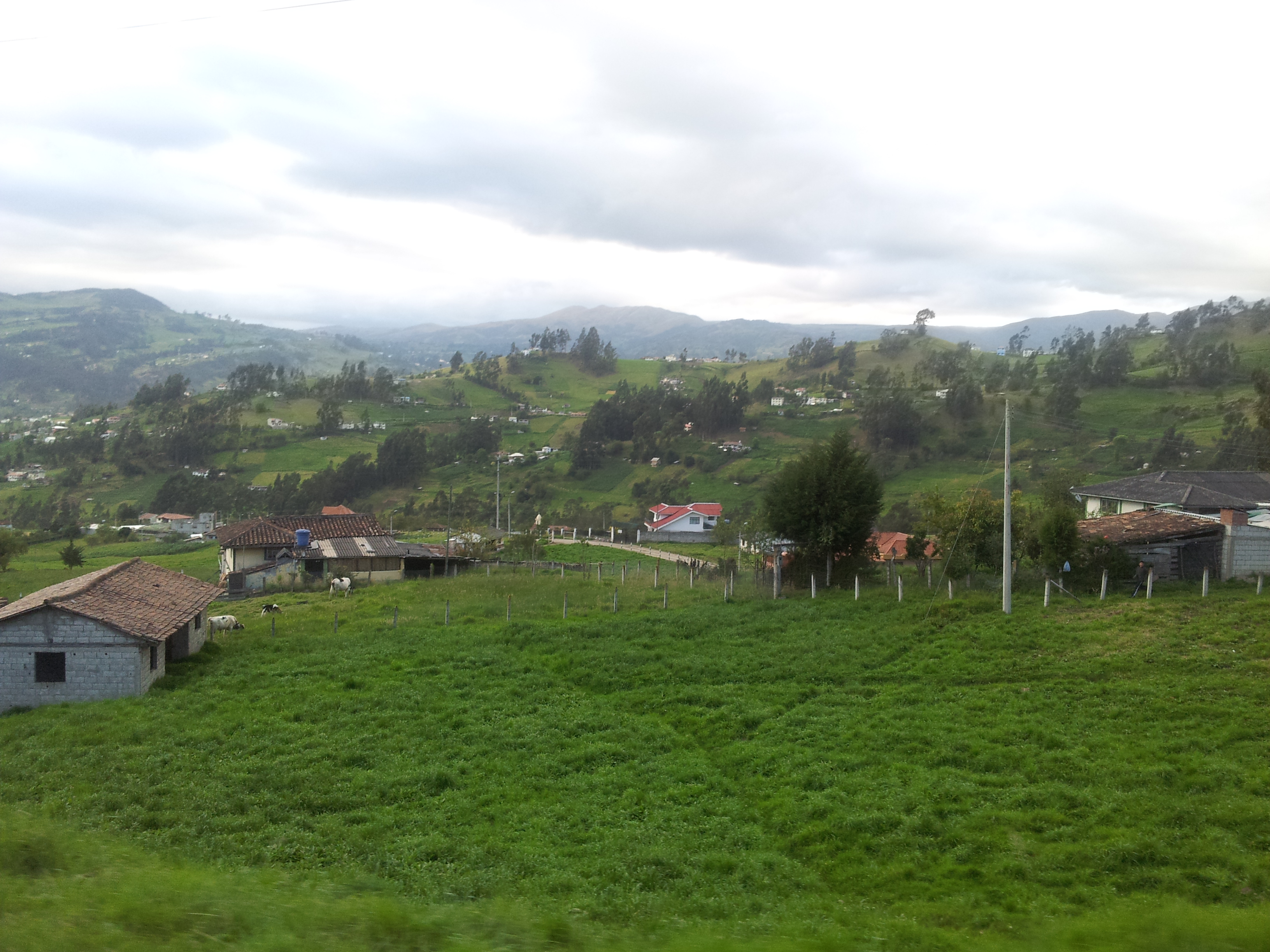
We arrived in Cuenca and have been here for three days. Mondays & Tuesdays are work days for me and we also had work samples for school due. We found a GREAT place to stay – a gas station and parqueadero just south of Cuenca called Rancho Alegre / Petro Comercial. It has a mini market and it is on a field of cows and they have free wifi (a life saver!) and the people here are really kind. One of the people here is from Peru and he gave us a long list of good places to camp. We are planning to leave tomorrow.
]]>
We had plenty of time to explore the town. We drove up to the Parque Cóndor one afternoon and we drove to the village of Peguche where Jack bought a, rondador, quena and chacchas and Ryan bought an ocarina. The days are now filled with haunting Andes music. The drive was straight up, about 2000 ft above Otavalo.
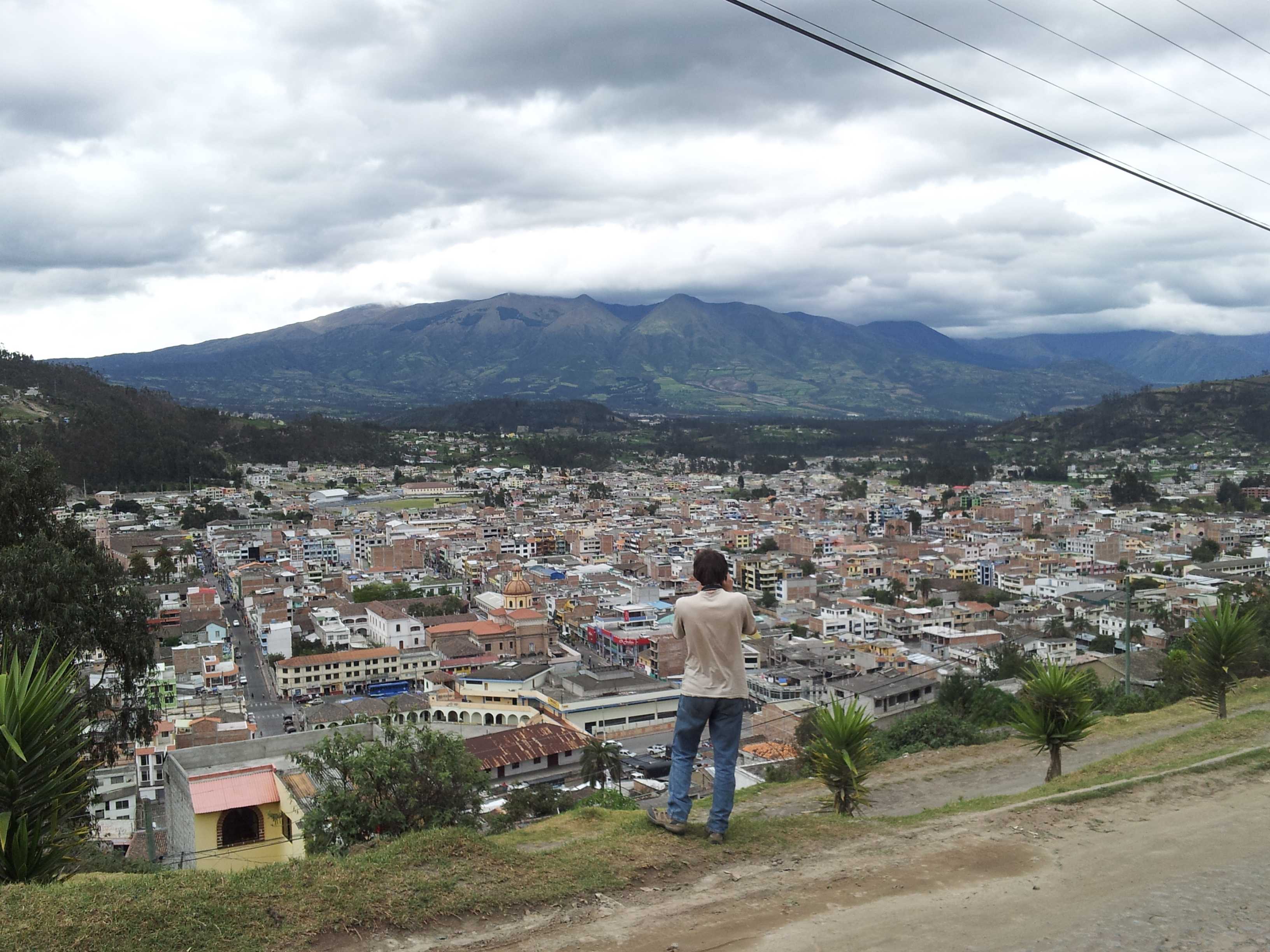
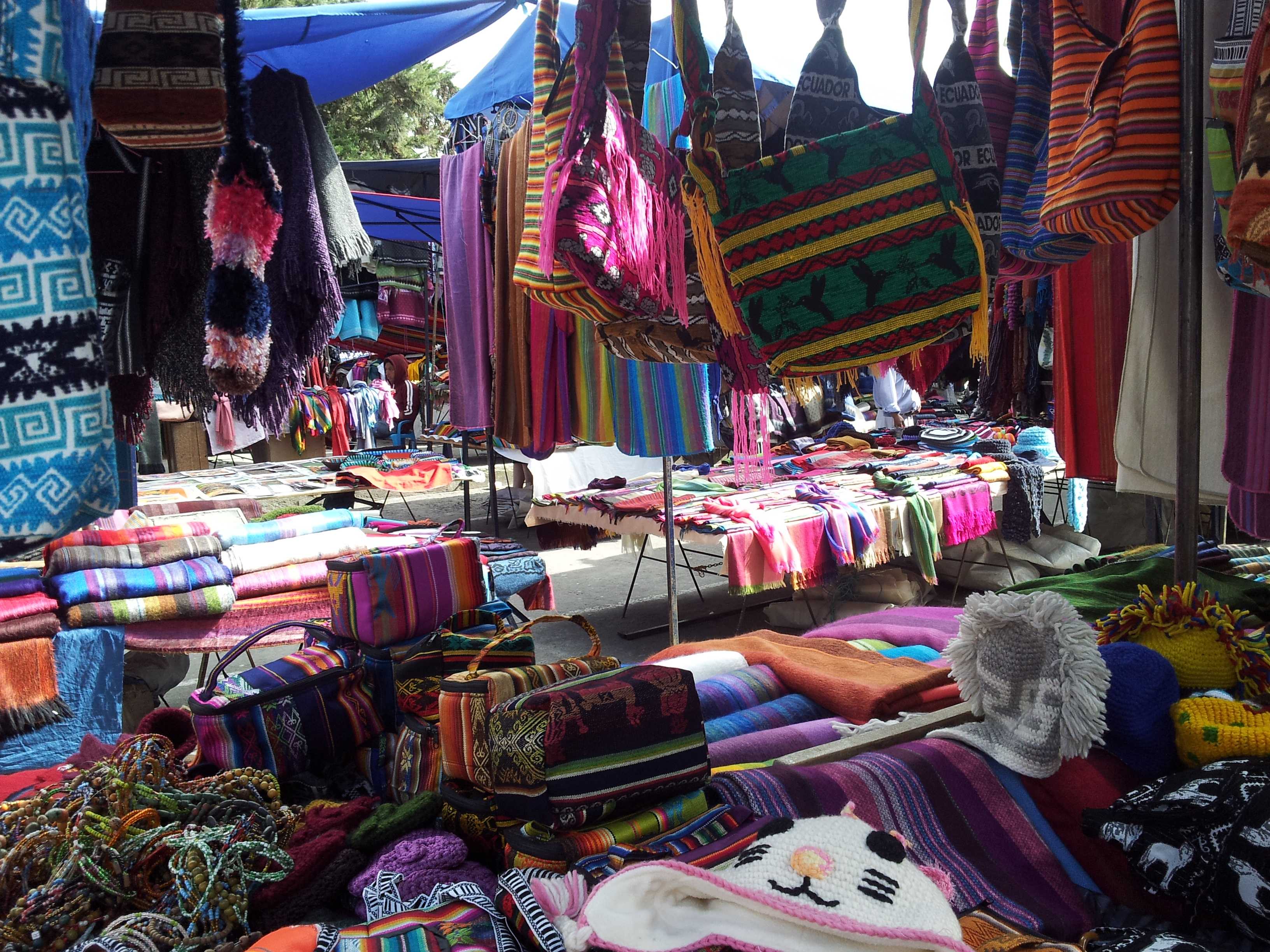
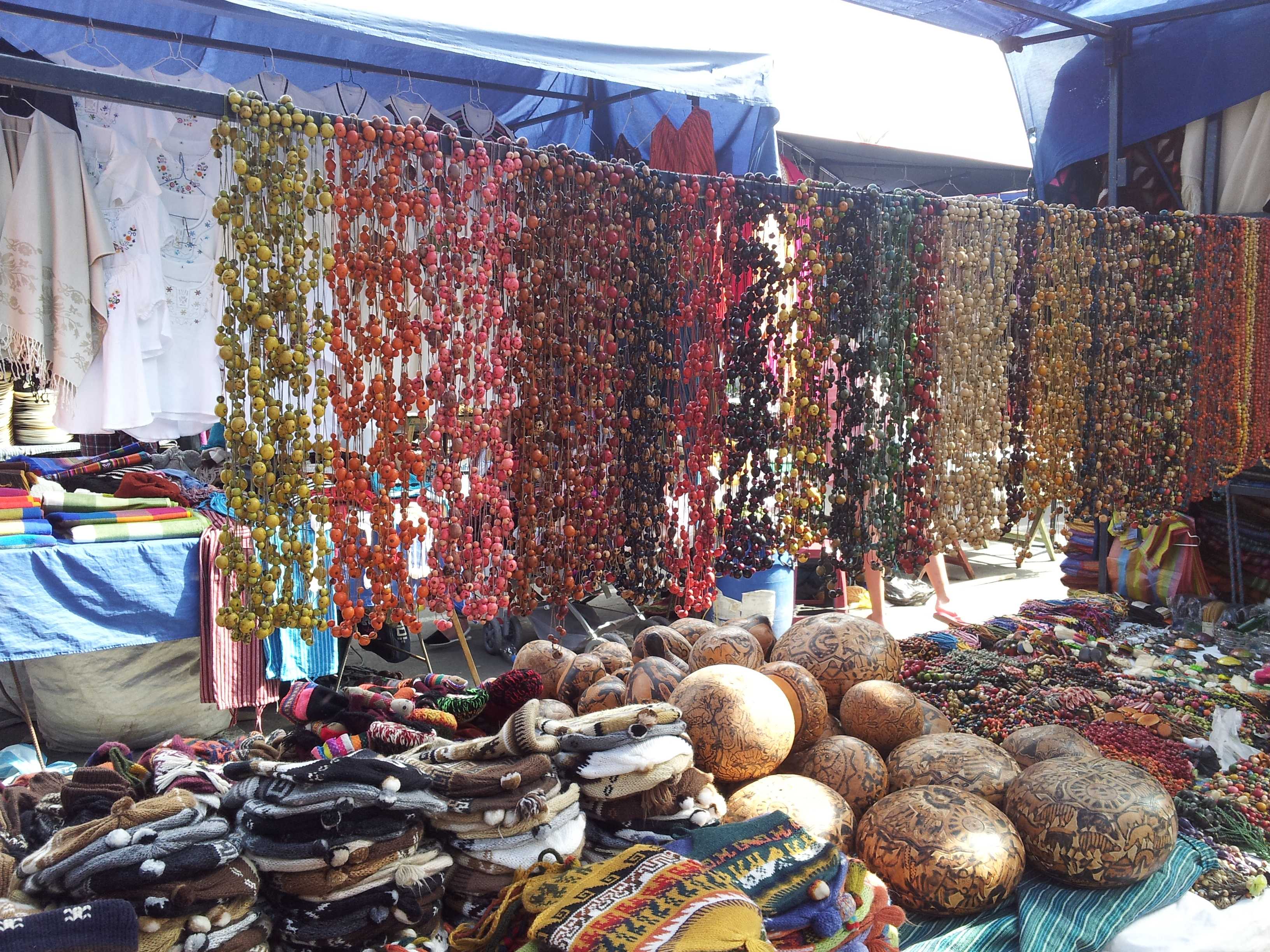
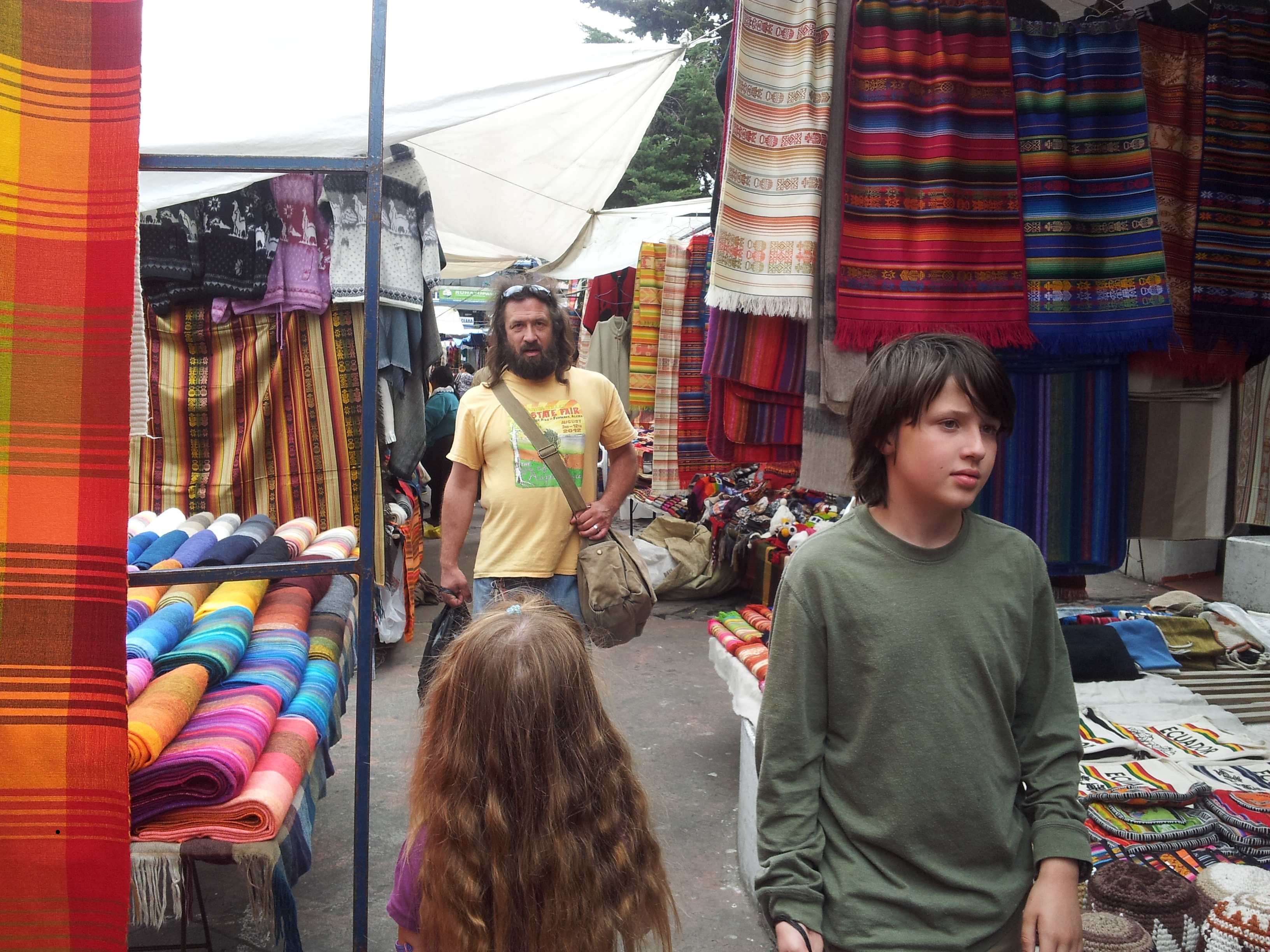
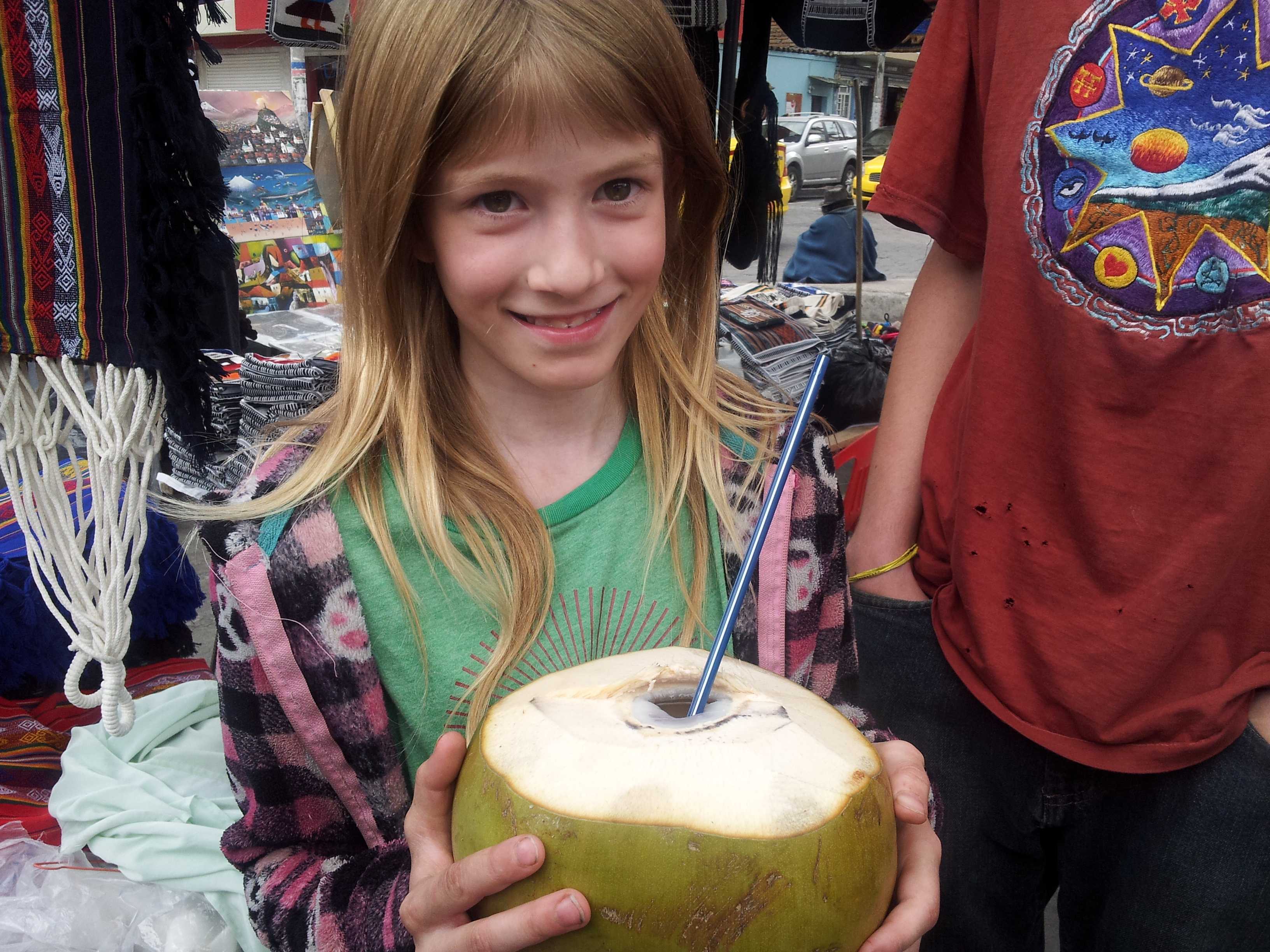
The market is every day but on Saturday it triples in size. During the week, it takes up the entire town square and on Saturday the streets surrounding the square fill up.
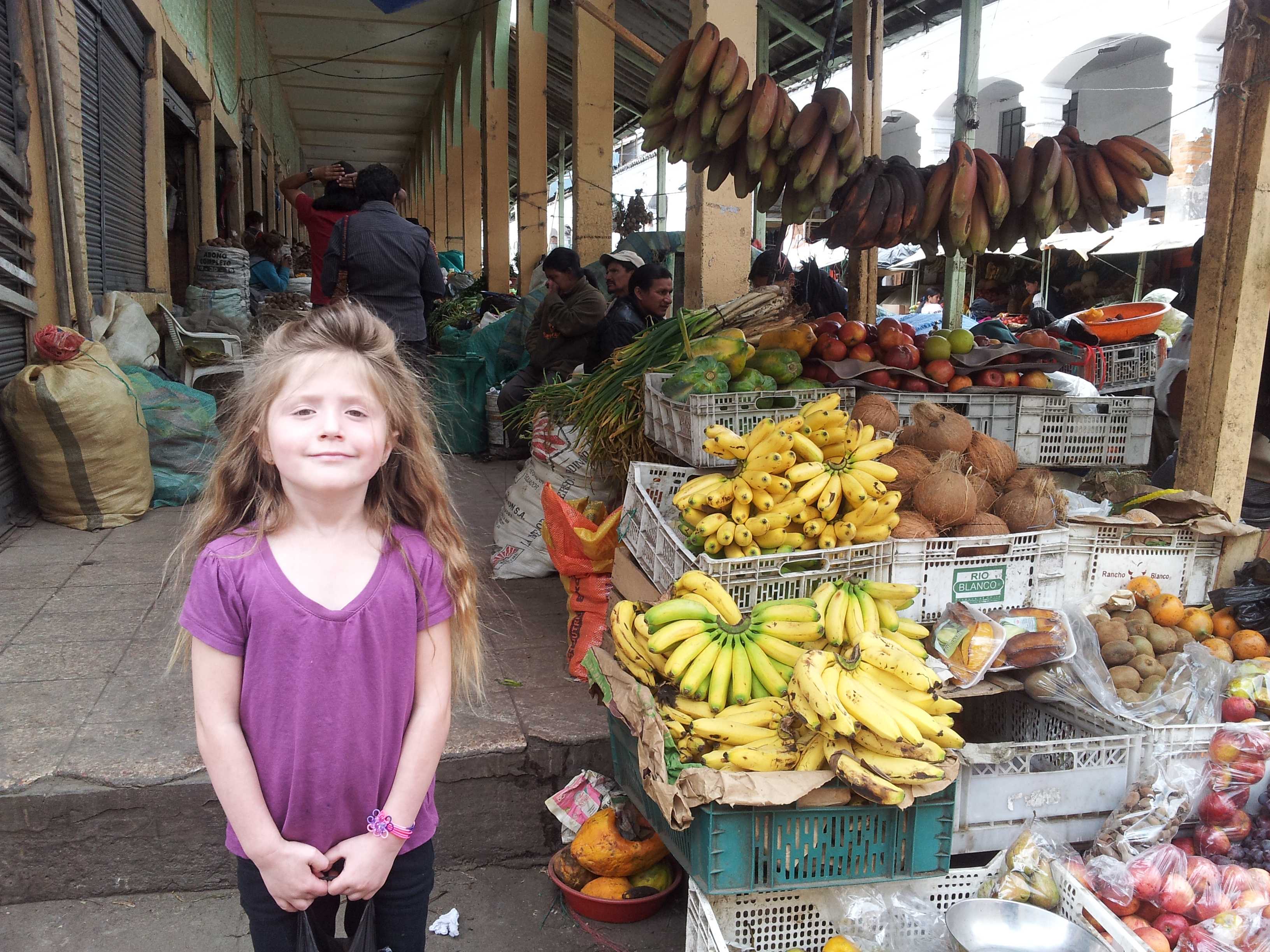
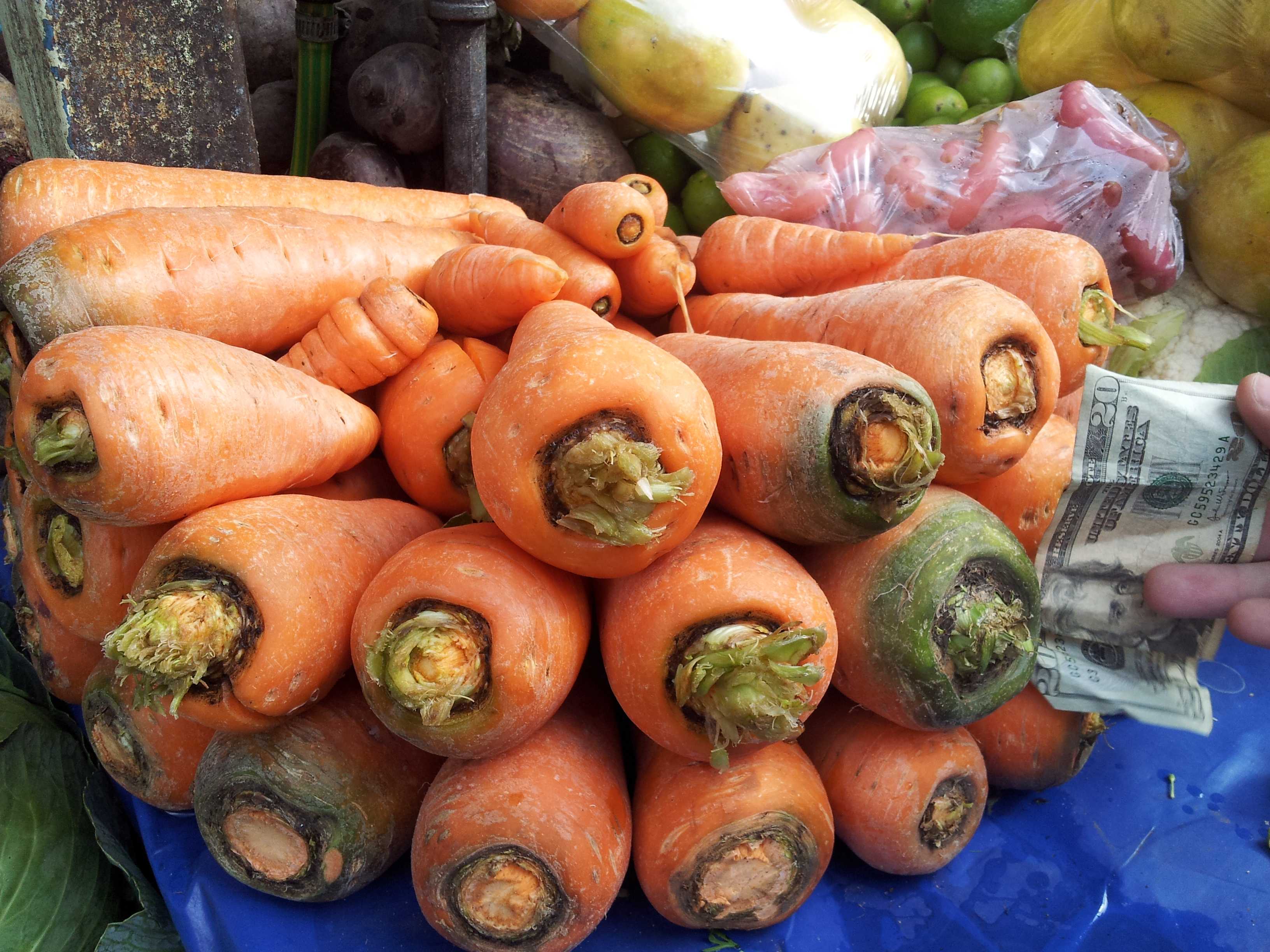
In another section of town is the food market. It is filled with flowers, fruits, vegetables and every single part of every animal. Stalls of chicken feet, pig heads, tongues – very colorful.
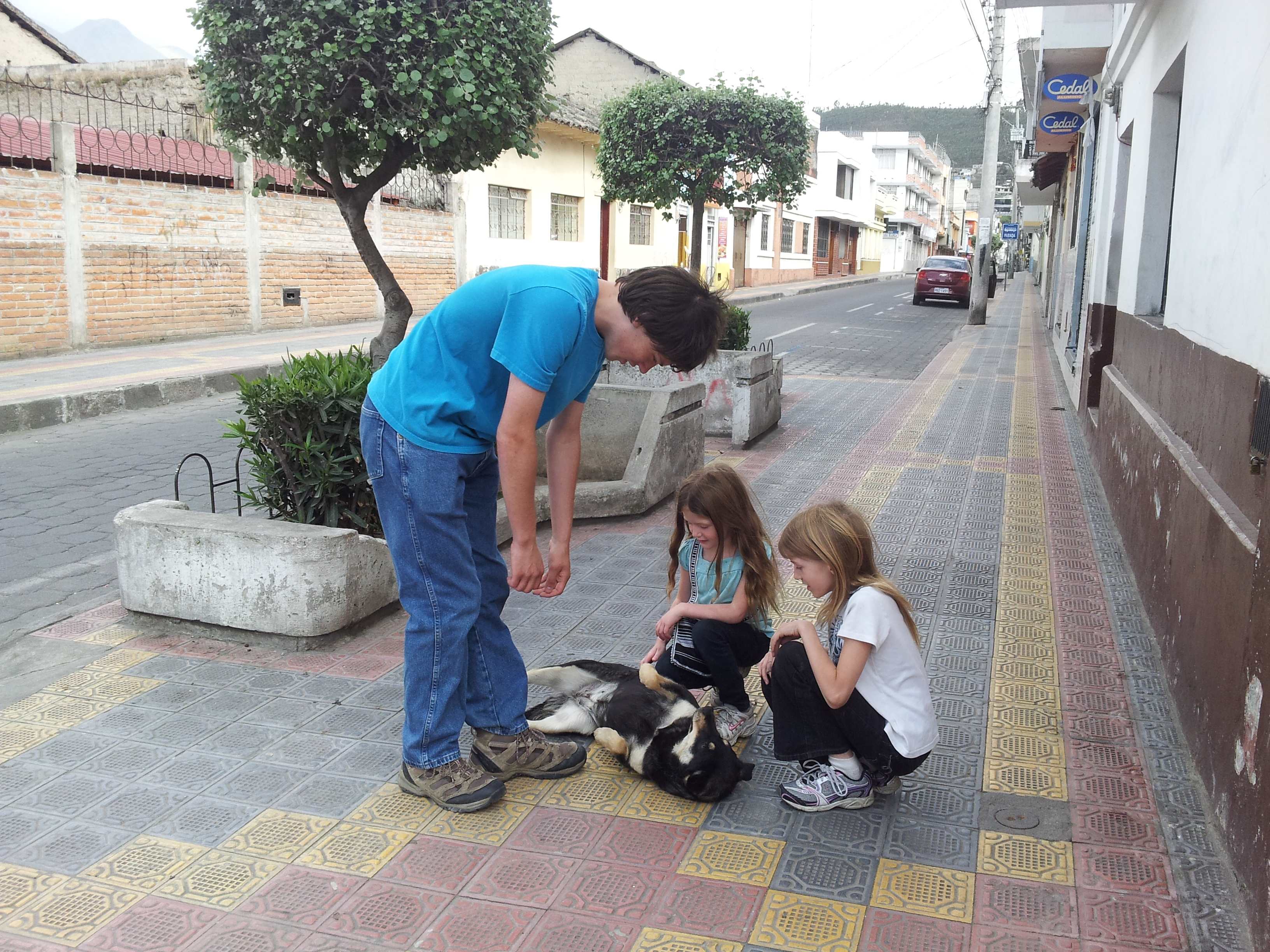
Louie got hit by a car here and his death was very hard on everyone. Two days later, a little dog showed up when we were in the market and followed Ryan all day. The dog continued to follow Ryan, sleeping in the road outside the parqueadero every night. We didn’t feed her or anything. She was particularly devoted to Ryan, waiting for him to come out of stores and waiting for him to wake up in the morning. She even tried to follow the van. She got shooed away from stores and restaurants and still persevered, we could not shake her. She is quiet and low key and seems happy to have kids who pet her.
]]>
On January 3rd, Trek broke out of a window in our trailer while we were away. He and Louis ran out of the parking lot, and Louis was hit by a car. I got there ten to twenty minutes after it had happened, and I believe Louis was killed on impact. I didn’t want to post this, but I felt that it’s something that should be said since Louis was a major part of our trip.

Louis at the beach on South Padre Island, Texas – Winter, 2011
The parquedero attendant was very sympathetic and found a corner of the parking lot under something that looks like an allysum bush where he dug a hole for us. Otavalo isn’t a bad place to go, I’m sure the people we bought him from on Fort Wainwright would never have guessed ten years ago that he’d be hit by a car .13 degrees from the equator in the Andean Highlands. It wasn’t until we lost Louis that it really struck me how far I am from home. Louis was a really great dog, there’s a lot I could say. We will all really miss him, he was the perfect dog to travel with.

One of the last photos I have of Louis, on top of a mountain in Antioquia, Colombia
We had planned on spending a short time in Colombia. People say that you can drive from Cartagena to Ecuador in a day or two as it is only about 700 miles. Our initial plan was to drive straight to Ecuador – but that was before we all fell in love with Colombia. The food was some of the best we have ever had. The people were without a doubt the nicest we had ever met traveling. The scenery was unbelievable (and we are from Alaska!).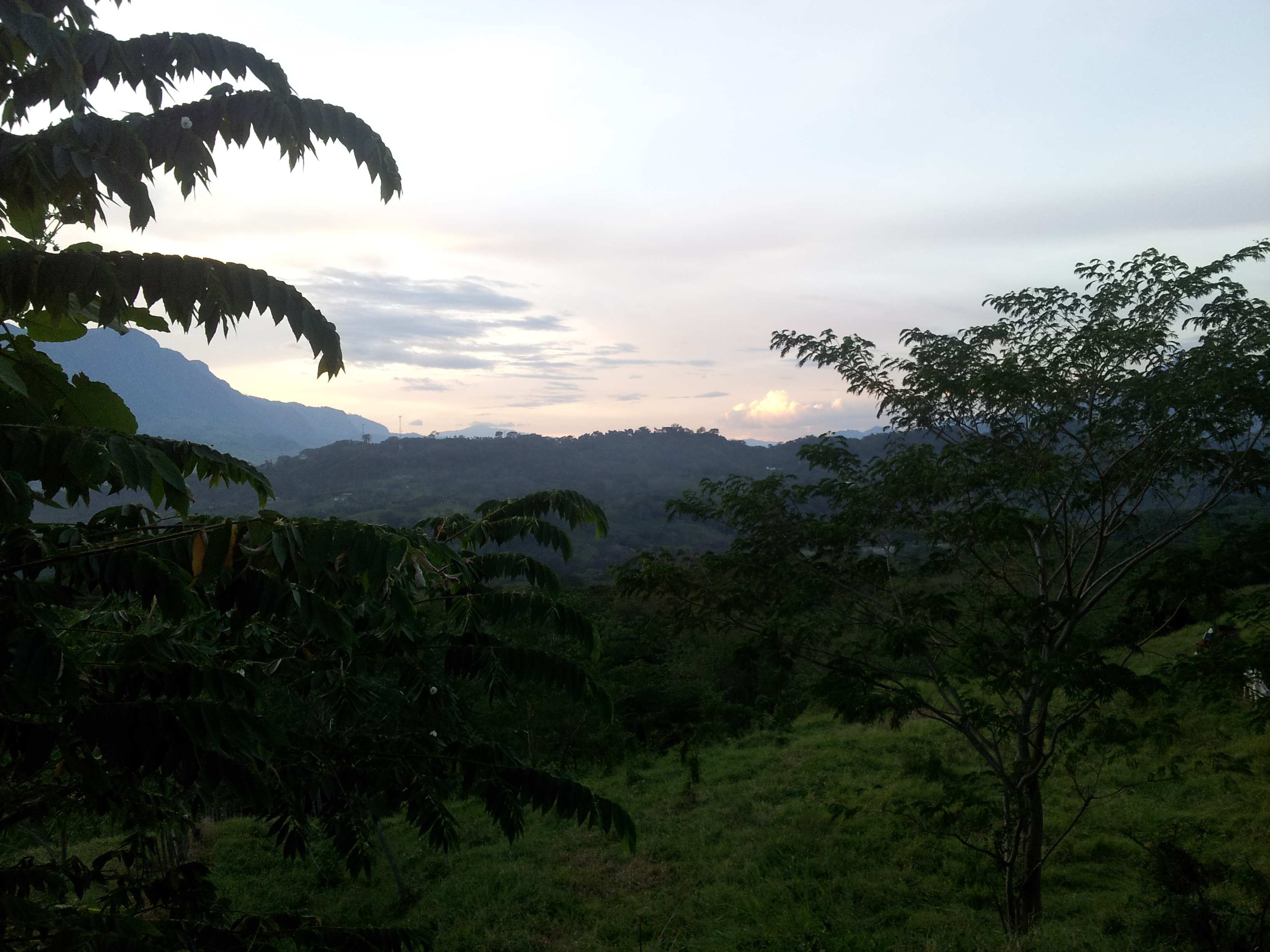
We left the coastal lands (the hot lands) and entered the highlands where most people live. The temperature was better for us. We stuck to the Pan American Highway and disconnected the camper when we wanted to drive to villages off the Highway.
Driving in Colombia Pulling a 29 ft Trailer
When we first began researching this trip, we could find very little information on the roads in South America. The descriptions we did find were usually vague (fine or rough or slow). We figured (correctly so far) that if a truck could drive the Pan American, then so could we.
First, it was always our plan to stick to the Pan American Highway. All adventures off the
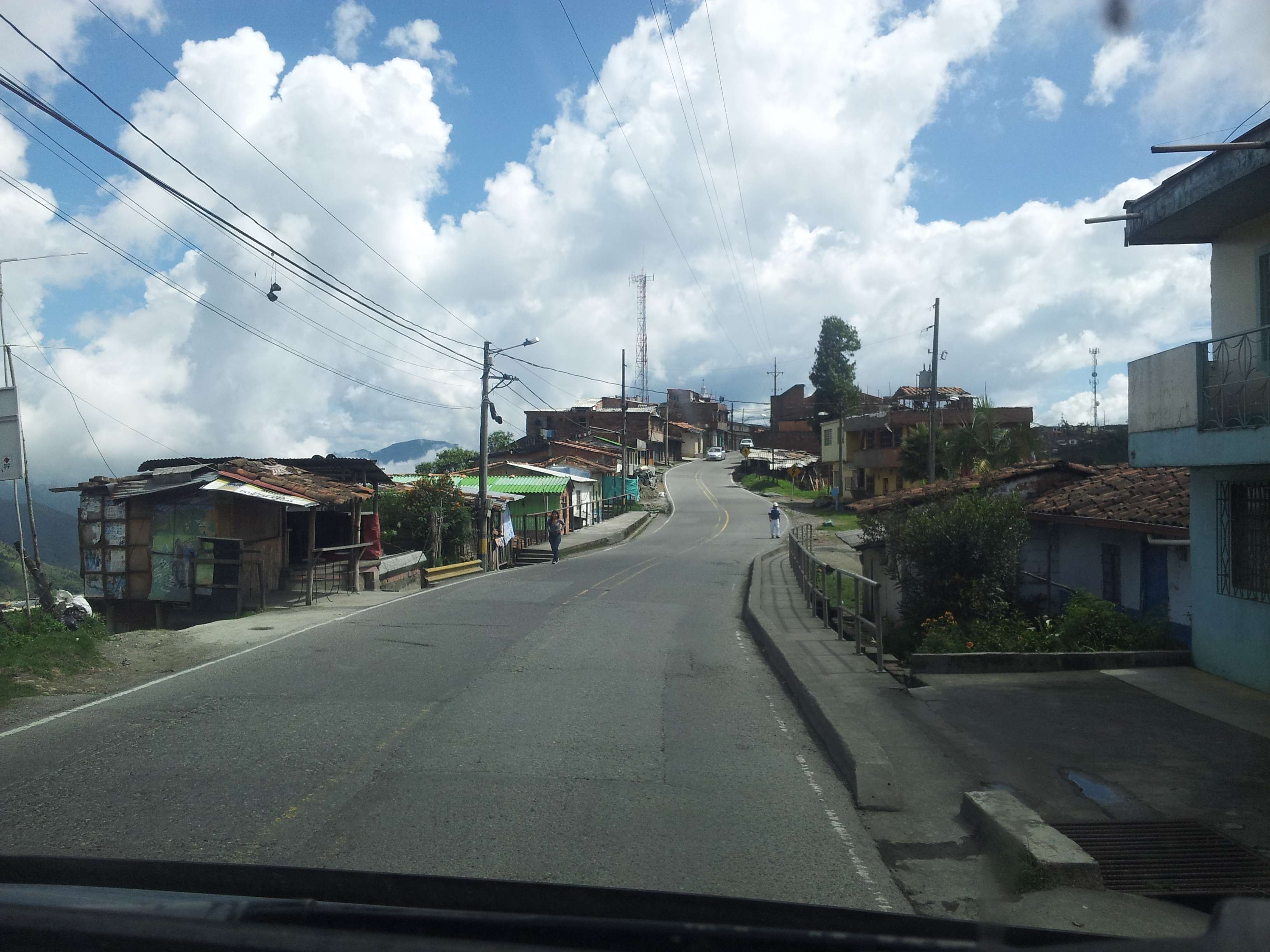
highway involve parking and either disconnecting the van and driving, walking or taking a bus / taxi. The first rule of driving a big rig is Don’t Leave the Highway unless you know for sure you can get where you are going. We are lucky that our rig is short (many are not) so we fit under archways and such. The Pan American wends through several big cities in Colombia and driving gets tense but it is all part of the adventure.
Here are some things to note about the Pan American in Colombia:
- Parquaederos are everywhere, all along the highway. There is always a place to park over night. Some are industrial like parking lots (we only stayed in one of those near Popayon), some are gas stations (some are crowded and loud, some are close to the road but many are spacious and quiet), some are restaurants and some are in hotel parking lots where you can pay the price of a room ($12 USD seemed to be the most expensive) and use the pool, the showers, the wifi and the room. The cost ranged from free to $7000 pesos ($4 USD).
- There are often no signs especially when you need them most. Sometimes there is a sign that says something is about to happen (like turn left up ahead) but then when you get to the point it is a roundabout with three left turns off of it – none are marked.
- GPS barely works when you need it. Often we were driving in a white space.
- Roundabouts are in every city and manage all traffic flow.
- Traffic lights turn yellow before they turn green as well as before they turn red (green – yellow – red – yellow – green)
- The Pan American is a toll highway. We paid about $7000 pesos per toll (same as a car). We paid $82,000 in tolls (about $42 USD).
- People stretch ropes across the road and you have to stop. A few coins and you are on your way – a kind of unofficial toll.
- There is a strong police / military presence but they never stopped us once and were always kind and helpful
- We passed many gas stations in southern Colombia that were sold out of gas (not diesel)
- Many gas stations do not take credit cards.
- Most small towns do not have an ATM. ATMs are often out of cash.
- There are sections of the highway that are literally a steep uphill /downhill for thousands of feet.
- Vehicles pass three and four at a time so there are sections of the highway that may look like a four lane, one way highway but it is just trucks and cars passing a truck. At the same time. Early on, we got confused coming out of Cartagena because the road divided (one side went into a town) and the other turned into a major passing section. It looked entirely like a divided highway section.
- There are few places to pull over when you most want to pull over (scenic overlooks, steep uphills)
- We nearly overheated a few times driving. Make sure you have plenty of water.
- We filled up with water at almost every gas station. The water is clear and smells like chlorine but we only used it for showering, dishes, laundry — and overheating.
- People fill the pot holes in and remove rocks from the road and expect you to pay them. We handed out coins and it was never too little.
- There are military police check points all over the place but they always gave us the thumbs up (meaning we could drive on). We did see buses stopped and searched and we met some people who worked with the police at a restaurant – they wanted to see pictures of snow.
- Expect to be the center of attention every place you stop. We were sometimes swarmed with people and it feels a bit scary at first but every single time it was a fabulous experience.
We divided our trip through Colombia into five sections:
- Cartagena
- Cartagena – Medellin
- Medellin – Popayon
- Popayon – Pasto
- Pasto – Border of Ecuador
Cartagena – Medellin
The roads out of Cartagena are smooth and paved. We passed through one police check point, they looked at Mark’s passport and asked us questions about Alaska. The inland country is very hot and humid. The first night, we actually felt like we couldn’t breathe (but we are Alaskans). The road is two lanes and there are not a lot of cars – but there are many trucks and even more motorcycles. There are no passing lanes and few places to pull over. Once you start the climb into the mountains, things move pretty slow. Trucks average about 35mph and there is really no passing because there is just another truck uphead. Better to just relax and enjoy the slow and beautiful drive. We could have made the trip to Medellin comfortably in three days but we weren’t in a hurry.
Camping spots:
- A field in Arjona on the left side of the Pan American.
- Parquedearo with a big field and a restaurant and a little store
- Santa Rosa de Osos parquedearo, a five minute walk into the lovely town and the parquedearo is behind a 24 Hour Travel Stop which had a cheese maker, a bakery, a small store and restaurant with excellent and inexpensive food.
Medellin – Popayon
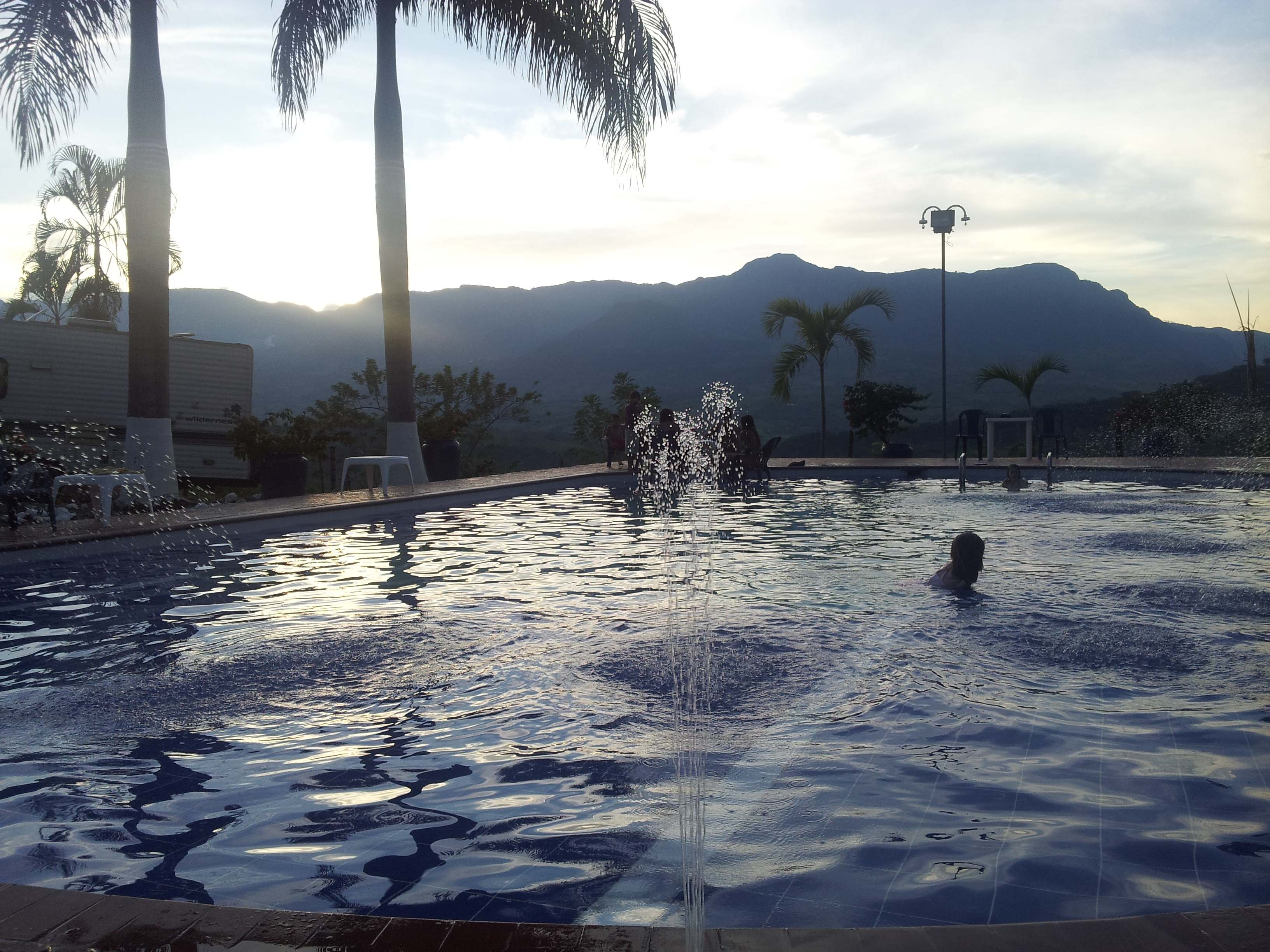
 We spent wonderful and relaxing days in the beautiful town of La Pinatada.We saw a parquedearo with a hotel and a pool and it turned out to be one listed in Americas Overland but the name had changed to Mirador del Rocio. We were not really looking for a place to camp but this looked so wonderful that we had to stay. It was $20,000 pesos a night ($11 USD) and that included the pool, the bathrooms and showers and a nice lobby patio with hammocks and ping pong and a pool table. The hotel overlooks the coffee fincas.
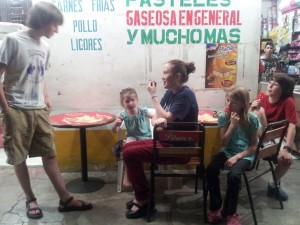
In the evening, we disconnected the van and drove into town and walked around. We bought popsicles and some supplies (potatoes, avocados, oranges for juice) and were headed back to the van. Women were gathered around the van peering inside – it was Sylvia’s car seat that they were looking at. The car seat led to a lengthy discussion which involved Sylvie buckling herself in as a demonstration. Car seats are completely unheard of in Colombia. We told them they were the law in the USA and there was much conversation about this. Our van is also quite the conversation starter, even without the Alaska plates. Kids always ask us why we have a bus as even minivans do not exist in Colombia.
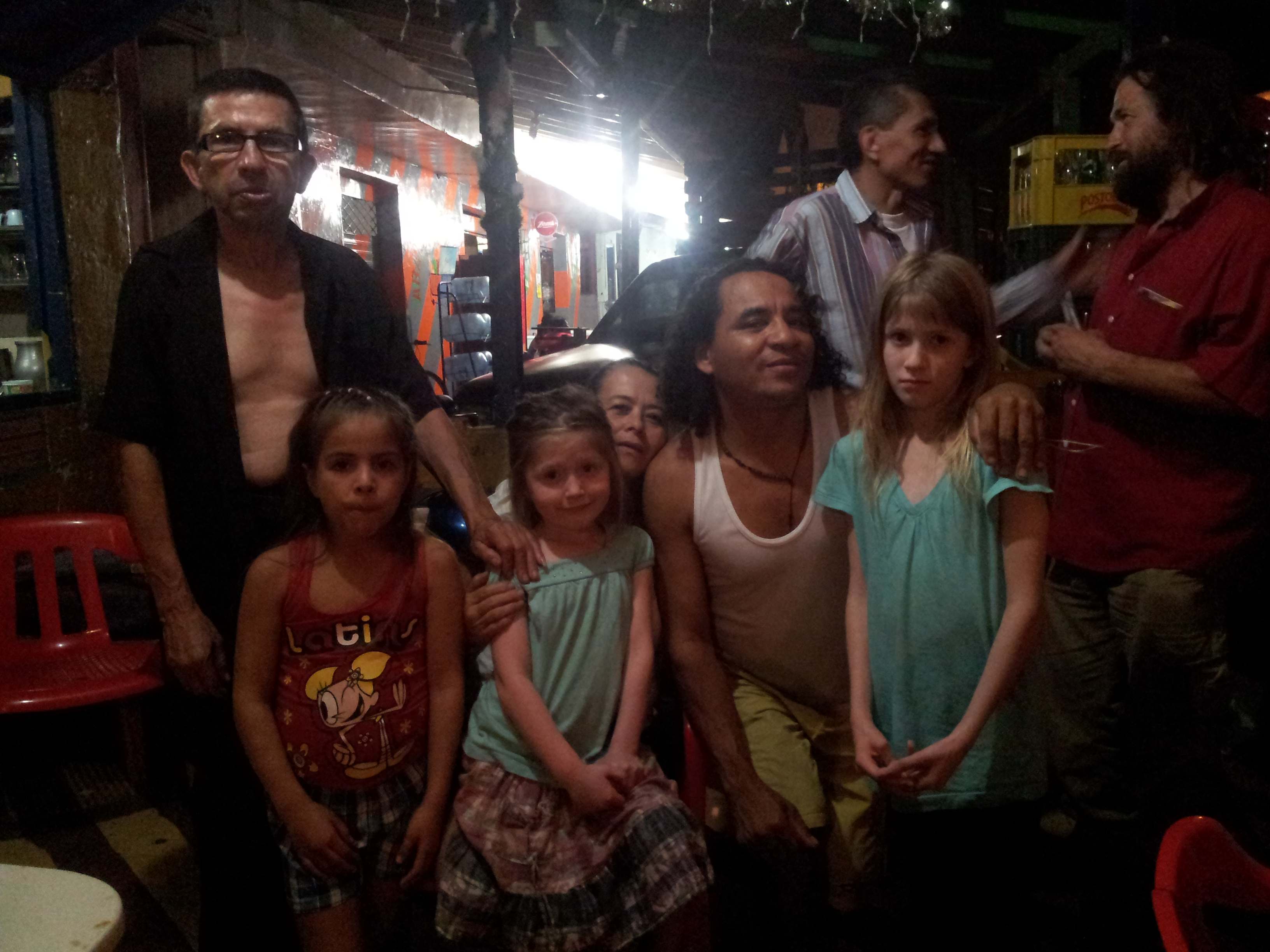
In La Pintada, we met some wonderful and friendly people who brought us all to their restaurant and gave us all bottles of juice. The juice was Colombian and they were wanting to share things from Colombia with us. It is hard for us to understand Colombian Spanish as there is a strong accent so we talked haltingly for a long time and had a very nice evening. We left with a great CD (the folks we met were in a band) and promises to meet up when we left La Pintada so they could see the camper. We did this – which is no easy task but we had great luck and a truck was delivering produce when we pulled up and it promptly left so we had plenty of space to park.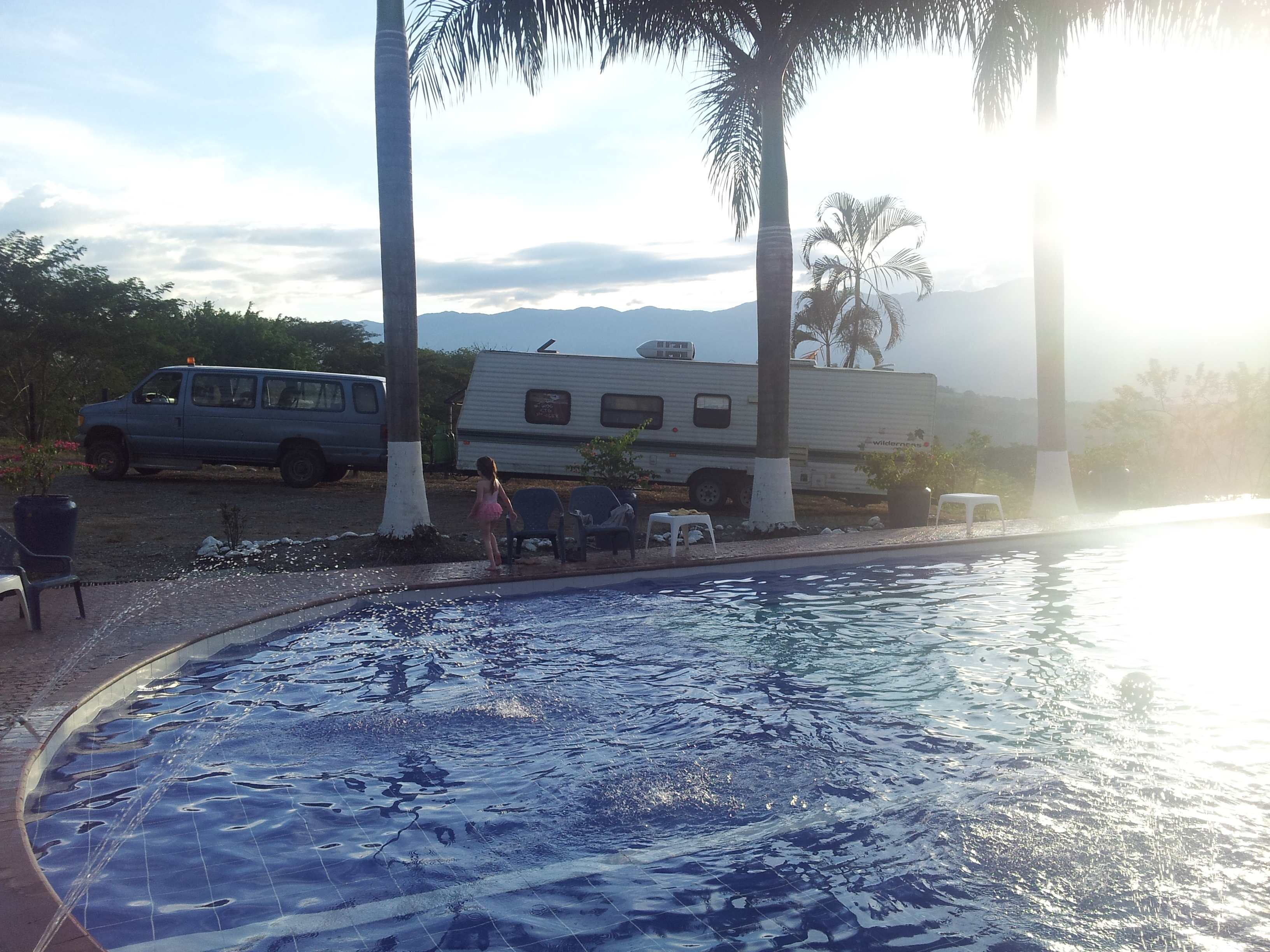
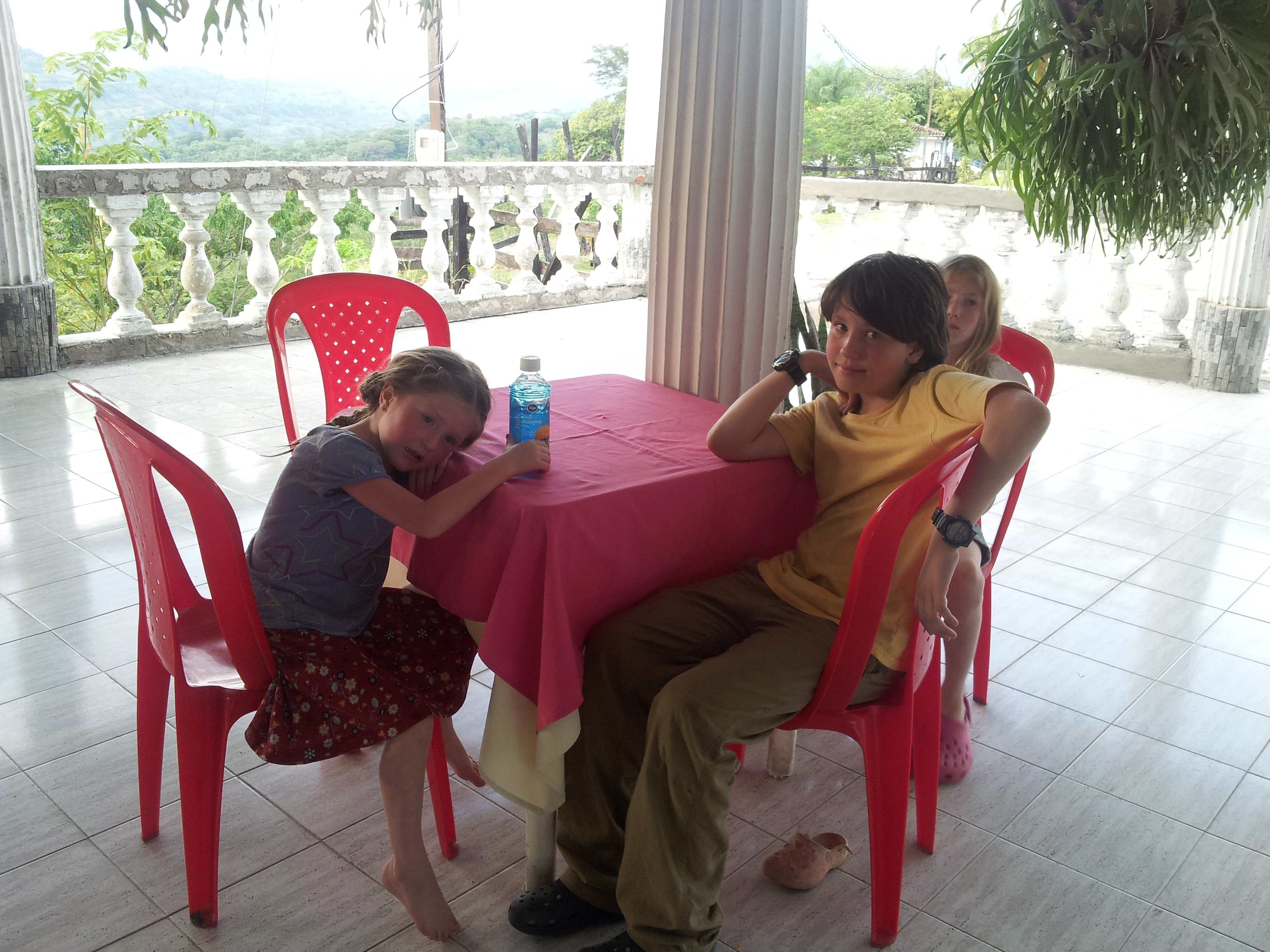
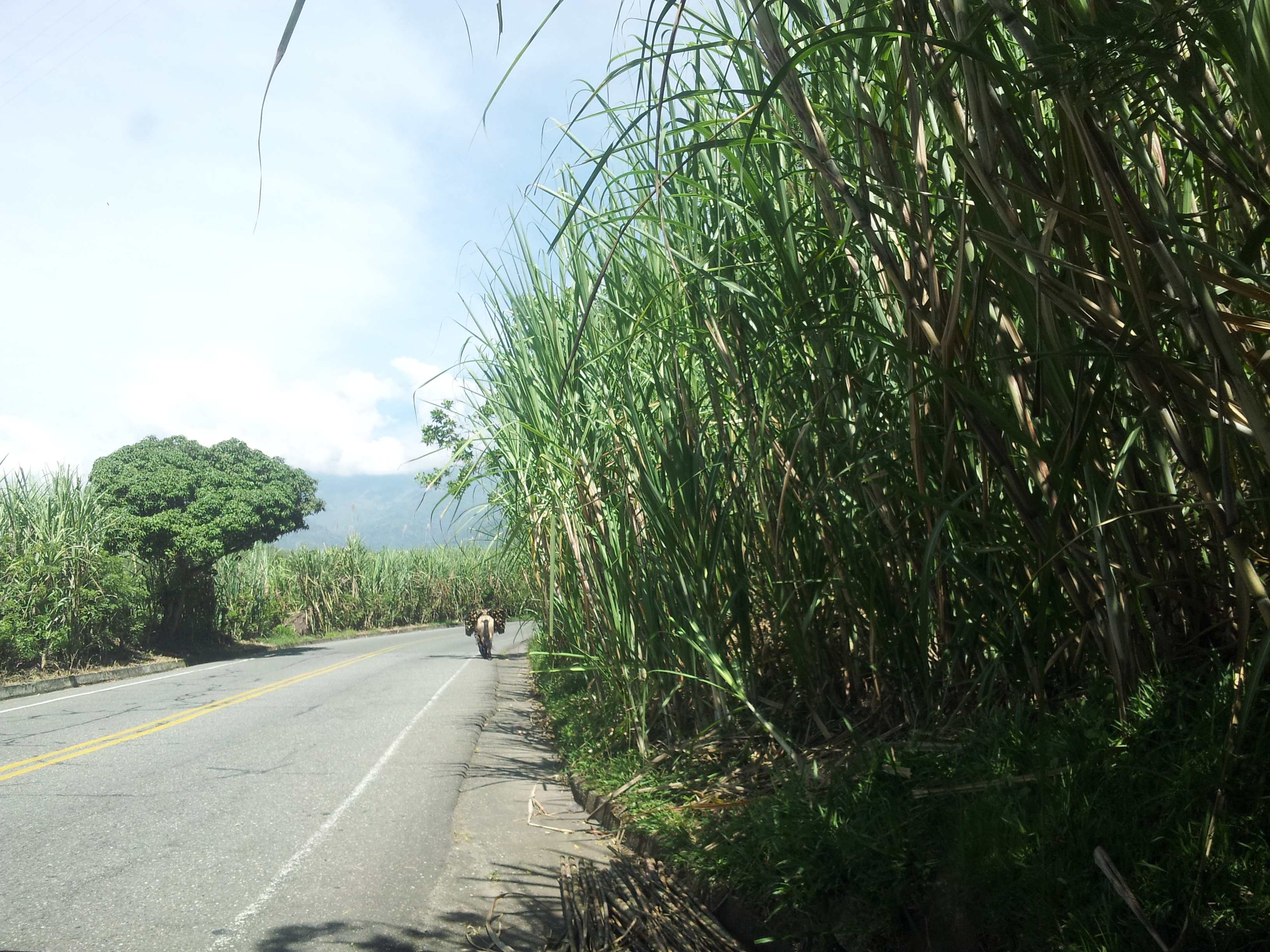
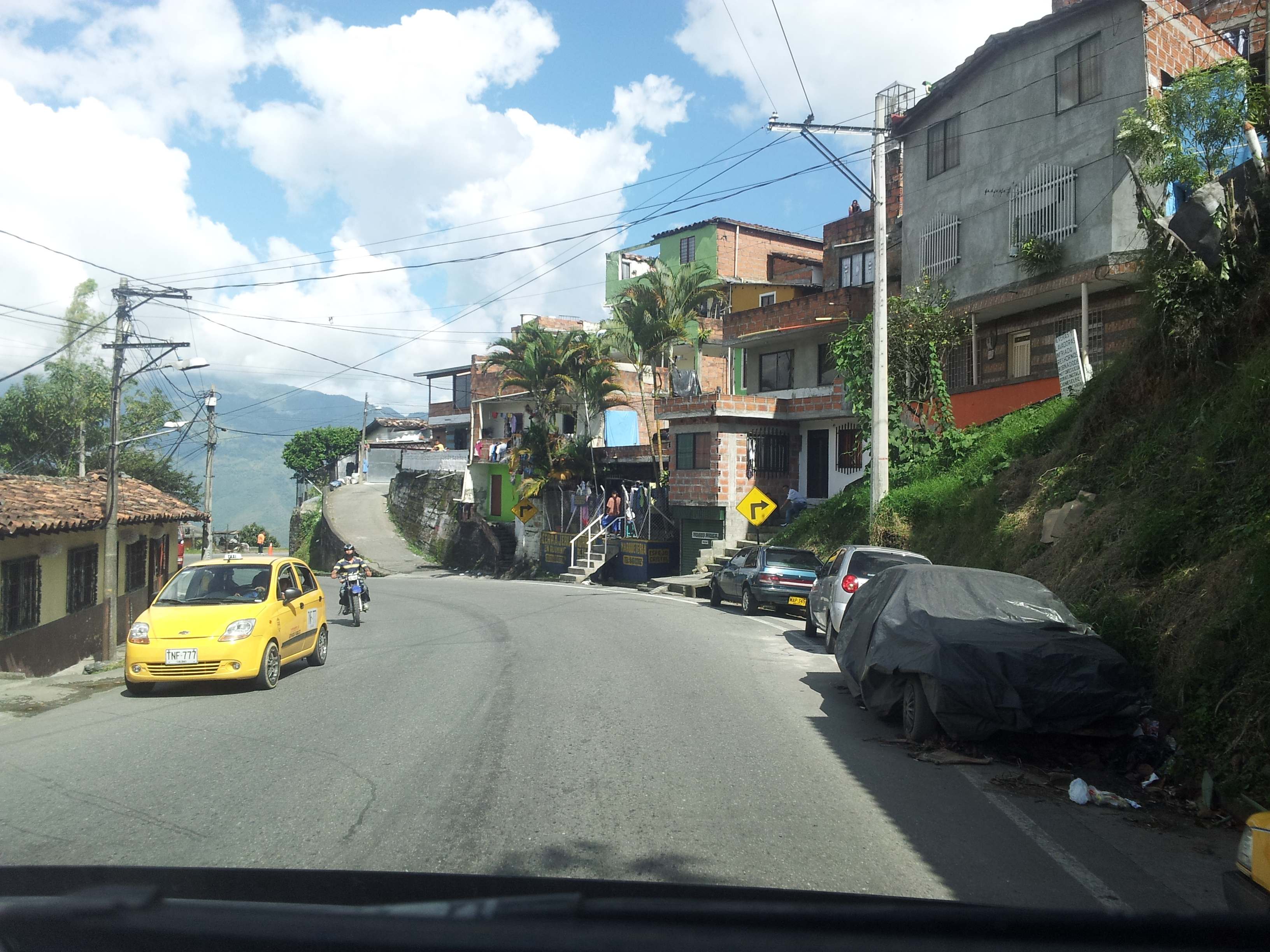
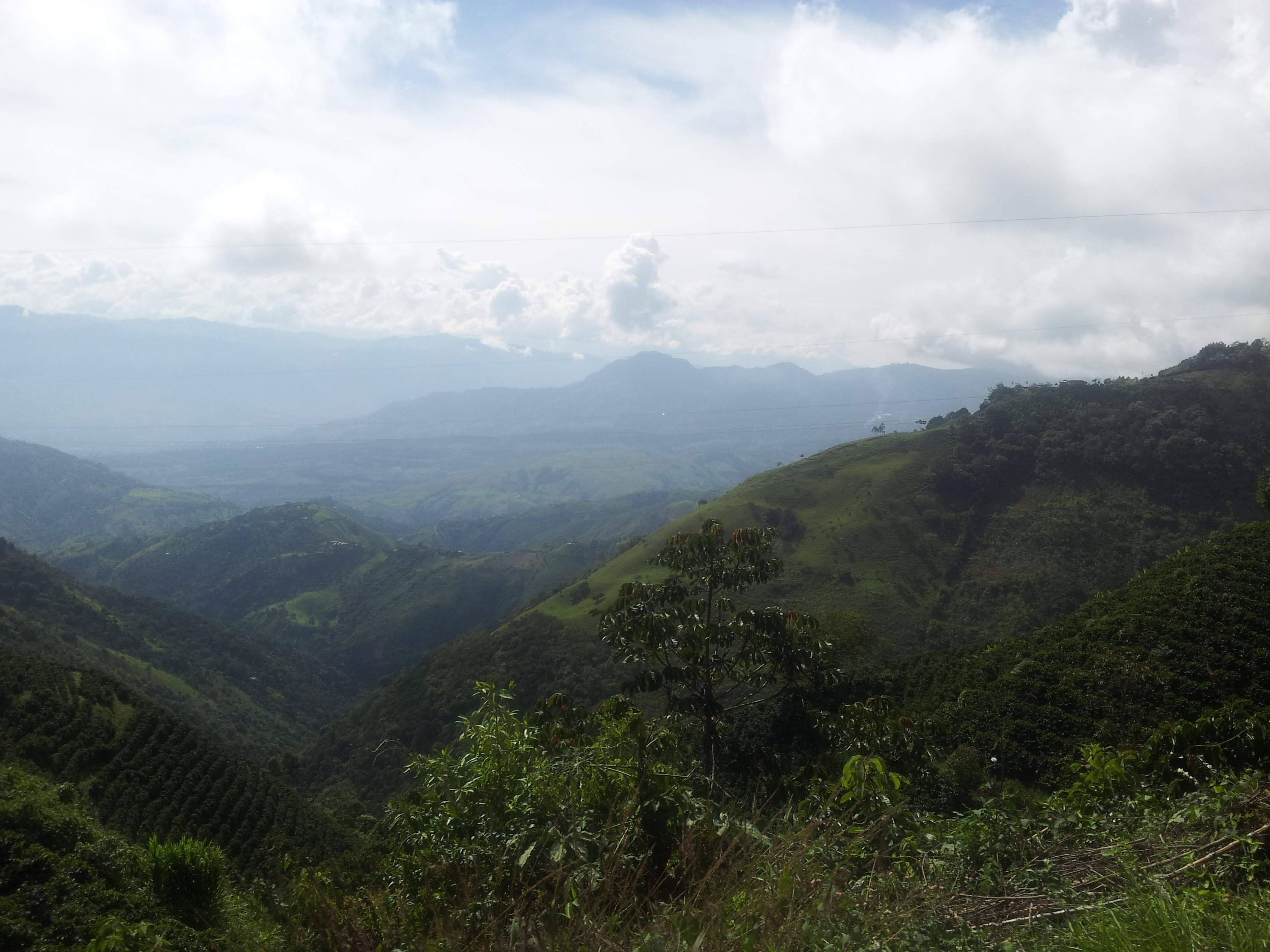
We drove through Medellin which was beautiful. Medellin is mostly red brick and it is nestled high in the mountains with no sprawl so you sort of meander down a two lane highway from the mountains right into Medellin. Here are some things we learned about Medellin: it has one of the most efficient public transportation systems in the world which includes trams up the steep mountainsides and it has art everywhere and is very beautiful. Medellin has a law that says that all public buildings must have art so there are statues and gardens and fountains and mosaics everywhere and many light up at night. Along the river which runs through the city is a park completely lit up the entire length at night with colorful decorative lights. All along the trip, people kept asking us if we were from Medellin and once we got there, we knew why. Most people in Medellin are much lighter skinned than coastal people and tourists are so rare everyone assumed we were from Medellin.
We headed into a small town on the advice of a Colombian / Irish gas station attendant and camped at a Esso station next to a hotel. It was quite the exciting moment when we arrived and we soon had a crowd of about 20 people outside hanging around. We were too far from the town to walk and we were pretty tired that night so we stayed around our neighborhood. Our neighborhood turned out to be filled with prostitutes and hotels you could rent by the hour, hotels called things like the Love Karma Sutra and Cupid Love Shack with gigantic nativities set up outside. Apparently this is part of the truck driving industry.
We camped in Popayon in a parquedearo listed in Americas Overland and disconnected the camper and drove into Popayon. The van and camper were secure but the parquedearo was filthy and smelled really bad. Oil and gas had been spilled or dumped all over it and it was pretty toxic smelling. The section of town was kind of rowdy and from the camper we could here plenty of fights and screaming and even a few gunshots. The security guards at the parquedearo were constantly walking the gate and the evening was not tranquillo. Once it got dark, there was some kind of massive trash fire that filled the entire valley with smoke that made your eyes sting. This lasted all night. We shut all the windows – luckily it was not very hot.
Popayon – Pasto
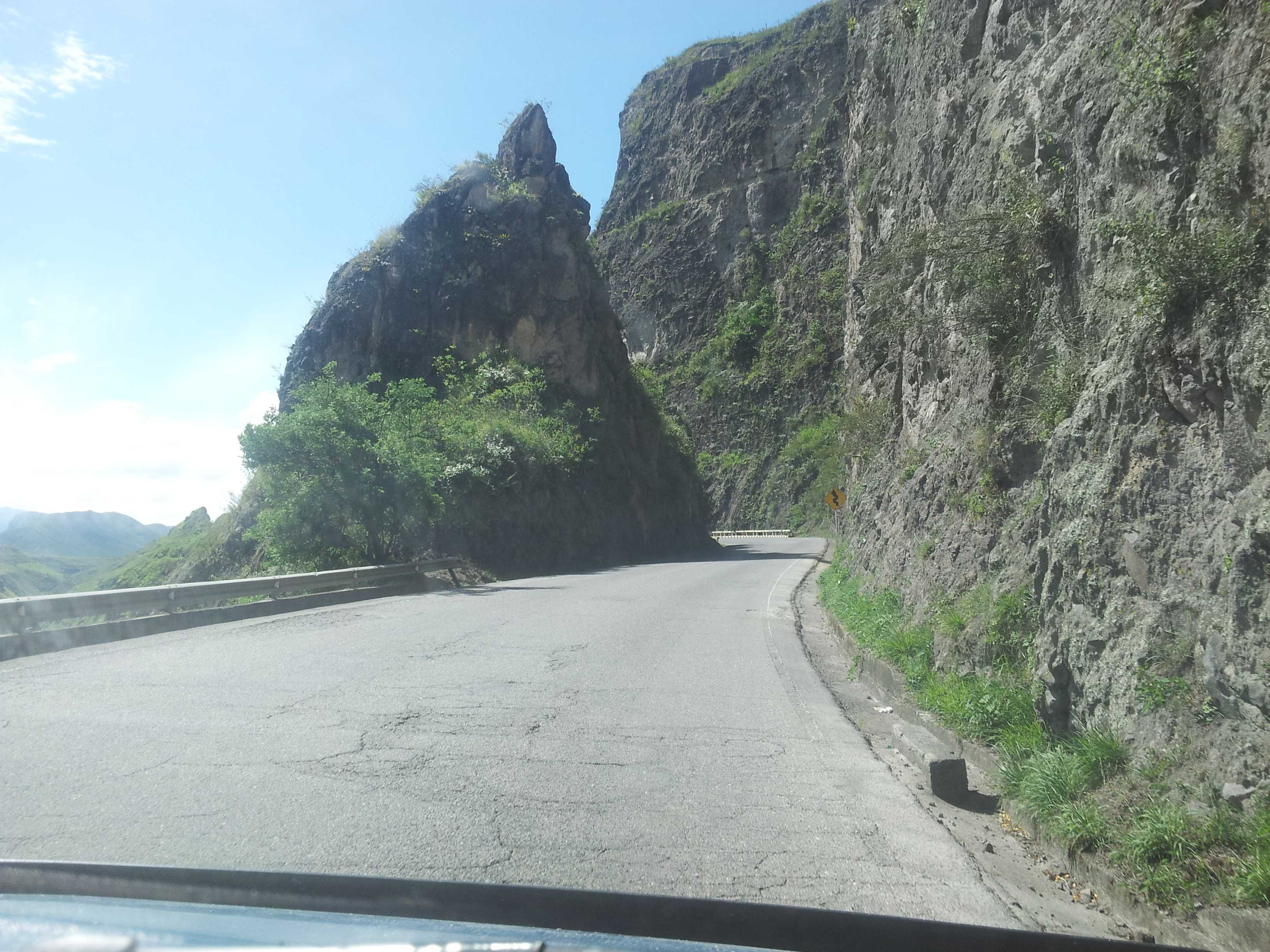
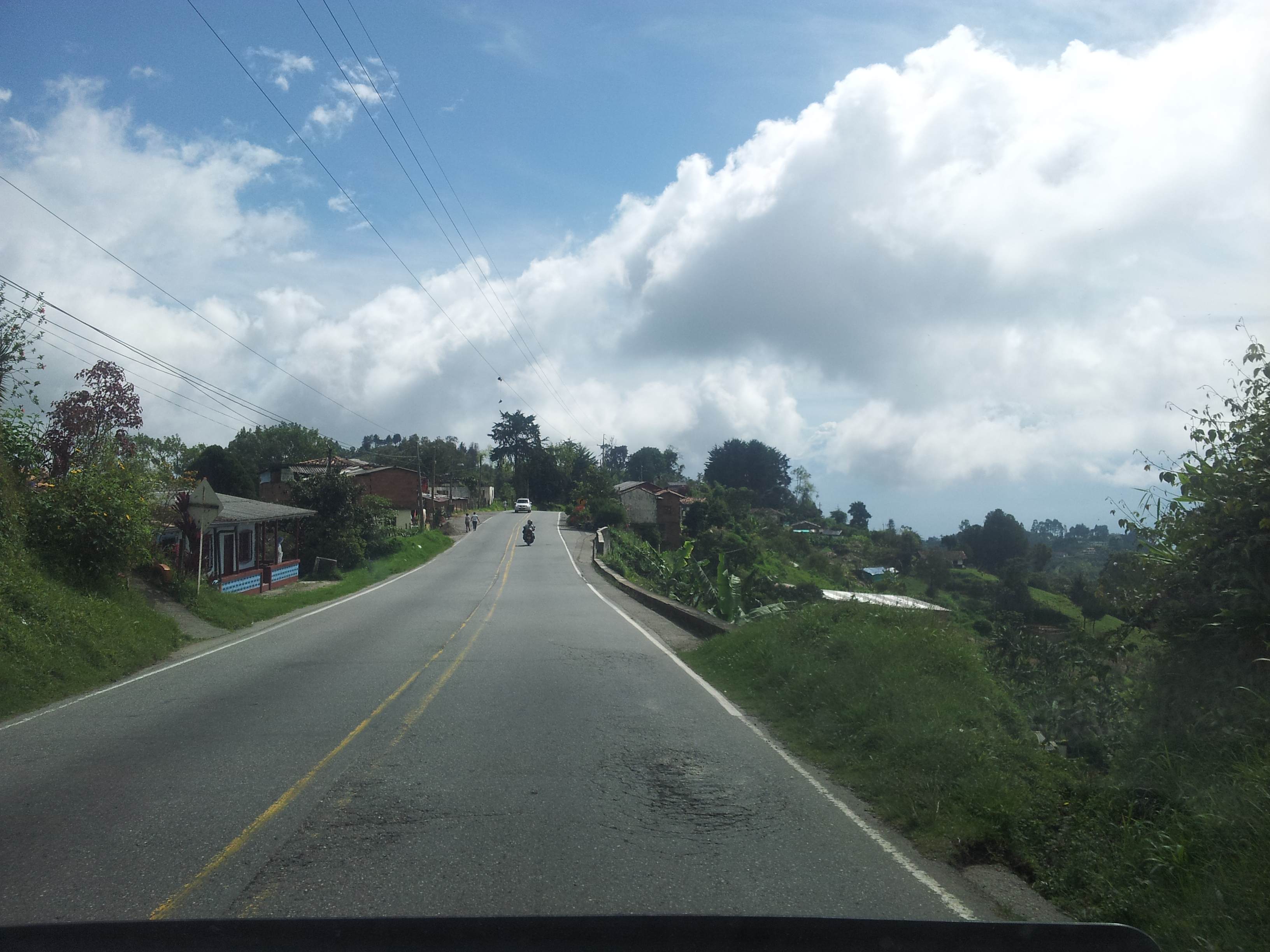
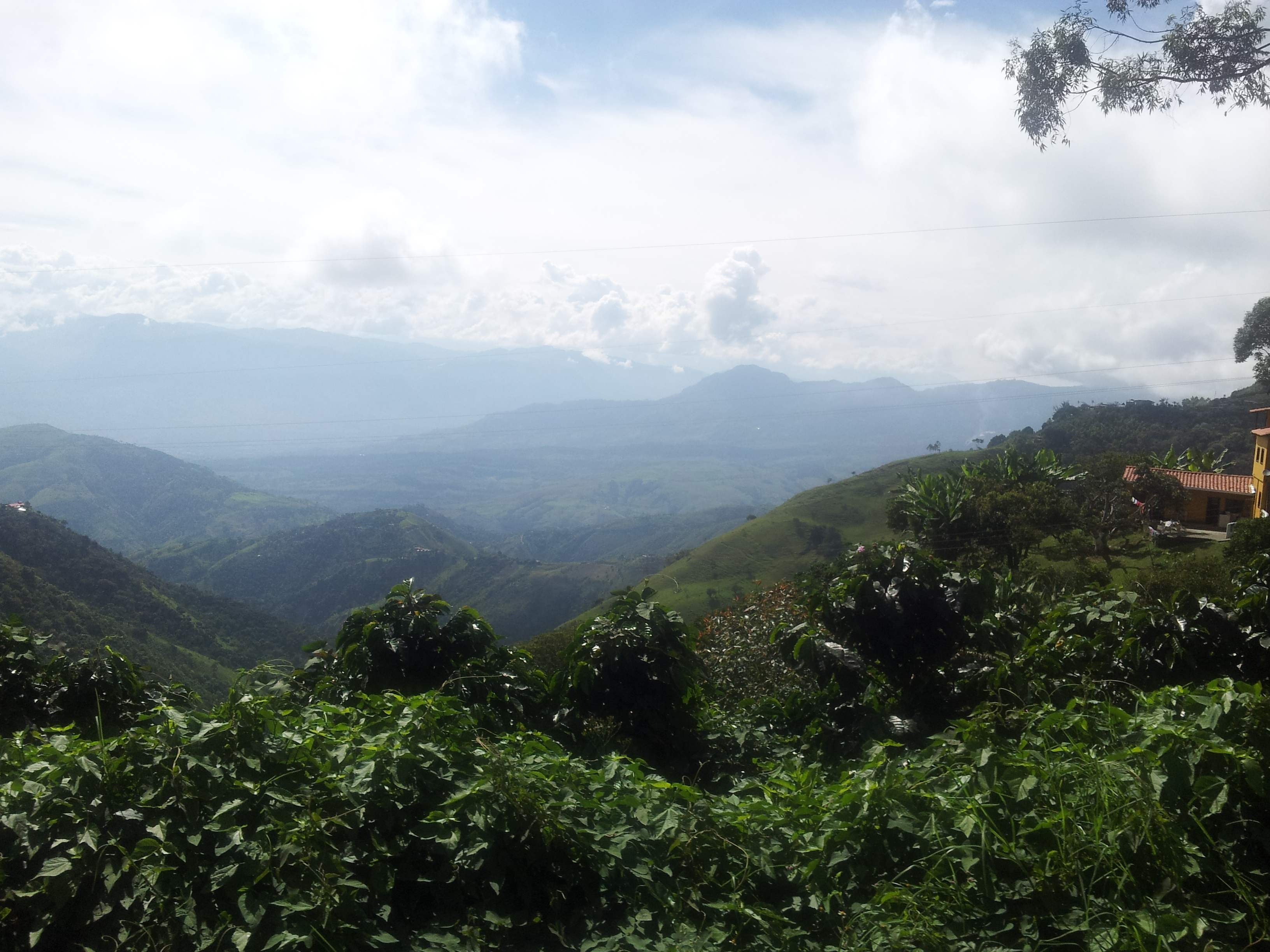
We camped at a very nice Texaco station that was quiet and about a 5 minute walk to town. The Texaco had free showers and water and a stunning view across the valley.
Pasto – Border of Ecuador
Pasto was a very nice city. It reminded us of Vancouver, BC.
In a perfect example of the lack of signs, the Pan American drives right through the center of Pasto and then turns right. The upcoming right turn is marked but when you get to the point of turning right, there are actually two right turns; one heads west and one heads more southwest. We took the wrong one. The GPS completely failed us here. It had us floating about 10 feet off the road anyway.
There was no gasoline and lines were long at the stations that did have gas. Diesel was not a problem. The price of gas drops dramatically here, from over $8000 pesos a gallon (yes, a gallon) to $5600 a gallon.
We camped at a Bio station with a huge empty parquedearo and disconnected the camper and drove into the small towns.
Ipiales is the Colombian border town. Driving through it was confusing and the streets were narrow and crowded. The border was easy, we had our passports stamped and we were on our way to Ecuador. It is funny how a few feet can make such a great difference. The Ecuador side of the border was much dirtier, buildings covered with graffiti and litter all over the place. We had to wait about an hour to get our passports stamped. Someone had thrown up on the floor and it was covered up with pieces of paper. The good part was that it was a little meet up of fellow travelers so we had some fun conversations with a man on a motorcycle from Scotland and another couple on motorcycles from Australia. The Ecuadorian border town is Tulcan and it was more narrow than Ipiales. Lucky we got behind a bus and just followed it out of town.
Ecuador
We were sad at first with Ecuador. It was dirty and covered with graffiti and litter and the people were not so nice. On the other hand, we were not such a freak show and no one seemed to care. It was New Years day and there were drunk people men everywhere, sleeping on the sidewalk and lying in the grass and stumbling around. Everything was closed. We drove up and up and up and up to more than 10,000’ and then down to 2,000’ and then we did it once more. It was kind of stressful. The roads are much better but there are many more drivers and cars in Ecuador due to the fact that gas is $1 USD a gallon. Ecuador uses the USD and we learned where all the $2 bills and Susan B. Anthony coins are – Ecuador. We were headed to Otavalo and Americas Overland said there were two conveniently located parqueaderos near the market but we never know what that means. We hired a taxi for $2 to lead us to one and we arrived at a huge parqueadero right next to the market with bathrooms and a nice level cement pad we got to park on.
Otavalo
Otavalo has one of the biggest (or perhaps the biggest) market of indigenous crafts in South America.